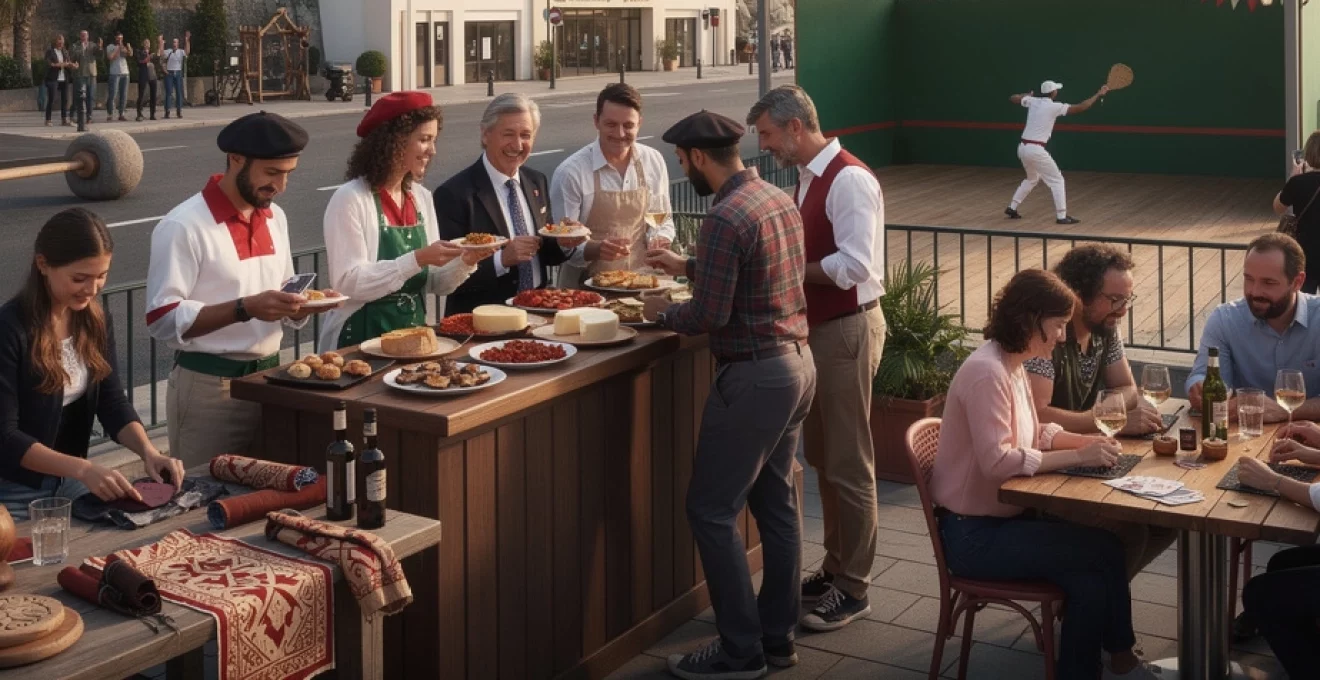
Nestled along France’s Atlantic coastline, Biarritz serves as a magnificent gateway to authentic Basque culture, where centuries-old traditions seamlessly blend with contemporary French sophistication. This elegant seaside resort, once favoured by European royalty, offers visitors an extraordinary opportunity to immerse themselves in the rich tapestry of Basque heritage through its distinctive architecture, vibrant culinary scene, traditional sports, and time-honoured celebrations. From the red-shuttered etxe houses dotting the landscape to the rhythmic sounds of pelota echoing from ancient frontons, Biarritz presents a living museum of Basque culture that continues to thrive in the modern world.
The town’s unique position straddling both French and Spanish Basque territories creates a fascinating cultural synthesis, where visitors can experience authentic traditions whilst enjoying the refined amenities of a world-class resort destination. Understanding and participating in these cultural practices provides travellers with profound insights into one of Europe’s most distinctive and enduring civilizations.
Architectural heritage and traditional basque building techniques in biarritz
Biarritz’s architectural landscape tells the compelling story of Basque building traditions adapted to coastal environments and enhanced by imperial grandeur. The town’s built environment reflects centuries of cultural evolution, from humble fishing village origins to its transformation into Europe’s premier seaside destination during the Second Empire period.
Villa eugénie and second empire architectural influence
The magnificent Hôtel du Palais, originally constructed as Villa Eugénie in 1854 for Empress Eugénie, represents the pinnacle of Second Empire architectural achievement in Biarritz. This extraordinary building, designed in the shape of an ‘E’ to honour the empress, demonstrates how imperial patronage elevated local building techniques to international standards. The structure’s distinctive pink façade and ornate detailing showcase the fusion of French imperial aesthetics with traditional Basque proportions and coastal adaptations.
Visitors can observe how the building’s positioning maximises ocean views whilst incorporating traditional Basque elements such as deep overhanging eaves and robust stone foundations designed to withstand Atlantic storms. The villa’s transformation into a luxury hotel preserves these architectural innovations whilst allowing public access to spaces once reserved for European royalty.
Etxe traditional basque houses in quartier Saint-Charles
The authentic etxe houses scattered throughout Biarritz’s residential neighbourhoods exemplify traditional Basque domestic architecture that has remained virtually unchanged for centuries. These distinctive dwellings feature the characteristic white limestone walls contrasted with vibrant red or green timber shutters and structural elements. The steep-pitched roofs, traditionally covered with Roman tiles, demonstrate practical adaptations to the region’s wet climate.
In Quartier Saint-Charles, visitors can observe how these traditional forms have been adapted to urban settings whilst maintaining their essential character. The houses typically feature ground-floor commercial spaces with residential areas above, reflecting the traditional Basque integration of work and domestic life. Many retain their original lorio (covered galleries) that provide sheltered outdoor living spaces perfectly suited to the maritime climate.
Art deco casino municipal and 1920s seaside architecture
The Casino Municipal, reconstructed in 1929 following Art Deco principles, represents Biarritz’s embrace of modernist design whilst respecting traditional proportions and materials. This stunning building overlooks the Grande Plage and demonstrates how contemporary architectural movements were interpreted through the lens of Basque cultural sensibilities. The casino’s geometric façade incorporates local stone and maintains the horizontal emphasis characteristic of traditional Basque construction.
The building’s interior spaces feature period decorative elements that reference Basque maritime heritage whilst embracing the glamorous aesthetic of the Jazz Age. Visitors can appreciate how the architects successfully balanced innovation with respect for local building traditions, creating a structure that feels both timelessly elegant and distinctly of its era.
Chapelle impériale byzantine revival elements
The Imperial Chapel, designed by architect Paul Louis Boeswillwald specifically for Empress Eugénie, showcases the sophisticated ecclesiastical architecture that emerged during Biarritz’s imperial period.
Its exterior combines Romanesque and Byzantine Revival elements, with polychrome brickwork, horseshoe arches and a striking tiled roof that recall both Orientalist fashions of the period and the cross-cultural currents of the Basque coast. Inside, finely worked mosaics, carved capitals and an ornate altar dedicated to the Virgin of Guadalupe reveal Eugénie’s Spanish heritage and the imperial fascination with exotic religious art. For visitors interested in architectural history, the chapel illustrates how Biarritz became a laboratory for stylistic experimentation in the late 19th century, layering imperial symbolism onto a landscape still dominated by traditional Basque forms.
Access to the Chapelle Impériale is limited, typically to guided visits on selected days, so it is worth checking opening times at the tourist office or online before you plan your cultural itinerary in Biarritz. When you do visit, pay particular attention to how the chapel sits within its garden, slightly withdrawn from the street: this semi-enclosed setting evokes the intimate oratory of a royal residence rather than a public parish church. By contrasting this refined sanctuary with the robust parish churches of nearby Basque villages, you begin to appreciate the architectural dialogue between imperial Biarritz and the rural Basque world that surrounds it.
Gastronomic immersion through authentic basque culinary traditions
Exploring Basque culture in Biarritz is impossible without diving into its extraordinary food culture, which blends Atlantic seafood, mountain produce and centuries of culinary know-how. Rather than limiting yourself to restaurant meals, you can use gastronomy as a structured way to experience daily life, from morning coffee rituals to late-night tapas crawls. Markets, traditional bars and historic pâtisseries become living classrooms where you learn the codes, timing and etiquette of Basque conviviality.
In recent years, the wider Basque Country has gained global recognition as one of Europe’s most exciting gastronomic regions, with a dense concentration of Michelin-starred restaurants and innovative chefs. Yet what makes Biarritz special is how refined cuisine coexists with simple, everyday food traditions that remain deeply local. By following where Biarritz locals eat and drink, you will discover that Basque culinary culture is less about fine dining than about sharing, seasonality and respect for ingredients.
Pintxos culture at bar jean and traditional txikiteo routes
If you want to experience Basque culture in Biarritz as the locals do, start with pintxos and the ritual of txikiteo – the art of going from bar to bar for small bites and drinks. Around Les Halles market, Bar Jean has been a fixture of this culture since the 1930s, with zinc counters crowded with plates of tortilla, croquettes, marinated anchovies and peppers. Rather than sitting for a long meal, you stand at the bar, order a couple of pintxos and a drink – perhaps a glass of Basque cider or a light red from nearby Irouléguy – and move on.
A classic txikiteo route might begin at Bar Jean, continue along Rue des Halles and spill into the surrounding streets, stopping wherever the counter looks lively and the display of pintxos is most tempting. You will notice that each bar has its own speciality, from octopus with piment d’Espelette to mini burgers with Basque cheese, and part of the pleasure lies in comparing them. To blend in, avoid over-ordering in one place; instead, do as local groups do and share a few pintxos, paying at each stop before drifting to the next address. This roaming style of eating makes the historic centre feel like an open-air dining room, and it is one of the most convivial ways to experience Biarritz at night.
Basque pastry techniques at pâtisserie miremont since 1872
For a sweeter side of Basque culture, Pâtisserie Miremont, founded in 1872, offers a direct link to the Belle Époque when aristocrats and royals flocked to Biarritz. Stepping into this tearoom overlooking the ocean, with its period mirrors and upholstered banquettes, feels like opening a time capsule of 19th-century café culture. Behind the elegant façade, however, is a working laboratory where traditional pastry techniques are still taught from master to apprentice, ensuring continuity of flavour and craftsmanship.
The Basque cake, or gâteau basque, is the star of this repertoire: a dense, buttery pastry shell filled with either black cherry jam or vanilla custard, baked until lightly caramelised. Watching it being sliced, you can see the precise layering and uniform texture that betray a confident hand and carefully controlled oven temperature. Alongside the gâteau basque, look for rustic macarons, fruit tarts topped with seasonal berries and chocolate specialties that reflect the historic chocolate trade of nearby Bayonne. Taking time to savour a slice with coffee or hot chocolate is more than a treat; it is a way of participating in a ritual that has defined Biarritz social life for generations.
Traditional pelota fronton dining at jai alai restaurants
One of the more unusual ways to discover Basque culinary traditions in Biarritz and its surroundings is to eat at restaurants attached to pelota courts, known as frontons or jai alai halls. These establishments often serve simple, robust dishes – grilled fish, axoa of veal, omelettes with piment d’Espelette – designed to fuel players and spectators alike. The atmosphere is informal and convivial, with families, older regulars and groups of friends filling long tables before or after matches.
When a game is in progress, you can often hear the rhythmic thud of the pelota ball against the wall from your table, a soundtrack that turns dinner into a multi-sensory cultural experience. In smaller villages just outside Biarritz, the fronton is usually located on the main square, underlining how central the sport is to Basque communal life. If you are planning to dine at such a restaurant, it is worth checking the local schedule for tournaments so you can combine your meal with live play. This pairing of food and sport – eating well while cheering on your team – is a quintessential Basque way of spending an evening.
Idiazábal cheese and piment d’espelette tasting experiences
Cheese and peppers might sound like ordinary ingredients, but in Basque gastronomy they tell a story of transhumance, microclimates and careful regulation. In Biarritz’s markets and specialist shops you will find Idiazábal and Ossau-Iraty, both protected-designation cheeses made from the milk of local sheep breeds. Idiazábal, traditionally lightly smoked over beechwood, has a firm texture and nutty flavour that pairs beautifully with crisp apples, quince paste or a drizzle of mountain honey.
Equally emblematic is piment d’Espelette, the only pepper in France with AOP status, grown in the foothills a short drive from Biarritz. Instead of aggressive heat, it offers a warm, fruity spice that lifts everything from grilled fish to chocolate. Many delicatessens in Biarritz offer informal tasting sessions where you can compare different ages of cheese and sample Espelette products – powders, purées, even jelly – learning how small variations in terroir change the profile. By asking producers questions about their flocks or pepper harvests, you not only deepen your understanding of Basque food, you also support a network of small-scale farmers keeping these traditions alive.
Txakoli wine appreciation and local vineyard connections
While the Basque Country is often overshadowed by Bordeaux and Rioja in wine conversations, local whites such as txakoli (or txakolina) are gaining international attention. This lightly sparkling, high-acid wine, typically poured from a height to enhance its freshness, is a perfect match for the seafood-heavy cuisine of Biarritz. You will find it by the glass in many pintxos bars, often listed alongside Basque ciders and Irouléguy reds and rosés.
To go beyond a quick taste, you can book day trips from Biarritz to vineyards across the border in Spanish Basque Country or inland towards Irouléguy. There, winemakers explain how Atlantic breezes, steep slopes and traditional training methods shape their wines, often using analogies with surfing or mountaineering to describe the balance between risk and reward. Even if you stay in town, specialist wine bars offer guided tastings that place txakoli in context with other regional styles, helping you understand why local diners instinctively order it with oysters or grilled chipirons. By the end of an evening, you may find that learning to read a Basque wine list is as much a cultural skill as pronouncing place names correctly.
Traditional basque sport participation and spectating venues
Sport in Biarritz is more than leisure; it is a living expression of Basque identity, from the roar of ocean waves under surfers’ boards to the snap of leather in pelota courts. Many of these activities grew out of rural daily life – herding, fishing, manual labour – and were later formalised into competitions and festivals. For visitors, they offer an engaging way to experience Basque culture in motion rather than as something static in a museum.
Whether you join a surf lesson, watch a pelota tournament or learn the rules of the card game mus over a drink, you will notice the same values recurring: teamwork, resilience, respect for opponents and a quiet pride in local traditions. These practices also reveal how Biarritz bridges old and new Basque worlds, blending ancestral sports with contemporary global influences like modern surfing and skate culture.
Pelota basque tournaments at parc mazon fronton
One of the best places to see pelota in Biarritz is the fronton at Parc Mazon, a leafy public park not far from the town centre. Here, players of all ages gather to practice or compete in different pelota variants, from the bare-handed main nue to the spectacular cesta punta, where the ball is hurled at incredible speeds using a curved wicker basket. During summer, local clubs often organise evening tournaments, and the atmosphere around the fronton becomes electric as neighbours, families and visitors crowd the benches.
If you are unfamiliar with the rules, do not worry: watching a few exchanges is usually enough to grasp the essentials, and nearby spectators are often happy to explain finer points if you ask. Pay attention to the ritualised gestures before and after each match – handshakes, greetings in Euskera, the respectful acknowledgment of the crowd – which mirror the courtesy you may have noticed in Basque daily life. Some clubs offer introductory pelota sessions for beginners, providing helmets, gloves and basic instruction, so you can experience the satisfying crack of a well-placed shot against the fronton wall for yourself.
Force basque competitions and stone lifting demonstrations
Beyond ball games, Basque culture includes a rich tradition of rural strength sports known collectively as force basque. These events, often showcased during village festivals around Biarritz, transform everyday farm tasks into feats of endurance and skill: log chopping, cart lifting, hay bale stacking and, perhaps most iconic, stone lifting. Watching a seasoned competitor hoist a massive, roughly hewn block onto their shoulder is like seeing history condensed into a single movement.
In and around Biarritz, you may encounter demonstrations of these sports during summer fairs or cultural events, sometimes paired with folk dancing and choral singing. The atmosphere is always festive, with announcers switching between French, Euskera and Spanish as they introduce athletes and explain records. For visitors, these competitions highlight the deep connection between the Basque people and their rugged landscape, where physical strength and ingenuity were once essential to survival. If you are curious, some event organisers allow supervised participation in lighter events, giving you a safe glimpse into this demanding world.
Surf culture integration with basque maritime heritage
Biarritz is often called the surfing capital of Europe, yet surfing here is more than a borrowed Californian pastime; it has woven itself into the fabric of Basque coastal life. The first surfers arrived in the 1950s, but the town’s relationship with the ocean goes back centuries, to eras of whaling, cod fishing and coastal trade. Today’s surf schools along Côte des Basques and Grande Plage stand where fishermen once launched boats, and many local surfers proudly claim both identities – ocean athletes and heirs to maritime traditions.
Taking a surf lesson in Biarritz thus becomes a form of cultural immersion as much as a sporting activity. Instructors often share stories about early French surfers, changing wave patterns and local etiquette, from respecting priority rules in the lineup to greeting regulars after a good session. Surf competitions, film festivals and environmental initiatives link the sport to broader conversations about coastal preservation, echoing long-standing Basque respect for the sea’s power and generosity. Even if you prefer to stay dry, watching sunset sessions from viewpoints like the Rocher de la Vierge or Etxola Bibi terrace gives you a front-row seat to this evolving Basque maritime culture.
Mus card game sessions in traditional tabernas
Not all Basque sports require physical prowess; some, like the card game mus, test memory, bluffing skills and social intuition. Originating in the Basque Country and now played across Spain and parts of Latin America, mus is a four-player game usually played in pairs, using a special 40-card Spanish deck. In Biarritz, you may notice groups of mostly older men – and increasingly women and mixed-age teams – gathered around café tables in late afternoon, slamming cards with a flourish and punctuating hands with bursts of laughter.
Learning mus can feel, at first, like learning a new language, with its own vocabulary and unspoken codes, but that is precisely what makes it a rich cultural experience. Some bars organise informal mus evenings where beginners are welcome to watch or even join under the guidance of more experienced players. As with cooking or surfing, you will find that the game is as much about community as competition: it provides a structured reason for friends to meet, argue good-naturedly and share a drink. Accepting an invitation to sit in on a game, even as an observer, is a sign that you are being welcomed into the local rhythm of life.
Euskera language immersion and cultural learning opportunities
The Basque language, Euskera, is one of Europe’s great linguistic mysteries: unrelated to any other known language family and thought to predate the arrival of Indo-European tongues. In Biarritz, you are more likely to hear French in daily interactions, yet Euskera remains visible and audible in street names, signage, songs and greetings. Engaging even a little with this language – learning to say egun on (good morning) or eskerrik asko (thank you) – signals respect for local culture and opens doors to deeper conversations.
For visitors who want more structured learning, cultural centres and associations sometimes offer short Euskera workshops or introductory classes, especially in summer. These sessions often combine basic vocabulary with context about Basque history, literature and identity, helping you understand why language revival is such a powerful issue across the region. Many schools in the broader Basque Country now teach in immersive Basque-French or Basque-Spanish programmes, and public initiatives encourage bilingual signage and media. As you explore Biarritz, noticing where Euskera appears – on market stalls, festival posters, bookshop windows – becomes a kind of cultural treasure hunt, revealing how language underpins the region’s strong sense of continuity.
Even if you only have a few days, you can create your own language immersion by choosing cafés and bars where locals gather, listening to fragments of Euskera in conversations and politely asking about meanings when appropriate. Think of it as tuning into a radio frequency that has been broadcasting for millennia. The more you attune your ear, the more you will notice how Basque identity flows not just through visible symbols like flags and traditional dress, but also through the everyday words people use to greet each other, share stories and name their world.
Seasonal basque festivities and traditional celebration calendar
One of the most vivid ways to experience Basque culture in Biarritz is to time your visit with the region’s rich calendar of festivals and celebrations. These events weave together music, dance, sport, religion and food into immersive, multi-day experiences that transform streets and squares into communal stages. While major gatherings like the Fêtes de Bayonne, held each summer in nearby Bayonne, attract huge crowds, there are many smaller, more intimate festivities in and around Biarritz that offer a closer look at local customs.
Throughout the year, you will find occasions where Basque choirs perform polyphonic songs, dancers in traditional dress circle the fronton and children learn historic games from elders. Many of these celebrations follow the agricultural calendar – marking harvests, transhumance or patron saints’ days – and are deeply rooted in village life. In Biarritz itself, neighbourhood events like the fête de Bibi Beaurivage animate specific districts with street food, concerts and informal pelota matches, giving you a chance to experience how urban communities preserve rural traditions. By checking local listings or asking at the tourist office, you can often plan at least one festival experience into even a short stay.
Participating respectfully in these events means paying attention to dress codes (white and red are common for many Basque festivities), following the lead of locals in rituals such as toasts or processions, and remembering that you are entering not a spectacle staged for tourists but a living tradition. As you move between quiet museum visits and exuberant street parties, you will likely sense how Basque culture balances solemnity and joy, continuity and adaptation. Festivals are the moments when all the strands you have encountered separately – language, sports, food, music, architecture – come together in a single, unforgettable tapestry.
Artisanal craft workshops and traditional basque manufacturing techniques
Beyond food and festivals, Biarritz and the wider Basque Country are known for a wealth of artisanal crafts that reflect both practicality and aesthetic refinement. From hand-stitched espadrilles and woven linge basque (striped household linens) to leather goods and pottery, these objects carry patterns and techniques passed down through generations. Visiting workshops and small factories around Biarritz allows you to see how traditional manufacturing methods coexist with contemporary design, much like the town’s architecture blends old and new.
Many artisans in the region open their doors to visitors for demonstrations, short workshops or behind-the-scenes tours. You might watch a weaver set up a loom to create the bold red, green and white stripes associated with Basque identity, or see how shoe-makers reinforce espadrille soles with natural fibres to withstand coastal weather. Some ateliers explicitly frame their work as cultural preservation, explaining how cheaper imports and fast fashion threaten local industries, while others focus on innovation, collaborating with designers to bring Basque motifs into modern interiors and wardrobes. As you handle fabrics, ceramics or leather fresh from the workbench, you gain a tactile sense of the region’s values: durability, functionality and quiet elegance.
For travellers, purchasing directly from these makers is one of the most impactful ways to support Basque culture in Biarritz. Instead of mass-produced souvenirs, you bring home items whose stories you know – the name of the village where the linen was woven, the type of clay used for a bowl, the meaning of a particular geometric pattern. Some workshops even offer short hands-on experiences where you can try your hand at a simple task, like printing a motif or stitching a small accessory. Just as learning a few words of Euskera changes how you hear the town, learning a basic craft technique changes how you see everyday objects, deepening your connection to Biarritz long after you leave.