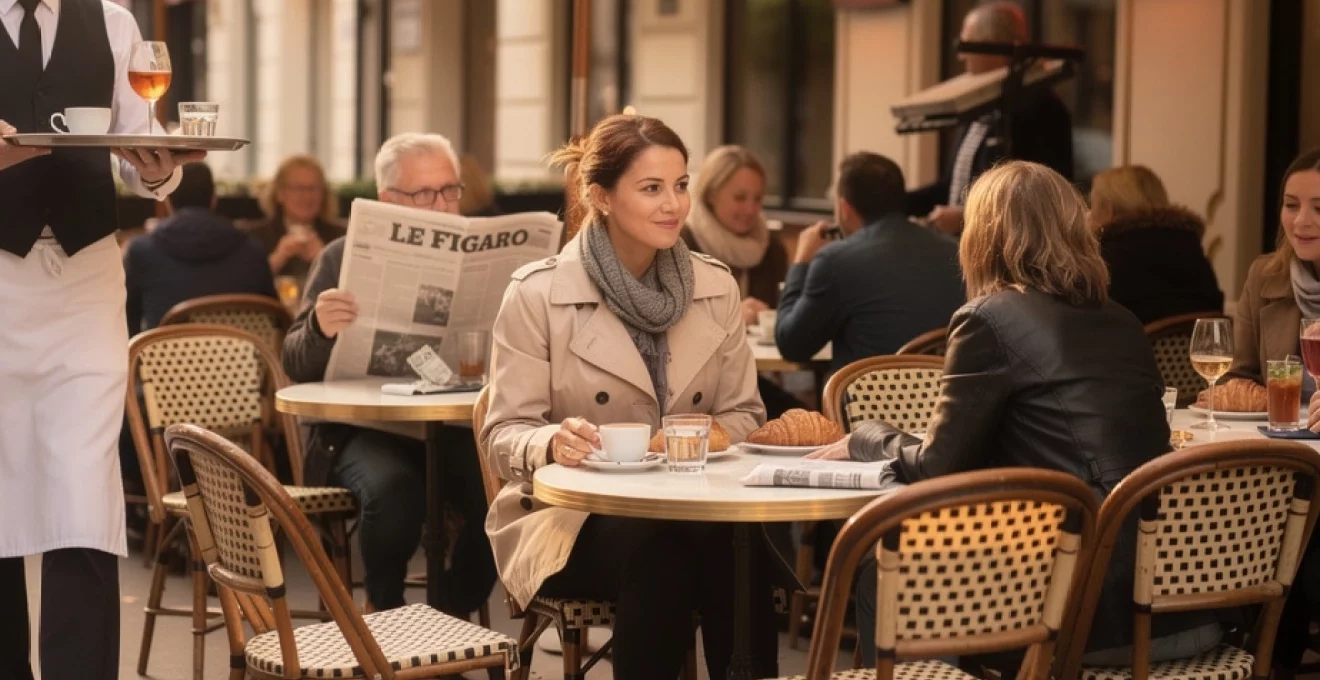
The Parisian café terrace represents far more than outdoor seating—it embodies a cultural institution that has shaped the city’s social fabric for over two centuries. These iconic spaces transform simple meals into theatrical performances, where every patron becomes both spectator and performer in the grand theatre of urban life. Understanding how to navigate this cherished tradition separates fleeting tourists from those who truly grasp the essence of la vie parisienne. From the legendary establishments of Saint-Germain-des-Prés to the hidden corners of the Marais, mastering terrace culture requires knowledge of unwritten codes, strategic timing, and an appreciation for the slow, deliberate pleasure that Parisians have elevated to an art form.
Decoding parisian café terrace culture and social etiquette
The terrace experience functions as a microcosm of Parisian society, governed by invisible yet ironclad social conventions. These spaces emerged during the 19th century when cafés began placing tables outdoors, quickly evolving into hubs where philosophers debated, artists sketched, and locals exchanged gossip. Today, approximately 17,000 terraces operate during peak season, with 13,000 remaining open year-round, testament to their enduring importance in daily Parisian life. Recent surveys indicate that 96% of Parisians visit a terrace at least weekly, underscoring how deeply embedded this ritual has become in contemporary urban culture.
Upon arrival, the first rule remains paramount: greet staff with a clear “Bonjour, monsieur” or “Bonjour, madame” before any other interaction. This simple courtesy establishes respect and dramatically improves service quality. Never seat yourself at tables set with cutlery unless you intend to dine—these configurations signal meal service, whilst bare tables welcome those seeking only beverages. When uncertain, ask “Puis-je m’installer ici?” for solo seating or “On peut s’installer ici?” when accompanied. This deference to establishment protocols demonstrates cultural fluency that waiters immediately recognise and appreciate.
The art of “flânerie”: observing street life from your table
Flânerie—the practice of leisurely urban observation—constitutes the philosophical heart of terrace culture. You’ll notice chairs deliberately facing the street rather than positioned across from companions, facilitating this treasured pastime. Parisians traditionally sit side-by-side, transforming the boulevard into their shared stage. This arrangement dates to the 19th century literary tradition when figures like Baudelaire celebrated the flâneur as the quintessential modern urban figure, someone who derives pleasure from simply watching city rhythms unfold.
Proper flânerie requires digital restraint. Leave your phone concealed; scrolling destroys the meditative quality that makes terrace time restorative. Instead, observe the elegant dance of pedestrians, the particular gait of different neighbourhoods, the subtle theatre of human interaction. This contemplative practice offers genuine psychological benefits—studies suggest that mindful observation reduces stress and enhances present-moment awareness. Many regulars bring Le Monde, Libération, or Le Figaro, newspapers serving as acceptable companions that enhance rather than distract from the surroundings.
Understanding the unwritten seating hierarchy at café de flore and les deux magots
Historic establishments maintain subtle but definite spatial hierarchies. At Les Deux Magots and Café de Flore, tables nearest the street command premium positioning, offering optimal people-watching whilst signalling social confidence. Corner positions provide dual perspectives—watching both boulevard traffic and fellow patrons. Regular clients often claim unofficial “reserved” tables through decades of patronage; at La Palette, certain tables remain perpetually held for longtime habitués, left empty when these individuals are absent.
During peak hours, patience becomes essential. Hovering aggressively or rearranging furniture independently will earn disapproval. Instead, make eye contact with serving staff and wait to be directed. If accompanying a large group, always request assistance—”Pourriez-vous nous aider à nous installer?”—before attempting any table configuration. This approach respects the terrace’s spatial choreography and the waiter’s territorial authority over seating arrangements.
Mastering the
Mastering the waiter-client dynamic in traditional brasseries
In Paris, the relationship between waiter and client is closer to a host-guest dynamic than a service transaction. The waiter is the guardian of the terrace’s rhythm, orchestrating seating, orders, and timing. Expect brisk, efficient exchanges rather than overt friendliness; warmth is expressed through professionalism, not constant smiles. When your server says “J’arrive,” take it at face value—they have seen you, and they will return when the flow of service allows.
To order like a local, wait for a brief moment of eye contact and signal discreetly, avoiding raised voices or hand-waving theatrics. Place your order in one go if possible, combining food, drinks, and water: “Un café crème et une carafe d’eau, s’il vous plaît.” This shows respect for the server’s time and the terrace’s pace. Remember that in French café etiquette, lingering is expected and built into the business model; you are not obliged to order repeatedly, but you are expected to be courteous, patient, and decisive.
Disagreements about the bill or an order are best handled calmly and precisely. Rather than challenging the waiter in public, state the issue factually: “Je crois qu’il y a une erreur sur l’addition.” This direct yet neutral approach maintains everyone’s dignity. Tipping generously will not radically change the interaction; what truly improves your experience is following the cultural codes, speaking a few words of French, and accepting that you are entering a well-established ritual rather than a customisable service experience.
Peak hours versus off-peak rhythms in Saint-Germain-des-Prés establishments
In Saint-Germain-des-Prés, time slots determine both the mood and the unwritten rules of terrace use. Mornings between 8:00 and 11:00 belong to residents, office workers, and a few lingering night owls nursing a café and tartine. You can stay for an hour or more with a single drink during this period, as turnover pressure is low and terrace culture favours unhurried starts to the day. Late morning bleeds into lunch preparation, when tables begin to be reset with cutlery and napkins, signalling a shift in expectation.
From approximately 12:00 to 14:30, the lunch service dominates. If you occupy a fully laid table, you should intend to order food; sticking to a solitary espresso at a prime lunch table is poor form. The most strategic Paris café terrace users slide away just as cutlery appears if they do not plan to eat, freeing space for diners. Late afternoon, from 15:00 to 17:30, returns to a more relaxed rhythm ideal for long reading sessions, laptop-free work, or a second round of people-watching as shoppers and students pass through the neighbourhood.
The evening apéritif window, roughly 17:30 to 20:00, is the terrace’s golden hour. Seats at Café de Flore, Les Deux Magots, or nearby Le Bonaparte become hot property. Expect quicker turnover, louder terraces, and a more social energy. If you want a front-row seat on a sunny day, arrive slightly before the rush, even as early as 17:00. After 21:00, the vibe splits—some terraces calm down into hushed conversation over digestifs, while others close their kitchens but keep tables available for final drinks, especially in warmer months.
Strategic terrace selection across parisian arrondissements
Choosing the right café terrace in Paris is as strategic as selecting the right museum or neighbourhood. Each arrondissement offers distinct terrace cultures, from the intellectual Left Bank to the bohemian Canal Saint-Martin. Your goal is to balance atmosphere, sun exposure, and authenticity while avoiding the most obvious tourist traps. Think of terrace selection like choosing a vantage point in a theatre: the performance—the city—remains the same, but your perspective changes everything.
Orientation matters, especially if you care about sun. North-side terraces on east–west boulevards usually face south, giving you that coveted light that Parisians instinctively seek. Beyond light, consider the surrounding urban fabric: market streets such as Rue de Bretagne or Rue Cler provide constant movement, while quieter squares like Place du Marché Sainte-Catherine offer more intimate, village-like scenes. Ask yourself: do you want a terrace to anchor a long afternoon, or a quick, intense immersion in the city’s bustle?
Left bank literary haunts: café de la mairie and le select in montparnasse
The Left Bank remains the spiritual home of café terrace culture, especially if you are drawn to its literary heritage. On Place Saint-Sulpice, Café de la Mairie offers one of the most quietly Parisian terraces in the city. Less photographed than its Saint-Germain neighbours, it provides a generous view of the church and fountain, with a mixture of locals, students, and a few well-informed visitors. The pace here is slower; you can spend an entire morning with a newspaper and a single café crème without anyone rushing you.
Further south in Montparnasse, Le Select, along with La Coupole and Le Dôme, still carry echoes of their 20th-century bohemian clientele. Le Select’s terrace in particular is ideal for extended sessions: prices are slightly lower than ultra-iconic spots, and the ambiance mixes office workers, artists, and travellers. If you are following a “how to enjoy café terraces like a true Parisian” strategy, Montparnasse lets you sit where Hemingway, Picasso, and Simone de Beauvoir once lingered, but with fewer cameras and more genuine conversation.
To maximise your experience in these literary haunts, avoid peak lunchtime if you simply want to drink and observe. Arrive mid-morning or mid-afternoon, bring a book or notebook, and resist the urge to photograph everything. You are not only consuming a postcard scene; you are participating in a long tradition of flâneurs and writers using the terrace as their open-air office and observatory.
Marais quarter terraces: L’As du fallafel proximity and people-watching hotspots
The Marais offers a different terrace profile: narrower streets, denser crowds, and a mix of historic charm and contemporary fashion. Around Rue des Rosiers, L’As du Fallafel draws constant lines, creating a dynamic backdrop for nearby terraces even if you are not eating there. For serious people-watching, consider Café Charlot on Rue de Bretagne, facing one of the city’s liveliest market streets. Sunday brunch here transforms the terrace into a stage of families, fashion-conscious locals, and wandering visitors.
A few minutes away, Au Petit Fer à Cheval and Les Philosophes on Rue Vieille du Temple anchor a microcosm of Marais terrace life. Outdoor seating is limited but highly prized, especially on sunny afternoons. The theatre here is more compressed than in Saint-Germain; you are close enough to hear fragments of conversations, notice the details of outfits, and watch delivery bikes weave among pedestrians. If your goal is immersive terrace people-watching, the Marais delivers density and variety in a relatively small radius.
To avoid the most tourist-saturated options, move one or two streets away from the main axes and look for terraces filled with French conversation and fewer open guidebooks. Place du Marché Sainte-Catherine is a perfect example: enclosed yet sunlit at midday, its ring of restaurant terraces feels like a village square within the city. Arrive a bit before standard mealtimes to secure a table, and treat the square as your living room for a leisurely drink or simple meal.
Canal Saint-Martin alternative scene: chez prune and artisan coffee culture
For a more alternative take on Paris café terraces, head to Canal Saint-Martin in the 10th arrondissement. Here the mood is younger, more bohemian, and distinctly less formal than in Saint-Germain or the Marais. Chez Prune, directly on Quai de Valmy, has become an institution of the canal scene. Its terrace spills onto the pavement, offering front-row views of the water, the iron footbridges, and the ebb and flow of picnicking groups along the banks.
This neighbourhood also showcases Paris’s evolving artisan coffee culture. Spots like La Fontaine de Belleville (a short walk away) and various specialty cafés around the canal offer high-quality espresso, flat whites, and filter brews without sacrificing the essential terrace experience. If your vision of how to enjoy café terraces like a true Parisian includes excellent coffee and a laptop-friendly environment, Canal Saint-Martin may be your ideal compromise between authenticity and modern comfort.
Timing is crucial here. Sunny weekend afternoons can feel like a festival, with crowds occupying both terraces and canal edges. If you prefer a quieter scene, try weekday mornings or late afternoons when locals reclaim the space before the after-work apéro rush. Choose the east bank (Quai de Jemmapes) for softer late-day light or the west bank (Quai de Valmy) for earlier sun exposure and an energetic lunch crowd.
Champs-élysées tourist traps versus hidden gems in the 8th arrondissement
The Champs-Élysées is famous worldwide, but many of its terraces are classic examples of tourist-focused cafés: high prices, average quality, and little of the intimacy that defines true Parisian terrace culture. That does not mean you should avoid the 8th arrondissement altogether; it simply requires a more strategic approach. Consider the Champs-Élysées as a scenic promenade rather than your primary café zone, unless you are fully aware you are paying for the view and the myth rather than the coffee.
For a more authentic experience within the same district, move a few blocks away from the main avenue. Around Rue du Faubourg Saint-Honoré and the streets behind the Grand Palais, you will find smaller brasseries and cafés catering more to office workers and gallery staff than to transient crowds. Terraces here may not appear on every Instagram feed, but that is precisely their charm: prices are more reasonable, and the atmosphere reflects everyday Parisian life in a business and cultural district.
If you still want a landmark experience in the area, Café de la Paix near the Opéra Garnier offers a compromise: spectacular architecture, historic pedigree, and a terrace oriented towards the bustling square. It is not inexpensive, but the level of service and ambiance generally matches the pricing. As always, decide in advance whether you seek iconic views or local integration; your choice of terrace in the 8th arrondissement will follow naturally from that priority.
Ordering methodology: beverages and light fare for extended sessions
Knowing what and when to order is central to enjoying Paris café terraces like a local. Rather than constantly ordering to justify your seat, you should place smart, well-timed orders that align with the day’s rhythm. Different drinks and light dishes are culturally coded to specific time windows, and following these unwritten guidelines helps you blend in while optimising your terrace time. Think of your order as both refreshment and a subtle statement: it signals whether you are in morning, afternoon, or apéro mode.
French café menus can seem deceptively simple, but each term—un café, un crème, noisette, allongé—conveys expectations about portion, strength, and context. Ordering the “wrong” drink at the “wrong” time is not a crime, yet aligning with local patterns enhances your experience and often your service. You do not need to order constantly to occupy a terrace table, but you should avoid, for example, ordering only tap water and nothing else during a busy period.
The “un café” versus “un crème” distinction and timing protocols
When you say “un café” in Paris, you will almost always receive a small espresso—short, strong, served in a tiny cup. It is the default order throughout the day, especially after meals or for quick breaks. If you prefer something closer to an American-style coffee, ask for a café allongé (espresso topped up with hot water) rather than expecting a filter coffee. Both are acceptable at almost any hour, though repeated rounds of allongés in the late evening will mark you as visiting rather than local.
Milk-based coffees follow different timing protocols. A café crème or café au lait—espresso with hot milk—is considered a breakfast or late-morning drink. Parisians rarely order milky coffee after lunch, and almost never in the evening. If you do so, you will not offend anyone, but you will stand out slightly from those following traditional patterns. If you wish to maintain a Parisian profile, order your crème before 11:30, then switch to straight coffee, wine, or other beverages later in the day.
For longer terrace sessions, alternate drinks according to the time of day: café crème with a tartine in the morning, café or allongé after lunch, then perhaps a glass of wine or demi (half-pint of beer) for late afternoon. This progression mirrors local rhythms and provides a natural structure to your time at the table. Remember that you can always add “s’il vous plaît” and a smile; even if your timing is slightly off, politeness smooths any cultural rough edges.
Apéritif hour essentials: pastis, kir, and house cocktail navigation
The apéro hour—roughly 17:30 to 20:00—is when terrace culture truly shines. Ordering correctly during this time is part of the ritual. Classic choices include pastis (an anise-flavoured spirit diluted with water at the table), kir (white wine with a dash of blackcurrant liqueur), and simple glasses of red, white, or rosé wine. Beer, usually ordered as a demi (25 cl) or pinte (50 cl), is also increasingly popular, especially among younger Parisians.
Many cafés list a cocktail maison or cocktail du jour on the chalkboard. These house cocktails are often more economical and better integrated into the establishment’s style than international classics. If you are unsure, ask: “Quel apéritif vous conseillez ?” and let the waiter guide you. This question not only yields recommendations but also signals your interest in participating in the local ritual rather than imposing a rigid order from home.
Light snacks—olives, cacahuètes, a small planche of cheese or charcuterie—are ideal companions for apéritifs, especially if you plan to stay through sunset. Think of apéro as a bridge between the working day and dinner, not a rushed prelude. A well-chosen drink, some shared bites, and a prime terrace seat can turn even an ordinary weekday into a small celebration of la vie parisienne.
Croissant and tartine etiquette for morning terrace occupation
Mornings on Parisian terraces are built around modest, simple breakfasts rather than large brunch plates (except on weekends). A typical local order is a formule petit déjeuner: coffee, a croissant or tartine, and sometimes orange juice. A tartine usually means half a baguette served with butter and jam. Eating these at the table is expected; walking around with takeaway cups and pastries is far less common than in Anglo-Saxon cities.
If you plan to stay for an extended morning session—reading, journaling, or simply watching the city wake up—this basic formula buys you time and goodwill. You are occupying a table, but you are also ordering in line with the café’s business model for that hour. On weekdays, most locals stick to this light breakfast; eggs and heavier dishes are atypical outside of tourist-oriented or explicitly brunch-focused venues.
On weekends, some cafés transform into brunch hotspots, with richer menus including eggs Benedict, avocado toast, and pancakes. In such cases, terrace turnover accelerates, and lingering after finishing your meal becomes slightly less acceptable if a queue forms. Use your judgment: if people are visibly waiting and the staff quietly stack bills on recently emptied tables, it may be time to continue your flânerie elsewhere, even if you could theoretically stay longer with a second coffee.
Seasonal adaptation techniques for year-round terrace enjoyment
Parisian terrace culture is not confined to summer; it is a year-round practice adapted to changing seasons. Locals adjust their strategies—choice of side of the street, proximity to heaters, clothing layers—to prolong their time outdoors. If you want to master how to enjoy café terraces like a true Parisian, learning to read seasonal conditions is as important as understanding etiquette. The reward for this skill is simple: more days per year spent in that sweet spot between comfort and outdoor ambiance.
Weather apps help, but terrace regulars also rely on instinct: they know which corners catch the late winter sun, which façades shield from cold winds, and which canopies trap too much heat on August afternoons. Think of these seasonal adaptations as your terrace “toolkit”—once you understand a few core principles, you can apply them in almost any neighbourhood, at almost any time of year.
Chauffage extérieur coverage zones during winter months
In winter, outdoor heaters—chauffage extérieur—are the lifeline of terrace culture. Many cafés install radiant heaters above or around the seated area, creating warm pockets beneath awnings. The key is to visualise the heat “bubble.” Seats directly under heaters can become quite warm, even on cold days, while those at the edge of the covered zone may feel almost as chilly as the open street. When you arrive, take a moment to look up: red or orange glowing bars usually indicate the best-protected seats.
Winter terrace pros come prepared with scarves and coats but often remove gloves once settled in a heated zone. Hot drinks like chocolat chaud or a vin chaud (mulled wine available in many places around the holidays) extend your comfort window even further. Some cafés provide blankets on chairs; if they do, using them is not only acceptable but encouraged. The combination of heater, blanket, and wind-protected awning can make a January terrace feel almost as comfortable as a spring afternoon one block away.
That said, not every terrace is equally suitable in winter. Narrow, breezy corners and streets that act as wind tunnels will remain uncomfortable regardless of heaters. When in doubt, favour terraces recessed slightly from major intersections or those protected by side panels. Ask the staff, “C’est chauffé ici ?” if you are unsure. They will quickly indicate the warmest areas, as it is in their interest to seat you where you are likely to stay longer and order more.
Parasol-shaded positioning strategies for summer afternoons
Summer flips the equation: instead of seeking heaters, you negotiate sun versus shade. Direct sunlight can feel glorious in May but oppressive in August, especially on stone pavements that radiate heat. Parasol placement becomes critical. Aim for a seat that allows you to slide slightly into or out of the sun as it moves—half-shaded tables near the edge of a canopy are often ideal. Full, static shade may feel cooler, but it can also dampen the vibrancy that makes a Parisian terrace special.
On wide boulevards, remember the “sunny side” rule: the north side of an east–west street usually faces south, giving you more light but also more heat at peak hours. In high summer, many Parisians actually prefer the opposite side for a cooler, breezy experience. Hydration matters as much as etiquette; alternating alcoholic drinks with water is both socially acceptable and physically wise. You can always request “une carafe d’eau” alongside your wine, and it will be provided free of charge.
For long summer afternoons, attire is part of your strategy. Lightweight fabrics, sunglasses, and a hat (removed indoors) extend your tolerance for sunlit terraces. If you find full sun unbearable but still want to feel outdoors, look for terraces under trees—common along Canal Saint-Martin and in squares like Place Saint-Sulpice—where dappled shade offers a natural cooling system more pleasant than harsh artificial light.
Prime weather window exploitation in spring and autumn
Spring and autumn are arguably the best seasons to enjoy café terraces in Paris. Temperatures are moderate, the sun’s angle is lower and more flattering, and the city feels less crowded than in peak summer. During these transitional months, attention to orientation pays large dividends. South-facing terraces, which may feel overwhelming in July, become coveted in March or October, especially around midday when the sun is highest.
The most strategic terrace users plan their day around these prime windows. A late-morning coffee on a south-facing terrace, a shaded lunch just off a busy boulevard, and an early evening apéro catching the last rays on a west-facing corner can turn an ordinary day into a perfectly orchestrated sequence. It is no exaggeration to say that some Parisians will cross an entire arrondissement to sit on “their” terrace at just the right moment of light.
Weather can shift quickly in these seasons, so flexibility is key. If clouds roll in or a sudden breeze picks up, do not hesitate to ask the staff if you can move to a more sheltered table: “Est-ce qu’on peut changer de table ?” As long as you are polite and the terrace is not at full capacity, such requests are usually granted. This agility—moving with the light and temperature—is one of the subtle arts that defines true Parisian terrace mastery.
Socio-cultural integration practices for authentic experiences
Beyond where you sit and what you order, how you behave at a café terrace determines the quality of your experience. The goal is not to perform a caricature of Frenchness but to integrate smoothly into the existing social fabric. You are stepping into a shared living room more than a commercial venue, and your actions affect the comfort of those around you. Simple gestures—greeting staff, modulating your voice, staying present—signal that you understand terrace culture as a collective ritual.
Think of social integration on a terrace like learning the choreography of a dance. At first, you may focus on individual steps: saying “bonjour,” ordering correctly, asking for the bill. Over time, you begin to feel the rhythm of the space—when to linger, when to free a table, when to join or avoid conversation. This progression from conscious imitation to intuitive participation is one of the most rewarding aspects of learning how to enjoy café terraces like a true Parisian.
Newspaper reading rituals: le monde, libération, and le figaro selection
Reading remains one of the most accepted and respected solo activities on Parisian terraces. Newspapers in particular carry subtle cultural signals. Le Monde is often associated with centre-left intellectuals and students; Libération with more progressive, activist-leaning readers; and Le Figaro with a centre-right, often more traditional audience. You will find all three on café tables across the city, sometimes stacked together when readers browse multiple viewpoints.
Choosing a newspaper is less about sending a statement and more about engaging with the city’s daily conversation. Even if your French is limited, scanning headlines and photos helps you tune into local concerns, from politics to culture and sport. Many cafés still offer a rack of shared newspapers; if they do, take one at a time and return it neatly folded for the next reader. Books, magazines, and small notebooks carry the same social legitimacy, reinforcing the terrace as a space of reflection rather than constant digital distraction.
If you prefer digital reading on a tablet or e-reader, keep notifications muted and brightness moderate to avoid glaring screens. The key is to maintain the quiet, contemplative tone that physical newspapers naturally foster. You are not required to be productive; sitting with a paper, a coffee, and your thoughts is considered a worthwhile use of time in itself—one of the core lessons of Parisian terrace life.
Conversation volume modulation and mobile phone usage norms
Parisian terraces buzz with conversation, but rarely with shouting. Think of your voice as another element of the terrace’s soundscape; it should blend, not dominate. Locals generally keep conversations at a level audible to their own table but not to the entire row of chairs. Laughter is frequent and welcome, yet prolonged, loud phone calls are frowned upon, especially in the more traditional cafés of Saint-Germain or the Marais.
As a guideline, avoid taking non-urgent calls at the table. If you must answer, keep it brief or step a few metres away from the terrace. Extended video calls, speakerphone conversations, and loud notification sounds are widely considered disruptive. Ask yourself: would this behaviour break the gentle spell of flânerie for those around me? If the answer is yes, adjust accordingly. Respecting this acoustic etiquette is one of the clearest markers separating considerate visitors from oblivious tourists.
Within your own group, let pauses in conversation exist. You do not need to fill every silence with chatter or phone-checking. Watching the street together, commenting occasionally on the passing scene, and then lapsing back into companionable quiet is perfectly normal. This relaxed rhythm mirrors the broader Parisian approach to socialising: quality of interaction matters more than constant stimulation.
Extended stay justification: the single espresso duration maximisation
One of the persistent questions for visitors is: how long can you legitimately occupy a terrace with only one drink? In Paris, the answer is often “longer than you think,” provided you choose your moment and behave respectfully. Outside peak meal times, it is entirely acceptable to sit for an hour or more with a single espresso, especially on large terraces where table turnover is not critical. Many locals do exactly this while reading or writing.
The unspoken contract is simple: in exchange for your extended presence, you avoid blocking high-demand tables during rush periods and you do not monopolise a large table if you are alone while smaller ones remain available. If you sense the terrace filling rapidly around you, consider ordering a second, inexpensive item—a glass of water is free, but a second coffee, a soft drink, or a small snack expresses appreciation and maintains goodwill.
A useful analogy is that of a seat in a quiet train carriage: you can occupy it for the whole journey with a single ticket, but you do so with consideration for other passengers. On a terrace, that means not spreading your belongings across multiple chairs, not turning the table into a full remote office with chargers and cables, and being prepared to move or give up your spot if staff politely suggest it during a rush. In practice, such requests are rare if you have ordered something and blend into the general rhythm.
Payment protocols and tipping conventions at parisian terraces
Paying correctly is the final act of the terrace ritual, and handling it with confidence leaves a good impression. Unlike in some countries, the bill—l’addition—is never brought automatically unless the terrace is closing or extremely busy. When you are ready to leave, catch your server’s eye and request it: “L’addition, s’il vous plaît.” Avoid calling out “garçon,” which is considered outdated and rude. If the waiter is clearing your neighbours’ table, that is an ideal moment to ask discreetly.
You can usually pay at the table, especially if you are seated outside. Card payments are widely accepted, and portable terminals make the process quick. In some smaller or more traditional establishments, the server may ask you to settle inside at the counter; follow their lead. Always check the bill for accuracy, particularly when you have ordered multiple rounds. If something seems off, simply point to the line in question and say, “Excusez-moi, je ne crois pas avoir pris ça,” maintaining a matter-of-fact tone.
As for tipping, service is legally included in French restaurant prices—typically around 15%. A gratuity is therefore not obligatory, but it is appreciated for good service. Locals often leave small change to round up the amount or add 5% at most in cases of particularly attentive service. On a €4 coffee, leaving 20–50 centimes is perfectly acceptable; on a €30 terrace lunch, adding €1–2 in coins or rounding up the total reflects local habits.
If you pay by card and wish to leave a tip, it is easiest to say so before the transaction: “Je laisse quelque chose sur la table,” and place coins on the saucer, or, if the terminal allows, ask to round up the amount. There is no need for elaborate displays of generosity; in Paris terrace culture, the truest sign of appreciation remains your respectful participation in the ritual itself—arriving with a “bonjour,” observing the rhythms, and leaving your table as you found it for the next flâneur.