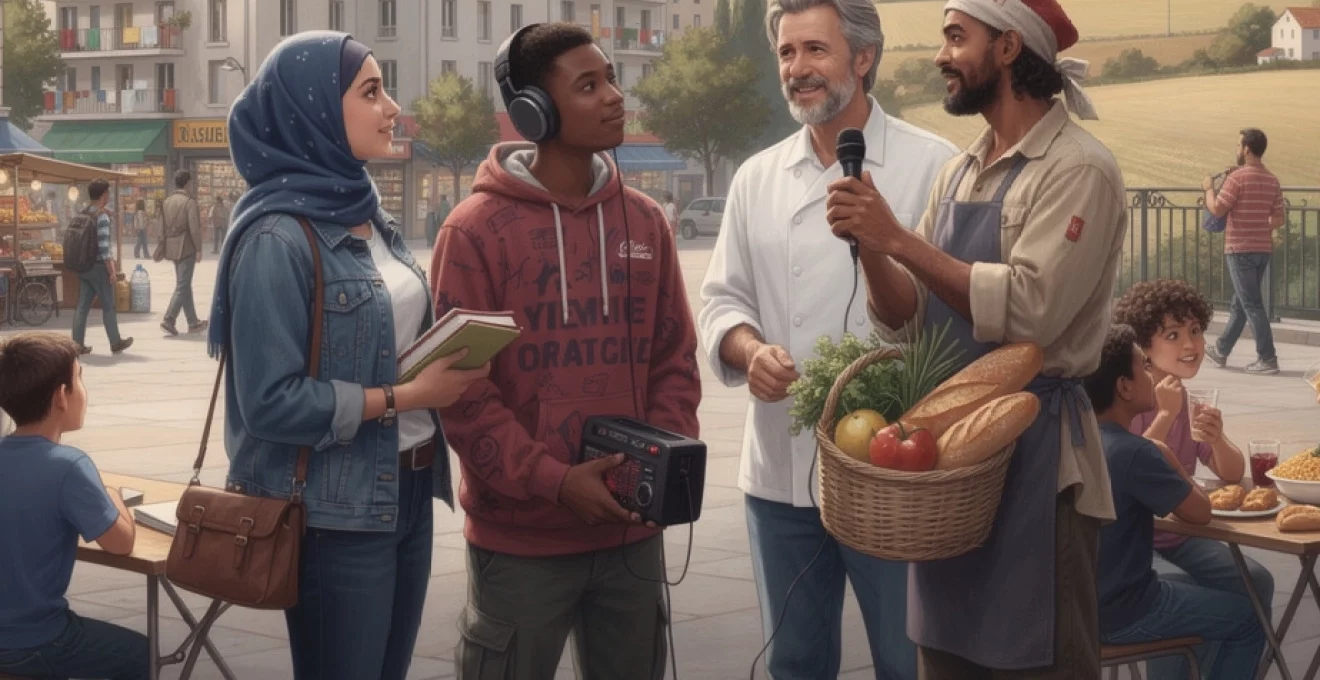
France stands at a cultural crossroads where traditional republican values intersect with an increasingly diverse society shaped by decades of immigration and globalisation. The nation’s historical commitment to laïcité and assimilationist policies faces unprecedented challenges as multicultural communities assert their distinct identities whilst maintaining French citizenship. This transformation extends beyond demographics, fundamentally reshaping artistic expression, political discourse, and social cohesion across metropolitan and suburban landscapes.
The emergence of what Jean-Luc Mélenchon terms “creolisation” represents more than a political strategy—it signals a profound reimagining of what it means to be French in the 21st century. As ethnic minorities gain visibility in public spheres previously dominated by traditional French elites, the republican model’s emphasis on cultural uniformity confronts new forms of hybrid identity that refuse easy categorisation. This cultural evolution manifests in everything from beur literature to Franco-Algerian cinema, creating artistic movements that challenge established boundaries whilst enriching France’s cultural landscape.
Historical foundations of french republican assimilationism and laïcité principles
The philosophical underpinnings of modern French identity trace back to the revolutionary principles of 1789, when the newly formed Republic established universalism as a cornerstone of citizenship. The famous declaration of Stanislas de Clermont-Tonnerre—”To the Jews as a nation, nothing; to the Jews as individuals, everything”—established the framework for individual rather than group-based rights that continues to influence contemporary integration policies. This approach fundamentally rejected the notion of distinct ethnic or religious communities within the French nation, instead promoting a vision of citizenship based on shared republican values.
The evolution of laïcité from its original conception as state neutrality toward religion to its contemporary interpretation as active secularism represents a significant shift in French republican ideology. The principle initially emerged to protect religious freedom by ensuring state institutions remained neutral, but modern applications often emphasise the suppression of visible religious expression in public spaces. This transformation reflects broader anxieties about national cohesion and the perceived threat of multiculturalism to traditional French identity.
Third republic’s integration policies and the jules ferry educational framework
The Third Republic’s educational reforms under Jules Ferry established the foundation for France’s assimilationist approach to cultural diversity. Ferry’s vision of universal, secular education aimed to transform regional populations with distinct languages and customs into unified French citizens. The systematic eradication of regional dialects such as Breton, Occitan, and Alsatian through mandatory French-language instruction created a template for later integration policies targeting immigrant communities.
This educational framework treated cultural difference as an obstacle to national unity rather than a source of enrichment. Teachers actively discouraged the use of regional languages, viewing them as impediments to social mobility and national cohesion. The success of this linguistic standardisation provided a model that French policymakers would later apply to immigrant populations, particularly those from former colonies who arrived with their own languages and cultural traditions.
Post-colonial migration patterns from maghreb and Sub-Saharan africa since 1960
The end of French colonial rule in Algeria, Morocco, Tunisia, and West African territories fundamentally altered the demographic composition of metropolitan France. Between 1960 and 1980, approximately 1.2 million North African immigrants settled in France, initially as temporary workers but increasingly as permanent residents through family reunification policies. This migration wave introduced Islamic cultural practices and Arabic languages into French urban environments, creating the first significant non-European minority communities in modern France.
Subsequent waves of migration from Sub-Saharan Africa, particularly Mali, Senegal, and Ivory Coast, added further complexity to France’s multicultural landscape. By 2020, an estimated 6.8 million French residents had immediate foreign origins, with 3.3 million tracing their ancestry to former French colonies. These populations concentrated in specific urban areas, creating distinct cultural enclaves that maintained connections to their countries of origin whilst adapting to French social norms.
Secularisation doctrine under the 1905 law of separation of church and state
The 1905 law establishing the separation of church and state initially targeted the Catholic Church’s influence over French society and education. This legislation created the legal framework
for a distinctive interpretation of laïcité that was later extended to new religious minorities, particularly Muslims. While the law was designed to guarantee freedom of conscience and equal treatment by limiting institutional religious power, its contemporary enforcement often focuses on visible symbols of Islam, such as headscarves, burkinis, or more recently the abaya. This shift from neutral arbiter to active regulator of religious visibility has made laïcité a central fault line in debates over multiculturalism and modern French identity.
In the postcolonial period, laïcité has taken on a “catho-laïque” character, blending historically Catholic cultural norms with militant secularism. Public holidays still follow the Christian calendar, churches remain prominent in town centres, and many cultural references are implicitly Christian, even as the state insists it is neutral. For many French Muslims, this asymmetry fuels perceptions that the secularism doctrine, while universalist in principle, is applied in a way that marginalises their religious practices and marks them as perpetually “other” within the national community.
Jacobin centralisation model versus regional cultural autonomy movements
The Jacobin tradition of strong centralisation has long defined the French state’s approach to territory, language, and culture. From the late 19th century onwards, Paris was not only the political capital but also the normative centre of what it meant to be French. Regional identities in Brittany, Corsica, Alsace, or Occitania were often treated as relics to be overcome through unified institutions, a single school curriculum, and a standardised national language. This centralising model underpinned the belief that a cohesive French identity required the dilution of regional particularisms.
Yet throughout the 20th century, regional autonomy movements challenged this homogenising project. Campaigns for the recognition of Breton, Corsican, Basque, and Occitan languages, alongside demands for cultural and sometimes political autonomy, exposed the limits of Jacobin universalism. While France has granted some concessions—such as support for regional languages in media and schooling—resistance remains strong, as illustrated by the Senate’s 2015 rejection of the European Charter for Regional and Minority Languages. These struggles set an important precedent: if regional cultures within the hexagon itself push back against centralisation, it is hardly surprising that postcolonial and migrant communities do the same.
The tension between centralisation and autonomy has direct implications for multiculturalism in modern France. Postcolonial communities, like regional minorities before them, often ask not for separatism but for recognition of their histories, languages, and religious practices within the broader republican framework. As debates evolve, we can see a gradual, if uneven, shift from a monolithic model of French identity to one where multiple, overlapping loyalties—local, regional, postcolonial, European—coexist, even if the legal framework remains resolutely universalist.
Contemporary demographic transformation through immigration waves and settlement patterns
Since the 1960s, successive immigration waves have transformed France from a largely homogeneous society into a complex mosaic of cultures, religions, and ethnic backgrounds. Today, around 10% of the population is foreign-born, and roughly a quarter of residents have at least one foreign parent or grandparent. This demographic shift has been most visible in major metropolitan areas and banlieues, where new forms of cultural mixing, social stratification, and political mobilisation are emerging. Understanding these spatial patterns is essential if we want to grasp how multiculturalism is redefining modern French identity in practice rather than just in theory.
Banlieues urbaines development in Seine-Saint-Denis and Val-de-Marne départements
The northern and eastern suburbs of Paris, especially in Seine-Saint-Denis and parts of Val-de-Marne, have become emblematic of both France’s multicultural vibrancy and its inequalities. Initially developed in the postwar era to house industrial workers and baby-boom families, these large housing estates later became key arrival points for migrants from the Maghreb, Sub-Saharan Africa, and beyond. Over time, processes of white flight and deindustrialisation left many banlieues with high unemployment, underfunded public services, and concentrated poverty.
Yet these same suburbs are among the most culturally diverse spaces in Europe. Walk through markets in Saint-Denis or La Courneuve and you will hear Arabic, Wolof, Lingala, Portuguese, and French intermingling over stalls selling halal meat, African fabrics, and North African pastries. This coexistence of cultures has generated new forms of urban identity that are neither simply “immigrant” nor traditionally “French”, but something in between. At the same time, recurring media portrayals of these areas as zones of insecurity or radicalisation fuel stigma, making it harder for residents to claim full belonging in the national narrative.
For policymakers, the challenge lies in seeing Seine-Saint-Denis and similar areas not merely as “problem neighbourhoods” but as laboratories of modern French multiculturalism. When we look past sensational headlines, we find dense networks of associations, youth groups, women’s collectives, and cultural initiatives that work daily to improve social cohesion. Supporting these grassroots actors, rather than relying solely on top-down “urban renewal” projects, is one concrete way to harness the potential of these diverse suburbs and counter the narrative of exclusion.
Second and third-generation maghrebi communities in marseille and lyon metropolitan areas
Marseille and Lyon offer contrasting but complementary examples of how second and third-generation Maghrebi communities are reshaping French urban life. In Marseille, long-standing ties to North Africa—rooted in colonial-era trade and migration—have produced a city where French, Mediterranean, and Maghrebi identities are deeply intertwined. Districts like Noailles or the Panier host halal butchers alongside traditional boulangeries, while Ramadan lights and Christmas decorations can coexist along the same streets. Many residents identify as both fully Marseillais and proudly Algerian- or Moroccan-origin, complicating any simple assimilation narrative.
Lyon, a more industrial and historically less cosmopolitan city, has experienced a different trajectory. Here, the children and grandchildren of Maghrebi workers who once staffed factories in Vaulx-en-Velin or Vénissieux are increasingly entering universities, creative industries, and local politics. Their social mobility, however, remains uneven, with persistent discrimination in housing and employment. This generational shift highlights a central question: can republican universalism adapt to include hyphenated identities—Franco-Algerian, Franco-Moroccan—without perceiving them as threats?
In both metropolitan areas, second and third-generation youth are at the forefront of cultural and political innovation. They launch podcasts on everyday racism, create fashion brands blending streetwear with North African motifs, and form civic collectives to challenge police profiling. For readers interested in the future of French multiculturalism, watching how these urban generations negotiate identity, faith, and citizenship offers valuable insight into where the country may be heading.
West african diaspora networks in château rouge and goutte d’or districts
In Paris, the neighbourhoods of Château Rouge and Goutte d’Or have become key hubs of the West African diaspora, particularly for communities from Senegal, Mali, Guinea, and Ivory Coast. These districts, located in and around the 18th arrondissement, are often described as “little Africas” due to their dense networks of hair salons, textile shops, specialty grocery stores, and informal money-transfer services. Far from being isolated enclaves, they function as transnational nodes linking Paris to multiple African cities through remittances, trade, and cultural exchange.
These diaspora networks illustrate how multiculturalism in France is not just about coexistence within national borders but also about ongoing connections beyond them. Religious life, for instance, revolves around mosques and Sufi brotherhoods that organise events spanning Dakar, Bamako, and Paris. At the same time, many residents navigate French administrative systems, public schools, and labour markets, living in what we might call “double anchorage”—rooted both in their neighbourhood and in wider West African circuits. This layered belonging complicates older republican expectations that migrants should sever external ties in order to fully assimilate.
Château Rouge and Goutte d’Or also highlight how contested urban spaces can become symbols in national debates about French identity. Periodic police operations targeting informal street vendors, or media stories about “ghettoisation”, often ignore the everyday solidarity, entrepreneurship, and cultural creativity that sustain these communities. Recognising these districts as engines of economic and cultural life, rather than as mere security problems, is crucial if we want a more accurate picture of how modern French identity is being redefined from below.
Eastern european labour migration impact on rural french communities
While public attention often focuses on multiculturalism in major cities, recent waves of Eastern European labour migration have begun to reshape rural and small-town France. Workers from Romania, Poland, and Bulgaria contribute significantly to agriculture, construction, and eldercare sectors, especially in regions facing demographic decline. Vineyards in the Loire, farms in Brittany, and building sites in Auvergne increasingly rely on seasonal or semi-permanent Eastern European labour, bringing new languages and customs into traditionally homogenous villages.
This development complicates the common association of multiculturalism with urban banlieues. In many rural areas, the arrival of Slavic-speaking workers has sparked both curiosity and anxiety. On the one hand, some local employers and mayors welcome the revitalisation of shrinking communities and the filling of labour shortages. On the other, stereotypes about “cheap labour” or “unfair competition” sometimes fuel tensions, echoing earlier episodes of hostility towards Italian or Polish migrants in the early 20th century. Here again, we see how fears around economic insecurity can be redirected into cultural or ethnic suspicion.
For rural France, the challenge is to move beyond a narrative of temporary, invisible workers towards a more inclusive understanding of shared futures. Practical steps—such as supporting language exchanges, local cultural events, or joint parents’ associations at village schools—can foster everyday contact and reduce mutual mistrust. When we realise that many of the values rural French residents cherish—family, community, religious traditions—are also central for their Eastern European neighbours, space opens up for a more nuanced and constructive conversation about identity.
Cultural hybridisation phenomena in french artistic and literary expression
As demographic realities have shifted, French artistic and literary expression has become a laboratory for cultural hybridisation. Writers, filmmakers, musicians, and chefs with roots in North Africa, West Africa, the Caribbean, and Eastern Europe are weaving their experiences into works that challenge rigid notions of Frenchness. Rather than simply “adding” minority cultures to a pre-existing national canon, these creators are transforming the canon itself, much as new ingredients can subtly alter a classic recipe without erasing its original character.
Beur literature movement through mehdi charef and faïza guène literary works
The rise of beur literature in the 1980s and 1990s marked a turning point in how children of North African immigrants narrated their place in French society. Authors such as Mehdi Charef, with his seminal novel Le Thé au harem d’Archi Ahmed, depicted life in the banlieues from an insider perspective, blending street slang, Arabic expressions, and standard French. These early works exposed the gap between republican promises of equality and the lived reality of discrimination, unemployment, and police harassment, while also capturing humour, friendship, and resilience.
In the 2000s, writers like Faïza Guène brought beur literature to a broader audience. Her debut novel, Kiffe kiffe demain, narrated by a teenage girl of Moroccan descent, uses a lively, colloquial voice to explore themes of identity, class, and gender in a Paris suburb. Readers encounter a protagonist who is simultaneously French, Maghrebi, working-class, and adolescent—an identity cocktail that defies simple categorisation. Through such narratives, beur literature invites us to see multiculturalism not as an external challenge to French identity, but as a lived experience at the heart of contemporary France.
For those interested in how multiculturalism is redefining modern French identity, engaging with beur literature is particularly instructive. These works function almost like sociological case studies in fiction form, illustrating how universal themes—love, injustice, hope—are refracted through specific cultural lenses. They also challenge the old assumption that French literature speaks with a single voice, instead revealing a polyphony of accents, histories, and perspectives.
Franco-algerian cinema renaissance via rachid bouchareb and abdellatif kechiche
Franco-Algerian cinema has played a crucial role in re-examining France’s colonial past and its postcolonial present. Directors like Rachid Bouchareb and Abdellatif Kechiche use film to explore complex identities and contested memories that official narratives have often downplayed or ignored. Bouchareb’s Indigènes (Days of Glory) brought overdue attention to North African soldiers who fought for France during World War II, highlighting both their sacrifice and the discrimination they faced. By putting these forgotten protagonists at the centre of the story, the film invited audiences to rethink who belongs in the pantheon of French heroes.
Kechiche’s work, from L’Esquive to La Graine et le Mulet, similarly focuses on characters of immigrant background navigating love, work, and family in contemporary France. His films are often shot in a quasi-documentary style, with overlapping dialogues and long takes that capture the texture of everyday life. Viewers encounter a France where Arabic and French coexist, where couscous is as much a Sunday ritual as pot-au-feu, and where questions about class and gender intersect with questions about ethnicity and religion.
These cinematic narratives serve as powerful vehicles for a more inclusive national memory. They suggest that to understand modern French identity, we must account not only for Versailles, the Revolution, and Gaullism, but also for the Algerian War, decolonisation, and the ongoing experiences of postcolonial citizens. In this way, Franco-Algerian cinema contributes to a broader project of “decentring” French history without abandoning it—much like turning a painting to reveal details that were always there but went unnoticed.
Hip-hop culture emergence in french rap through MC solaar and IAM collective
Hip-hop culture, and French rap in particular, has become one of the most influential arenas where multicultural France speaks back to the centre. Pioneering artists like MC Solaar and the Marseille collective IAM blended American hip-hop beats with French lyrics, North African references, and philosophical allusions. MC Solaar’s early tracks, for instance, mix wordplay worthy of classic chanson with reflections on racism, social exclusion, and the search for identity, making them accessible both to mainstream audiences and to youth in the banlieues.
IAM’s albums, such as L’École du micro d’argent, introduced millions of listeners to narratives rooted in Marseille’s multicultural streets, peppered with Egyptian mythology, comic book imagery, and critiques of police violence. Over time, French rap evolved into a dominant cultural voice for second and third-generation immigrants, offering a platform to address everyday discrimination, unemployment, and the contradictions of republican universalism. For many young people, these songs became a kind of alternative civics education, raising questions such as: What does equality mean when you are stopped by the police more often than your peers? Where do you belong when your passport says you are French but society treats you as foreign?
Today, the diversity of French rap—from conscious lyricists to trap-influenced stars—illustrates the depth and breadth of multicultural expression. It also shows how cultural production can reshape perceptions: phrases, styles, and slang originating in multiethnic suburbs have entered mainstream French language and advertising. In that sense, hip-hop has not only documented the rise of multicultural France; it has actively participated in redefining what mainstream French culture looks and sounds like.
Culinary fusion practices in french gastronomy and halal market integration
French gastronomy, long seen as a bastion of national pride, has not been immune to the forces of multicultural hybridisation. Over the past three decades, dishes originating in former colonies—couscous, tajine, mafé, yassa—have moved from community eateries into mainstream restaurant menus and even home cooking shows. Chefs of North African and West African descent increasingly appear on culinary programmes, presenting fusion recipes that combine traditional French techniques with spices, ingredients, and cooking methods from their heritage cuisines.
The growth of the halal food market further illustrates how multicultural practices are reshaping everyday French life. Estimates suggest that the halal sector now represents several billion euros annually, spanning butchers, supermarkets, fast-food chains, and fine dining. For many Muslim consumers, halal products allow them to reconcile religious observance with participation in broader consumer culture, from grabbing a quick burger to buying frozen meals. At the same time, debates around the labelling, regulation, and visibility of halal food have become proxy battles over the public legitimacy of Islamic practices in secular France.
Seen positively, these culinary developments demonstrate that identity can be negotiable and shared, much like a table where new dishes are added without removing the old ones. When a traditional bistrot in Lyon adds a vegetarian couscous to its menu, or when a Parisian bakery offers date-filled pastries alongside croissants, we witness multiculturalism in tangible, everyday form. For readers wondering how to foster greater inclusion, something as simple as supporting local restaurants that experiment with such fusion can be a small but meaningful step toward normalising diversity as part of French identity.
Political integration challenges within republican institutional framework
Despite these rich cultural exchanges, political integration has lagged behind. The republican institutional framework, built on the premise of colour-blind universalism, has struggled to account for the structural inequalities that disproportionately affect racialised minorities. France does not officially recognise ethnic categories in law, nor does it collect detailed racial statistics, making it difficult to measure discrimination or design targeted policies. As a result, issues such as employment bias, housing segregation, and police profiling are often framed as isolated problems rather than symptoms of systemic exclusion.
Representation in political institutions remains a key challenge. Although there have been notable breakthroughs—such as the election of MPs from banlieue backgrounds and increased visibility of racialised mayors—ethnic minorities are still significantly under-represented in the National Assembly, Senate, and senior civil service. This imbalance fuels a perception among many citizens of immigrant descent that republican universalism works better in theory than in practice. When you rarely see people who look like you in positions of power, it becomes harder to believe that the system truly offers equal opportunities.
Recent debates over the headscarf, abaya bans in schools, and restrictions on religious symbols in sports have further exposed tensions between institutional secularism and lived multiculturalism. Parties like La France insoumise have tried to reframe the conversation by criticising what they see as a selective application of laïcité that targets Muslims in particular, while promoting the idea of “creolisation” as a more dynamic understanding of French identity. Yet this strategy also faces pushback, including accusations of “communitarianism” and fears of fragmenting the Republic. Navigating this delicate balance between universal principles and recognition of concrete inequalities is one of the central political tasks for France in the coming decades.
Language policy evolution and multilingual identity formation dynamics
Language has always been a core component of French identity, from the Revolution’s standardisation efforts to the defence of French against Anglicisms today. Officially, the state still recognises only one language for the Republic—French—despite the presence of numerous regional and immigrant tongues. This monolingual ideal sits uneasily with the reality of classrooms and neighbourhoods where children switch effortlessly between French, Arabic, Berber, Portuguese, Turkish, or Lingala in their daily interactions. How can identity remain tied to a single language when actual speech practices are increasingly plural?
While there have been limited initiatives to support regional languages and heritage language classes (often through bilateral agreements with countries of origin), France still resists a truly multicultural language policy. Bilingual education in immigrant languages remains rare and is sometimes portrayed as a barrier to integration rather than an asset. Yet research in sociolinguistics suggests that valuing children’s home languages can enhance self-esteem and academic performance, reinforcing rather than undermining their mastery of French. In a globalised world, multilingualism is less a threat than a resource, both culturally and economically.
At the same time, young people are inventing new linguistic codes that reflect their hybrid identities. Verlan, street slang, and code-switching between French and other languages create expressive styles that circulate through music, social media, and everyday conversation. These practices challenge the traditional hierarchy that places “good French” at the top and all other forms of speech below. They also signal a shift from viewing French identity as tied to a single, standardised idiom toward a more flexible understanding where multiple linguistic repertoires can coexist within the same person.
For educators and policymakers, embracing these multilingual dynamics does not mean abandoning French as a common language. Rather, it involves recognising that many citizens now inhabit more than one linguistic world and that this plurality need not undermine cohesion. Practical steps could include training teachers in intercultural communication, expanding heritage language programmes, and valuing translation and interpreting skills as core competencies. When we treat multilingualism as a bridge rather than a barrier, we move closer to a model of French identity that is both inclusive and robust.
Socioeconomic stratification effects on multicultural community cohesion metrics
Finally, any discussion of multiculturalism in France must grapple with the role of socioeconomic stratification. Ethnic and religious diversity often intersects with class divisions, producing a situation where many racialised minorities are over-represented in low-income neighbourhoods, precarious jobs, and underfunded schools. This overlap can create the illusion that cultural difference is the root cause of social problems, when in fact structural inequalities play a decisive role. If we focus only on religious symbols or cultural practices, we risk overlooking the more material drivers of exclusion—unemployment, lack of affordable housing, limited public transport—that affect both minorities and disadvantaged majority populations.
Social scientists who study community cohesion in France point to several key indicators: trust in institutions, feelings of belonging, intergroup contact, and perceptions of discrimination. Surveys often show that young people of immigrant descent strongly identify as French, even while reporting higher levels of perceived racism and lower trust in the police or justice system. This combination—strong attachment to the nation but ambivalent attitudes toward its institutions—suggests that the problem lies not in multicultural identities themselves but in the unequal treatment these identities encounter.
Policy responses have oscillated between area-based approaches, such as designating “priority neighbourhoods” for extra funding, and universal measures aimed at poverty reduction and education. While both are necessary, neither will succeed without a frank reckoning with how race, religion, and origin shape life chances in practice. Investing in public services, supporting local associations, and enforcing anti-discrimination laws are not just social policies; they are tools for building a more cohesive and genuinely universal republic.
Ultimately, the question is not whether multiculturalism will redefine modern French identity—it already has. The real issue is whether institutions, laws, and public narratives will evolve to reflect this lived reality. If France can move from a defensive posture, worried about fragmentation, to a proactive embrace of its internal diversity, it may yet fulfil its universalist ideals in more concrete and inclusive ways than ever before.