# How has France preserved its rich culinary tradition?
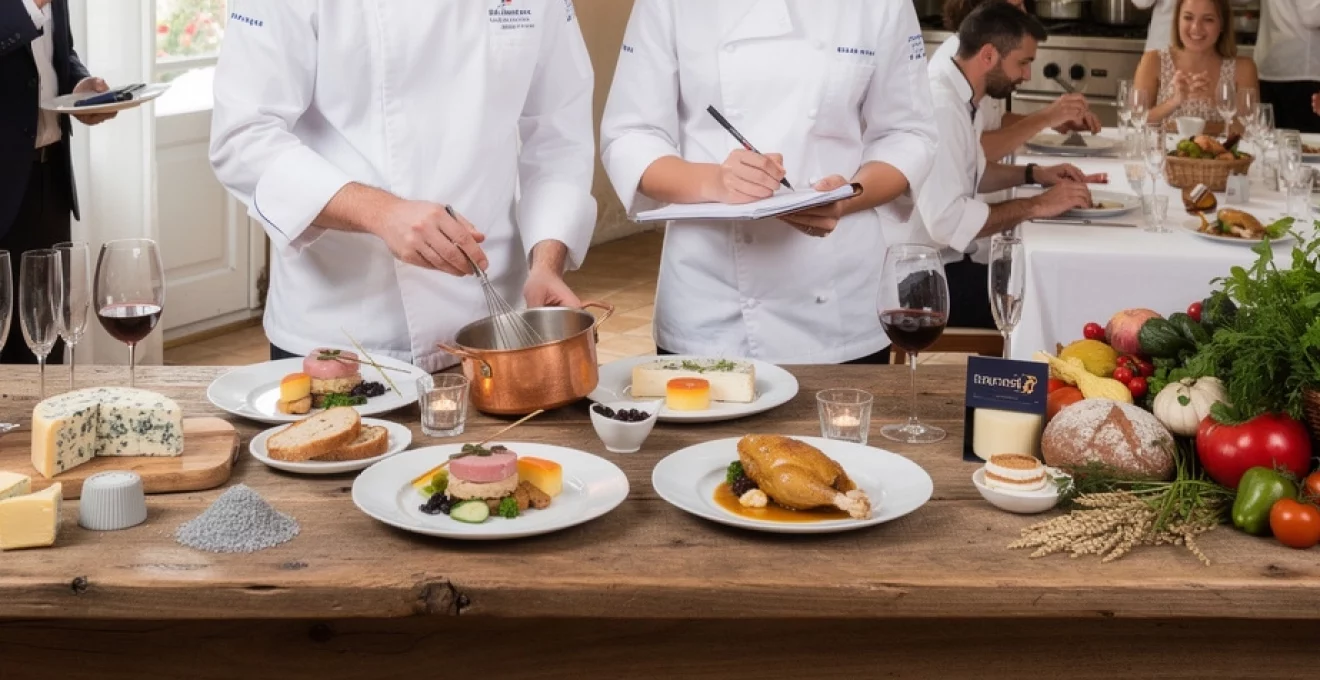
France’s culinary heritage stands as one of the most carefully protected cultural treasures in the world. Unlike many nations where traditional foodways have gradually eroded under the pressures of industrialisation and globalisation, France has implemented a comprehensive system of protections, regulations, and cultural initiatives that ensure its gastronomic traditions remain vibrant and authentic. From the rolling vineyards of Champagne to the bustling markets of Provence, French food culture continues to thrive because of deliberate, systematic preservation efforts that span legal frameworks, educational institutions, and grassroots movements.
The preservation of French culinary tradition isn’t merely nostalgic sentimentality—it represents a sophisticated understanding that food serves as a living connection between land, history, and identity. Through regulatory bodies, quality certifications, educational programmes, and cultural diplomacy, France has created an ecosystem where traditional techniques, regional specialities, and artisanal practices can coexist with modern innovation. This multifaceted approach has transformed French gastronomy into both a protected heritage and a dynamic, evolving art form that commands global respect.
The appellation d’origine contrôlée (AOC) system and geographical indication protection
At the heart of France’s culinary preservation strategy lies the Appellation d’Origine Contrôlée system, a rigorous framework that protects products based on their geographical origin and traditional production methods. Established in the 1930s initially to combat wine fraud, the AOC system has expanded to encompass cheese, butter, poultry, vegetables, and even specific types of hay. This legal protection ensures that only products genuinely produced in designated regions using traditional methods can bear prestigious names like Champagne, Roquefort, or Bresse chicken.
The AOC operates on the principle of terroir—an untranslatable French concept that encompasses the unique combination of soil, climate, topography, and human expertise that gives products their distinctive character. When you purchase AOC-certified Camembert, you’re not simply buying cheese; you’re obtaining a product that embodies centuries of cheesemaking knowledge specific to Normandy’s pastures and climate. This connection between place and product creates economic value for rural communities whilst preserving biodiversity and traditional agricultural practices that might otherwise disappear.
Today, approximately one in three French farms produces at least one AOC-designated product, demonstrating how deeply this system penetrates French agriculture. The economic impact extends beyond premium pricing—these protections enable small-scale producers to compete against industrial operations by offering authenticity and quality that cannot be replicated elsewhere. For consumers, the AOC seal provides assurance of both origin and adherence to time-honoured production standards.
Institut national de l’origine et de la qualité (INAO) regulatory framework
The Institut National de l’Origine et de la Qualité serves as the governmental body responsible for awarding and overseeing AOC designations, along with other protective labels such as the Indication Géographique Protégée (IGP). With approximately 1,200 protected French products under its purview, INAO functions as the guardian of France’s culinary heritage, establishing strict criteria that producers must meet to receive and maintain certification.
INAO’s regulatory framework extends far beyond simply verifying geographical origin. The organisation examines production methods, ingredient sources, ageing processes, and even seasonal considerations. For Roquefort cheese, for instance, INAO mandates that the cheese must be aged in the natural Combalou caves of Roquefort-sur-Soulzon, where specific humidity and temperature conditions fostered by unique air currents create the cheese’s characteristic blue veining. Such exacting standards ensure that protected products maintain their distinctive qualities generation after generation.
Importantly, INAO operates transparently, with production specifications publicly available. This openness prevents established producers from monopolising appellations whilst ensuring anyone willing to meet the criteria can participate. The system thus balances accessibility with quality maintenance, creating what amounts to shared intellectual property that belongs to a region rather than a corporation. This democratic approach to culinary heritage protection distinguishes the French model from trademark-based systems used elsewhere.
Champagne, roquefort
Champagne, roquefort, and bresse chicken: protected designation success stories
Few examples illustrate the power of geographical indication protection as clearly as Champagne, Roquefort, and Bresse chicken. Each of these products has become a global symbol not only of French cuisine, but of how law, terroir, and craftsmanship can work together to preserve authenticity. Their stories show how France has transformed local specialities into world-renowned benchmarks without sacrificing traditional methods.
Champagne is perhaps the most famous case. Only sparkling wines produced in the defined Champagne region, using authorised grape varieties and traditional méthode champenoise (including secondary fermentation in the bottle and minimum ageing periods), can legally bear the name. This strict framework has shielded local growers from unfair competition and ensured that when you open a bottle labelled Champagne, you are accessing a centuries-old craft rather than an industrial imitation.
Roquefort cheese offers a parallel success in the realm of AOC cheese. Protected since 1925, true Roquefort must be made from raw ewe’s milk and matured in the natural caves of Combalou, where naturally occurring Penicillium roqueforti moulds thrive. The caves’ unique microclimate cannot be replicated, which means Roquefort’s intense flavour and crumbly texture remain inextricably tied to place. Similarly, Bresse chicken (poulet de Bresse)—the only poultry with AOC status—must be raised under specific free-range conditions, with defined feed and slaughter ages, within the Bresse region. Its distinctive blue legs and exceptional flavour demonstrate how rigorous standards can elevate what might otherwise be a commodity into a protected culinary treasure.
Cahier des charges: strict production specifications for traditional products
Behind every AOC or AOP label stands a detailed cahier des charges, the official production rulebook that defines what makes a product genuinely traditional. This document acts almost like a culinary constitution, setting out everything from permitted raw materials and animal breeds to ageing periods, fermentation methods, and even packaging requirements. Far from being mere bureaucracy, the cahier des charges is where historical know-how is codified into enforceable standards.
For producers, adhering to a cahier des charges can be demanding. A cheesemaker seeking AOP recognition for Comté, for instance, must respect rules about the Montbéliarde or French Simmental cows’ diet, the distance between farm and dairy, and copper vat usage for curdling. These obligations can limit short-term cost-cutting, but they protect long-term value by maintaining distinctive sensory profiles and safeguarding rural employment. As consumers increasingly ask how food is produced, this transparent specification becomes a powerful tool for building trust.
From a preservation standpoint, the cahier des charges prevents the erosion of traditional techniques under economic pressure. It ensures that a product cannot gradually drift away from its roots while still exploiting a prestigious name on the label. You might think of it as an anchor: while innovation is possible within certain bounds, the core identity of the product remains fixed, protecting both culinary heritage and consumer expectations.
Label rouge certification and its role in quality assurance
Alongside AOC and AOP, France has developed complementary quality marks, the most significant of which is Label Rouge. Introduced in the 1960s, Label Rouge certifies products that demonstrate “superior quality” compared with standard equivalents on the market. While AOC is about origin and tradition, Label Rouge focuses on measurable improvements in taste, animal welfare, and production conditions. Many free-range poultry, pork, and even fruits and vegetables carry this distinction.
To obtain Label Rouge status, producers must meet stringent criteria validated by independent taste panels and regular audits. For example, Label Rouge chickens must be raised with low stocking densities, have access to outdoor runs, and follow slower-growing rearing methods that prioritise flavour over rapid weight gain. This slows down production and increases costs, but it delivers a product that consumers can identify as more flavourful and ethically produced—a crucial factor in preserving quality-focused French gastronomy in a globalised food system.
In practice, Label Rouge creates an incentive structure where doing things “the old-fashioned way” remains economically viable. It reassures consumers who may not be experts in French terroir that they are buying something above the industrial norm. When combined with AOC/AOP and IGP labels, it forms part of a layered system of protections that helps France maintain not only traditional recipes, but also the craftsmanship and agricultural practices that make those recipes meaningful.
UNESCO intangible cultural heritage recognition and the french gastronomic meal
Legal frameworks alone cannot capture everything that makes French cuisine unique. Recognising this, France pursued an additional form of protection that goes beyond specific products: safeguarding the very way meals are structured and shared. In 2010, UNESCO inscribed the “gastronomic meal of the French” on its Representative List of the Intangible Cultural Heritage of Humanity, acknowledging that what France seeks to preserve is not just recipes, but a whole social ritual around eating.
This inscription reframed French gastronomy as a living cultural practice rather than a static museum piece. It emphasised the role of commensality—the act of eating together—the aesthetics of table setting, the pacing of courses, and the interplay between food and conversation. In other words, France successfully argued that its national culinary identity lies as much in how people gather and celebrate as in the dishes themselves.
2010 UNESCO inscription: codifying ritualised social practice
The UNESCO recognition describes the French gastronomic meal as a “customary social practice” used to mark important life events such as births, weddings, anniversaries, and reunions. What does this mean in practical terms? It means that the meal is seen as a coherent performance, with a beginning (aperitif), a carefully ordered sequence of dishes, attentive wine pairing, and a closing gesture like coffee or a digestif. Each element plays a role in structuring time, nurturing relationships, and expressing respect for guests.
By codifying this practice, France has effectively placed the everyday rituals of dining under cultural protection. This encourages families, schools, and institutions to consciously transmit these habits to younger generations, rather than letting them be eroded by fast food culture or rushed eating. It also provides a framework for public policy: school canteens, for example, are encouraged to maintain proper meal pacing and balanced menus, reflecting the broader philosophy of the gastronomic meal.
For visitors, understanding this inscription helps explain why meals in France can feel different even when the food appears simple. The attention to order, timing, and conviviality is not an accident; it is the product of centuries of refinement, now formally recognised as something worth safeguarding at an international level.
Commensality traditions: the structure of the Multi-Course french repas
Central to the French gastronomic meal is the structure of the multi-course repas. Traditionally, a formal meal might begin with an apéritif, followed by a starter, main course, cheese course, dessert, and coffee, with bread and wine accompanying much of the sequence. Of course, everyday meals are often simpler, but the underlying logic—progression from lighter to richer dishes, balance of textures, and contrast of flavours—remains remarkably consistent across contexts.
This structure isn’t just about formality; it is a tool for balance and moderation. Spreading pleasure across several smaller courses allows for variety without overindulgence, a point often cited in discussions of the so-called “French paradox.” The cheese course, for instance, is not just an excuse to showcase regional products; it marks a gentle transition from savoury to sweet, giving diners time to pause and converse. In this sense, the multi-course meal functions like a well-composed piece of music, with movements that build, climax, and resolve.
Maintaining these commensality traditions in a fast-paced world is not always easy. Yet, through family habits, restaurant culture, and institutional practices, France has largely resisted the fragmentation of the meal into solitary snacking. When you sit down to a structured repas, you are participating in a living ritual that connects you to centuries of French social history.
Wine pairing doctrine and the sommelier profession
Another pillar of the French gastronomic meal is the art of pairing wine with food. In France, wine is considered an integral part of the dining experience rather than an optional luxury. The goal is not simply to choose an expensive bottle, but to create harmony between the dish and the glass—the acidity of a Loire white cutting through goat’s cheese, or the tannins of a Bordeaux complementing grilled lamb. This “wine pairing doctrine” is a cultural skill, taught informally at home and formalised in the training of professional sommeliers.
The sommelier profession plays a key role in preserving this knowledge. Certified sommeliers undergo rigorous training in viticulture, oenology, regional appellations, and sensory analysis. Their expertise helps restaurants curate wine lists that reflect both classic French regions and emerging terroirs, giving small producers a platform and ensuring diners can explore pairings that respect tradition while embracing innovation. As climate change alters wine profiles, sommeliers also become interpreters of a changing terroir, guiding consumers through new expressions of familiar regions.
For you as a diner, this means that ordering wine in France often involves a conversation rather than a mere transaction. The sommelier’s recommendations are part of the broader choreography of the meal, reinforcing the idea that gastronomy here is about thoughtful curation rather than consumption alone. In preserving the sommelier’s role, France preserves a nuanced, evolving dialogue between land, producer, and table.
Culinary education infrastructure: from CAP to meilleur ouvrier de france
Behind every celebrated French dish stands a well-trained professional. One of the less visible but most powerful ways France preserves its culinary tradition is through its dense network of culinary schools, apprenticeships, and elite competitions. Rather than leaving transmission to chance, the country has built a formal educational ladder—from vocational certificates to the prestigious Meilleur Ouvrier de France title—that structures how techniques are learned, assessed, and passed on.
This infrastructure ensures that French cuisine is not only preserved in books but embodied in the hands of thousands of cooks, pastry chefs, bakers, and service professionals. It also provides clear career pathways, making gastronomy an attractive and respected profession for new generations. In an era when many countries struggle to recruit into hospitality, France’s system of diplomas and titles remains a cornerstone of its culinary resilience.
Le cordon bleu paris and institut paul bocuse training methodologies
Two institutions symbolise France’s global leadership in culinary education: Le Cordon Bleu Paris and the Institut Paul Bocuse in Lyon. Both schools attract international students eager to master classical techniques, from knife skills and sauce preparation to pastry fundamentals and restaurant management. Their curricula blend rigorous technical training with exposure to French culinary history, product knowledge, and contemporary trends like sustainability and nutrition.
Le Cordon Bleu, founded in 1895, is known for its codified approach to classic French cuisine. Students progress through structured levels, mastering foundational preparations before moving to advanced techniques and creative applications. The Institut Paul Bocuse, named after the chef who championed nouvelle cuisine, emphasises innovation alongside tradition, incorporating research, hospitality management, and international exchanges. Together, these schools act as powerful ambassadors for French gastronomy, sending graduates back to their home countries with skills and values rooted in the French canon.
For France, this international reach is a double benefit: it strengthens the domestic talent pool while spreading French culinary techniques worldwide. When you see a chef in Tokyo, New York, or São Paulo executing a perfect sauce hollandaise or laminating croissant dough with textbook precision, you are witnessing the long arm of French culinary pedagogy.
Certificat d’aptitude professionnelle (CAP) cuisine apprenticeship model
While elite schools grab headlines, the backbone of French culinary transmission is the Certificat d’Aptitude Professionnelle (CAP) system. The CAP Cuisine is a vocational diploma typically completed over two years, combining classroom instruction with on-the-job training in restaurants, bakeries, or pastry shops. This apprenticeship model mirrors medieval guild traditions, embedding learners in real kitchens where they absorb not only techniques, but also professional culture and discipline.
Students in CAP programmes study core skills such as stocks, sauces, butchery, hygiene, and menu planning, all aligned with national standards. At the same time, they contribute to service under the guidance of experienced chefs, learning to work under pressure and adapt to seasonal products. The system ensures that even neighbourhood bistros and school canteens benefit from staff with solid technical foundations, not just intuition or family recipes.
From a preservation perspective, CAP is crucial because it normalises excellence in everyday cooking. It means that traditional methods—from deboning a chicken for ballotine to preparing a classic pot-au-feu—are routinely practiced and evaluated, rather than becoming rarefied skills reserved for luxury establishments. In effect, the CAP keeps the DNA of French cuisine alive across the entire hospitality sector.
Compagnons du devoir: medieval guild system preserving artisanal techniques
Another pillar of transmission is the organisation known as the Compagnons du Devoir, a centuries-old guild system that trains artisans in trades including baking, pastry, and butchery. Apprentices, known as compagnons, undertake a multi-year journey across different regions and master workshops, honing their skills through hands-on practice and mentorship. This “tour de France” exposes them to regional variations and techniques that might never be encountered in a single school or workplace.
The Compagnons system places strong emphasis on ethics, humility, and the pride of well-executed work. Apprentices are encouraged to complete a “masterpiece”—a technically demanding project that showcases their mastery of form, flavour, and presentation. For a baker, this might be an intricate bread sculpture using multiple doughs; for a pastry chef, a complex entremets demonstrating advanced sugar and chocolate work. These exercises preserve not only recipes but the artistic dimension of French gastronomy.
In an age of industrial baking and mass-produced pastries, the Compagnons du Devoir act as guardians of savoir-faire that could otherwise vanish. Their graduates often become the artisans behind the independent boulangeries and pâtisseries that define everyday life in French towns, ensuring that authentic croissants, baguettes, and regional specialities remain accessible to the public.
Meilleur ouvrier de france (MOF) competition and master craftsman recognition
At the summit of this educational and professional pyramid stands the Meilleur Ouvrier de France (MOF) title, arguably the most prestigious artisan distinction in the country. Awarded in various crafts—from cuisine and pastry to cheese mongering and charcuterie—the MOF is not a competition in the usual sense, but a state-recognised diploma validating “exceptional professional proficiency.” Candidates undergo gruelling tests that can span months, culminating in highly technical and creative exams judged by peers and experts.
For chefs and artisans, earning the MOF tricolour collar is a career-defining achievement, signalling not only technical excellence but a commitment to transmitting knowledge. Many MOFs teach in schools, mentor apprentices, or lead brigades in top restaurants, multiplying their impact. The demanding nature of the exams also acts as a form of preservation: only those who can execute classic techniques to a near-perfect standard, while demonstrating innovation rooted in tradition, will succeed.
From the perspective of French culinary heritage, the MOF system serves as both an incentive and a quality filter. It encourages continuous learning and sets a visible benchmark for craftsmanship, making it clear that in France, gastronomy is not casual entertainment but a recognised art and profession.
Michelin guide influence and the guide gault et millau star system
If educational institutions train the talent, restaurant guides shape the public face of French gastronomy. Since the early 20th century, the Michelin Guide has acted as an unofficial arbiter of excellence, awarding one to three stars to establishments that demonstrate outstanding cuisine, service, and consistency. Its anonymous inspections and conservative standards have created a culture in which chefs constantly refine techniques, menus, and sourcing practices in pursuit of recognition.
Critics sometimes argue that the star system can encourage formality or excess, but its preservation role is undeniable. By rewarding kitchens that respect seasonal produce, precise execution, and coherent wine lists, Michelin reinforces core values of French cuisine. It also helps maintain a dense network of high-level restaurants not just in Paris, but across regions—from Brittany’s seafood temples to Lyon’s bouchons and Provençal country inns—ensuring that regional culinary identities remain economically viable.
Complementing Michelin, the Guide Gault et Millau introduced a more modern, sometimes more adventurous rating philosophy in the 1960s and 1970s. Using a 20-point scale and placing strong emphasis on creativity and flavour, Gault et Millau helped champion nouvelle cuisine and later generations of innovative chefs. This dual-guide ecosystem creates a healthy tension: Michelin anchors tradition, while Gault et Millau encourages evolution. Together, they help preserve French culinary heritage not as a fixed canon, but as a living dialogue between past and present.
Regional terroir preservation through slow food movement and conservatoires
While national labels and guides operate at the top, many of the most important preservation efforts unfold at the grassroots level. Across France, local producers, associations, and researchers work to protect regional terroirs, heirloom varieties, and artisanal methods that could easily be eclipsed by global supply chains. In this context, the Slow Food movement and various conservatoires (conservatories) play a crucial role in safeguarding biodiversity and culinary diversity.
These initiatives act like archives of taste, identifying endangered ingredients and traditional practices, then finding ways to keep them in active use rather than relegating them to museums. The goal is not to freeze rural life in time, but to ensure that the march of modernisation does not flatten the rich mosaic of local specialities that make French gastronomy so distinctive.
Ark of taste: safeguarding endangered indigenous ingredients
The international Slow Food Foundation’s Ark of Taste project catalogues endangered foods worldwide, and France is one of its most active contributors. Products such as the Barèges-Gavarnie lamb from the Pyrenees, the Niort angelica plant, or specific heritage apple and pear varieties have been added to the Ark as “passengers” whose continued existence depends on conscious support from farmers, chefs, and consumers. Inclusion on the Ark does not confer legal protection, but it raises awareness and often sparks local campaigns to revive production.
Why does this matter for French culinary tradition? Because many classic recipes were created around ingredients that industrial agriculture has sidelined in favour of standardised, high-yield varieties. When you lose a traditional bean, grain, or fruit, you risk losing the dishes and techniques associated with it. By mapping and promoting these products, the Ark of Taste functions as an insurance policy for gastronomic memory, encouraging us to seek out, cook, and eat foods that might otherwise vanish quietly.
For curious cooks and travellers, exploring Ark of Taste products can be a practical way to engage with preservation. Ordering a dish featuring a local heritage breed, or buying jam made from an almost-forgotten pear variety at a market, directly supports the farmers and artisans keeping these traditions alive.
Poitou-charentes butter and guérande salt: artisanal production methods
Some of France’s most emblematic ingredients survive thanks to the protection of artisanal methods in specific regions. Poitou-Charentes butter, for example, owes its reputation to high-quality local cream and traditional slow-churning processes that result in a rich, slightly tangy flavour prized by pastry chefs. Producers in the region have fought to defend these methods against industrial shortcuts, often combining AOC/IGP protection with cooperative structures that give farmers a fair share of added value.
Similarly, Guérande salt from the Atlantic coast is harvested using centuries-old techniques in shallow clay ponds, where seawater is channelled, evaporated by sun and wind, and finally raked by hand into grey sea salt or delicate fleur de sel. This labour-intensive process contrasts sharply with mechanised salt mining, but it preserves a landscape, a craft, and a distinctive mineral profile that chefs around the world now seek out. Buying Guérande salt is not just a seasoning choice; it is a vote for the survival of a coastal ecosystem and the knowledge of its paludiers (salt workers).
These examples illustrate a broader pattern: by valuing and paying for artisanal products, French consumers help ensure that traditional methods remain economically viable. In turn, these methods feed back into the culinary repertoire, enabling chefs and home cooks to work with ingredients whose flavours and textures embody centuries of local experience.
Conservatoire botanique national programmes for heirloom varieties
Beyond animal breeds and processed products, France also invests in the preservation of plant diversity through its network of Conservatoires Botaniques Nationaux. These institutions identify, catalogue, and protect wild and cultivated plant species, including many heirloom vegetables, fruits, and herbs that play vital roles in regional cuisines. They often collaborate with seed banks, farmers, and gardeners to reintroduce old varieties into cultivation.
For example, a conservatory might work with local producers to revive a nearly extinct variety of cabbage used in a specific regional potée (stew), or to safeguard an old melon variety once famous in royal courts. By maintaining genetic diversity, these programmes not only preserve culinary heritage but also strengthen resilience against pests, diseases, and climate change—issues that directly affect the future of French food.
From a diner’s perspective, you may never see the conservatory’s work directly, but you taste it every time you encounter a deeply flavoured tomato in a Provençal market or a distinctive pear in a Normandy tart. Behind those flavours lies an entire scientific and agricultural infrastructure quietly working to keep the palette of French cuisine as broad and vibrant as possible.
State-funded cultural transmission: ministry of agriculture and culinary diplomacy
Finally, France’s commitment to preserving its culinary tradition is supported by the state itself. Through the Ministry of Agriculture, the Ministry of Culture, and the Ministry for Europe and Foreign Affairs, public funds and policies reinforce what farmers, artisans, and educators are already doing on the ground. This might seem surprising—why would a government invest so heavily in food culture?—but in France, gastronomy is seen as both a strategic economic asset and a core component of national identity.
State involvement ranges from subsidies and training programmes for young farmers to international gastronomic festivals and chef exchanges. The goal is to ensure that French cuisine remains dynamic at home while projecting soft power abroad. In a sense, the French government treats gastronomy the way some countries treat film or fashion: as a creative industry that deserves structured, long-term support.
Goût de france festival: global culinary soft power strategy
One of the most visible examples of French culinary diplomacy is the annual Goût de France (Good France) festival. Coordinated by the Ministry for Europe and Foreign Affairs and renowned chefs, this event mobilises restaurants and French embassies in dozens of countries to serve French-inspired menus on the same day. The idea is simple yet powerful: to showcase the diversity and modernity of French cuisine, beyond clichés, while strengthening cultural ties and promoting tourism.
For participating chefs abroad, Goût de France offers an opportunity to explore French techniques and ingredients—often in collaboration with local producers—and to communicate the values of seasonality, balance, and conviviality associated with the French gastronomic meal. For France, it is a tool of soft power, reinforcing the perception of the country as a global benchmark in taste and lifestyle. In a world where national images are fiercely contested, such initiatives help keep French gastronomy at the centre of the conversation.
Events like Goût de France also create feedback loops. Diners discover dishes and wines they later seek out when visiting France, while foreign influences picked up by French chefs abroad gradually enrich the domestic culinary scene. Preservation, in this context, does not mean isolation; it means curating exchanges in ways that respect and highlight French foundations.
École Grégoire-Ferrandi and public vocational training investment
Within France, public investment in vocational training underpins the everyday reality of its food culture. Schools like École Grégoire-Ferrandi in Paris—often described as one of the “grandes écoles” of gastronomy—are supported by public or semi-public bodies and offer subsidised training in cuisine, pastry, bakery, and restaurant management. Their programmes align with national diplomas such as CAP, Brevet Professionnel, and Bachelor-level qualifications, ensuring consistency and quality.
Students at Ferrandi and similar institutions benefit from modern facilities, experienced faculty (including MOFs), and close links with industry partners ranging from traditional bistros to Michelin-starred restaurants. This ecosystem makes it possible for talented individuals from diverse backgrounds to access top-tier culinary education, rather than reserving such training for those who can afford private tuition. In turn, the hospitality sector benefits from a steady flow of well-prepared professionals capable of upholding and renewing French culinary standards.
By funding and structuring this network of public and semi-public culinary schools, the French state sends a clear message: cooking, baking, and service are not secondary trades but pillars of national culture and economic vitality. That recognition is itself a form of preservation, ensuring that gastronomy remains an attractive, respected career choice.
French culinary institute network in former colonial territories
France’s culinary preservation efforts also extend beyond its metropolitan borders, through a network of French culinary institutes and partnerships in former colonial territories and overseas departments. Establishments in places like Morocco, Vietnam, and the Caribbean—often linked to institutions such as the Alliance Française, French lycées, or French-branded culinary schools—offer training in French techniques alongside local cuisines. This creates a dialogue between traditions rather than a one-way imposition.
In cities like Casablanca, Ho Chi Minh City, or Pointe-à-Pitre, you may find chefs who have studied classical French sauces and pastry methods while also mastering local spices, produce, and cooking styles. The result is a hybrid gastronomy that honours French fundamentals—precision, respect for ingredients, structured menus—while reflecting local identities. These institutes thus act as cultural bridges, preserving the core of French culinary technique while allowing it to adapt and evolve in new contexts.
From a broader perspective, this global network reinforces France’s role as a reference point in gastronomy. At the same time, it challenges French cuisine to remain open and responsive, preventing preservation from hardening into rigidity. In this way, the country’s rich culinary tradition is not only safeguarded at home, but continually reinterpreted and revitalised around the world.