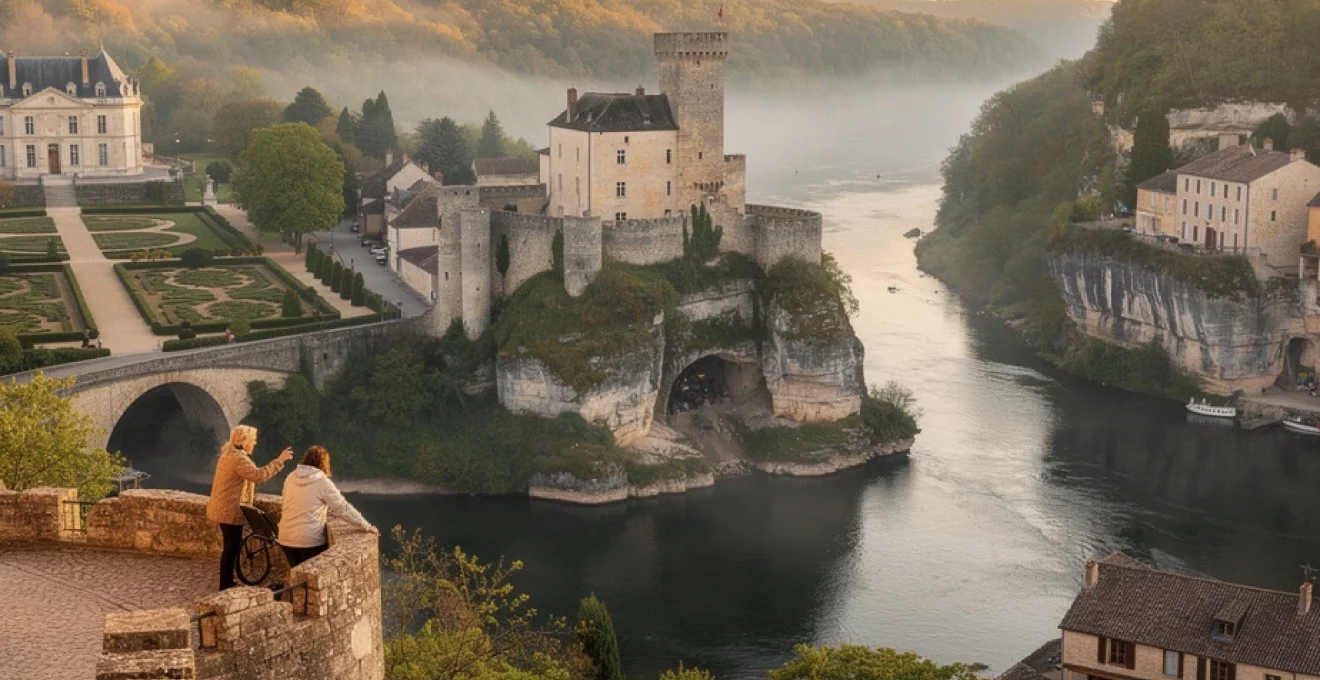
The Dordogne Valley represents one of France’s most captivating regions, where medieval history seamlessly blends with prehistoric heritage across a landscape of extraordinary beauty. Beyond the well-trodden tourist paths lies a treasure trove of villages perdus – hidden settlements that have preserved their authentic character through centuries of quiet existence. These remarkable communities offer visitors an intimate glimpse into French rural life, architectural mastery, and cultural traditions that remain largely undiscovered by mainstream tourism.
From clifftop bastides that once defended territorial boundaries to ancient cave networks housing humanity’s earliest artistic expressions, the Dordogne’s hidden villages present a mosaic of experiences. Each settlement tells its own story through stone facades, narrow cobblestone lanes, and timeless traditions that continue to thrive in the 21st century. The region’s strategic location between Atlantic influences and continental European culture has created a unique blend of architectural styles, culinary traditions, and historical significance that rewards the discerning traveller.
Medieval bastides and fortified settlements along the dordogne river basin
The Dordogne Valley’s strategic importance during medieval times resulted in the construction of numerous bastides – planned fortified towns designed to control trade routes and territorial boundaries. These architectural marvels represent some of Europe’s finest examples of medieval urban planning, combining defensive capabilities with commercial functionality in ways that continue to influence modern city design.
Domme’s 13th-century Cliff-Top strategic architecture
Perched majestically on limestone cliffs 150 metres above the Dordogne River, Domme exemplifies the perfect marriage of natural defences and human ingenuity. Founded in 1283 by Philip the Bold, this bastide showcases exceptional preservation of its original defensive walls, gates, and urban layout. The village’s Porte des Tours – a massive double-towered gateway – still bears graffiti carved by Knights Templar imprisoned here during the early 14th century.
The town’s elevated position provides commanding views across the valley, making it an ideal vantage point for understanding the region’s medieval military significance. Domme’s underground cave system, discovered beneath the central market square, adds another layer of historical intrigue. These natural limestone caverns served various purposes throughout history, from storage facilities to refuge points during times of conflict.
Castelnaud-la-chapelle’s Anglo-French warfare heritage
Dominated by its imposing 12th-century fortress, Castelnaud-la-Chapelle stands as a testament to the turbulent Anglo-French conflicts that shaped medieval Périgord. The village’s strategic position at the confluence of the Dordogne and Céou rivers made it a coveted prize during the Hundred Years’ War, changing hands multiple times between French and English forces.
The château houses one of Europe’s finest collections of medieval weaponry and siege engines, providing visitors with comprehensive insights into medieval warfare tactics. The village itself retains its authentic character through carefully preserved stone houses, narrow streets, and traditional lauzes – limestone slate roofing that characterises Périgord architecture. Local artisans continue traditional crafts, including blacksmithing and stone carving, maintaining connections to the village’s martial heritage.
Monpazier’s perfect Grid-Pattern bastide layout
Recognised as one of France’s most perfectly preserved bastides, Monpazier represents the pinnacle of 13th-century urban planning. Founded in 1284 by Edward I of England, the village maintains its original rectangular grid pattern with mathematical precision. The central Place des Cornières showcases 23 arcaded houses, each following strict architectural guidelines that governed commercial and residential construction.
Monpazier’s exceptional preservation stems from its continued use as a living community rather than a museum piece. The weekly market still operates under the same arcades where merchants have traded for over 700 years. The village’s building regulations, established during its foundation, continue to influence modern restoration projects, ensuring architectural continuity across centuries.
The bastides of the Dordogne represent medieval Europe’s most sophisticated approach to defensive urban planning, combining military necessity with commercial prosperity in ways that modern city
planning, combining military necessity with commercial prosperity in ways that modern city designers are only beginning to rediscover when they talk about “walkable” towns and human-scale public squares.
La Roque-Gageac’s troglodyte cave dwellings
Pressed tightly between the dark waters of the Dordogne River and a sheer limestone cliff, La Roque-Gageac is a village that quite literally grows out of the rock. Many of its earliest dwellings were carved directly into the cliff face, forming a chain of habitations troglodytiques that offered both protection and natural insulation. As you wander the single main street that hugs the river, look up to spot the remains of these cliffside refuges, which once formed a defensive “second level” of the village during times of siege.
The south-facing orientation of La Roque-Gageac creates a mild microclimate, a fact you’ll notice in the unexpected presence of palm trees, banana plants, and Mediterranean-style gardens cascading down the slopes. Above the village, a suspended path leads you along the base of the cliff, where you can peer into former cave homes and storage spaces that served as granaries and safe rooms for generations of inhabitants. Visiting outside peak summer hours – early morning or late afternoon – allows you to appreciate the interplay of light and shadow on the yellow stone façades without the distraction of crowds.
Prehistoric cave networks and archaeological tourism sites
Long before bastide towns and fortified châteaux appeared along the Dordogne Valley, this landscape was already home to some of Europe’s earliest artists. The Vézère and Dordogne river basins contain one of the world’s greatest concentrations of Paleolithic cave art, earning the area UNESCO World Heritage status. Today, a small number of these prehistoric caves remain open to the public under strict conservation controls, offering a rare opportunity to step inside the same chambers where Homo sapiens painted, engraved, and observed animals more than 15,000 years ago.
For travellers interested in archaeological tourism, these caves transform the Dordogne from a picturesque rural escape into a living textbook of human prehistory. Access is tightly regulated – daily visitor numbers are capped, and reservations often need to be made weeks or even months in advance – but the reward is an intimate, almost spiritual encounter with the origins of symbolic expression. As you plan which hidden villages of the Dordogne to visit, consider combining medieval hilltop towns with at least one or two of these lesser-known cave sites for a deeper sense of place.
Font-de-gaume’s polychrome magdalenian art galleries
Located on the outskirts of Les Eyzies-de-Tayac, Font-de-Gaume is one of the last prehistoric caves in France still displaying original polychrome paintings to the public. Dating from the Magdalenian period, around 17,000 BC, the cave’s walls are adorned with more than 200 figures, including bison, horses, and reindeer rendered in rich ochres, blacks, and reds. Unlike the more famous Lascaux (now accessible only as a replica), Font-de-Gaume allows you to witness authentic Paleolithic pigments that have survived millennia in near-total darkness.
To preserve humidity and temperature levels, group sizes are strictly limited, often to fewer than a dozen visitors per time slot, and photography is prohibited. This controlled access creates a hushed, contemplative atmosphere, more like entering a chapel than a tourist site. You’ll need to book well ahead through the official reservation system, and it’s wise to build flexibility into your itinerary in case weather or conservation measures alter the schedule. For anyone serious about exploring the Dordogne’s prehistoric heritage, Font-de-Gaume is a non-negotiable highlight.
Les combarelles’ engraved paleolithic animal depictions
Just a short distance from Font-de-Gaume, the cave of Les Combarelles offers a complementary yet distinct experience. Here, the emphasis is on engravings rather than paintings: more than 600 finely incised figures, many barely visible until your guide’s lamp catches them at the right angle. Horses, lions, mammoths, and even human-like forms crowd the narrow, winding gallery, testifying to the complexity of Ice Age symbolic thought.
The passage itself is long and low, requiring you to stoop and move carefully – a physical reminder of how different these prehistoric spaces are from modern museums. Because the engravings are so subtle, visiting with a knowledgeable guide is essential; you’ll be shown how artists used natural contours in the rock to give volume and movement to their subjects. If Font-de-Gaume feels like an art gallery, Les Combarelles feels more like an archive of sketches and studies, revealing the technical skill that underpinned Paleolithic art.
Rouffignac cave’s mammoth frieze discoveries
Further north, near the village of Rouffignac-Saint-Cernin, lies a vast network of underground galleries collectively known as Rouffignac Cave. Nicknamed the “Cave of a Hundred Mammoths”, it features more than 250 engravings and drawings of these now-extinct giants, in addition to bison, ibex, and woolly rhinoceros. Unlike the intimate spaces of Font-de-Gaume or Les Combarelles, Rouffignac’s wide tunnels are explored by electric train, allowing visitors of all ages and fitness levels to access the deeper sections.
As you trundle through the dimly lit passages, the guide stops the train periodically to illuminate clusters of figures and explain the latest research. Scientific studies over the last decade have used non-invasive imaging technologies to better understand pigment composition and engraving techniques, demonstrating how Rouffignac’s artists worked layer by layer. For families travelling through the Dordogne, this cave offers an engaging, accessible introduction to prehistoric art without demanding strenuous walking or climbing.
Bara-bahau’s Lesser-Known bear claw markings
While Font-de-Gaume and Rouffignac attract much of the attention, the cave of Bara-Bahau, near Le Bugue, remains a quieter, more contemplative stop on a Dordogne cave itinerary. Its main chamber displays large engraved figures of horses, bison, and cervids, but perhaps the most intriguing features are the claw marks left by prehistoric bears that once used the cave as a den. These parallel grooves, some several centimetres deep, run across the walls and ceilings like signatures from another species.
This combination of human and animal traces turns Bara-Bahau into a palimpsest of occupation: you can literally see where bears sharpened their claws centuries before or after humans carved their own images. The site typically receives fewer visitors than the major caves, making it easier to book on shorter notice and to experience the subterranean atmosphere in relative solitude. If you’re crafting a route through hidden villages of the Dordogne, pairing Bara-Bahau with a stroll through nearby lesser-known hamlets offers a rewarding off-the-beaten-path day.
Artisanal gastronomy villages and traditional food production
The Dordogne is as renowned for its cuisine as for its castles and caves. Yet some of the most rewarding gastronomic experiences are not found in high-profile restaurants, but in modest villages where producers still work on a small scale. Here, foie gras, truffles, walnuts, and goat’s cheese are not simply items on a menu; they are the backbone of local economies and family histories. Exploring these communities allows you to taste the Dordogne in its most authentic form, far from the tour-bus circuits.
To experience this side of the region, focus on farmers’ markets, cooperative shops, and seasonal food festivals rather than only starred establishments. Village markets such as those in Thenon, Aubas, or Bouzic – often held once or twice a week – bring together growers, cheesemakers, and butchers who sell directly to residents. Prices are typically lower than in more touristy towns, and you’ll have the chance to discuss production methods, seasonality, and recipes with the people who actually raise the ducks or harvest the walnuts.
- Plan your itinerary around at least one evening “marché des producteurs”, where you can buy ingredients and grill or assemble your meal on-site.
- Look for labels such as IGP Périgord (protected geographical indication) on products like walnuts and foie gras to ensure regional authenticity.
Smaller villages such as Cuzance, Saint-Geniès, or Fanlac often host truffle demonstrations or foie gras workshops in winter, when tourism numbers drop but culinary activity peaks. These hands-on experiences can involve everything from learning to “cave” (hunt) for truffles with dogs to preparing your own semi-cooked foie gras terrine under the guidance of a local cook. Not only do these encounters support rural economies, they also demystify ingredients that are sometimes portrayed as intimidating or elitist. By the end of a morning in a farmhouse kitchen, you’ll know exactly how to bring a taste of the Dordogne back to your own table.
Renaissance château estates and noble family residences
While the Dordogne is often associated with medieval strongholds, the region also witnessed a flourishing of Renaissance architecture between the 15th and 17th centuries. As warfare gradually subsided and royal authority strengthened, many fortified castles were transformed into more comfortable residences, blending defensive features with classical ornamentation. These estates, often surrounded by formal gardens and agricultural lands, tell the story of a rural nobility that remained deeply tied to the land even as tastes shifted toward Italianate elegance and symmetry.
Visiting these châteaux offers more than just a glimpse of noble lifestyles; it allows you to understand how architectural fashions travelled along trade and marriage networks from the Loire Valley and Italy into the Périgord. Many of these sites remain slightly off the main tourist axes, meaning you can wander their grounds and salons without feeling rushed. If you’re choosing which hidden villages of the Dordogne to visit, consider using one of these estates as a focal point for a day’s exploration, combining heritage, gardens, and nearby rural walks.
Château de hautefort’s classical french garden architecture
Rising above a patchwork of wooded hills and fields in the northern Dordogne, Château de Hautefort is often compared to the great palaces of the Loire for its harmonious proportions and grand silhouette. Rebuilt in the 17th century on the foundations of a medieval fortress, the château features an elegant central corps de logis flanked by rounded pavilions and crowned by slate roofs, embodying the transition from feudal stronghold to pleasure residence. Inside, furnished salons evoke the life of the de Hautefort and de Rohan families, who shaped the estate over generations.
The true masterpiece here, however, lies outside in the formal French gardens, designed in the 19th century and meticulously restored after a devastating fire in 1968. Geometric parterres of boxwood, clipped into intricate arabesques, unfold like embroidery around the château, while terraces offer sweeping views over the surrounding countryside. From an aerial perspective, the layout resembles a green tapestry laid across the hillside – a living example of how landscape design was used to project order and power. Visiting in late spring or early autumn allows you to enjoy both the gardens and the interiors in more temperate conditions.
Château de jumilhac’s distinctive Pepper-Pot towers
Further north, in the quiet village of Jumilhac-le-Grand, stands one of the Dordogne’s most intriguing silhouettes: Château de Jumilhac, instantly recognisable by its fantastical roofline. A cluster of steeply pitched roofs, pepper-pot turrets, and decorative cresting gives the château an almost fairy-tale appearance, especially when seen against a dramatic sky. Much of the current structure dates from the 15th to 17th centuries, blending Gothic massing with Renaissance detailing and later romantic embellishments.
Historically, Jumilhac was the seat of a powerful noble family involved in local mining ventures – the nearby valleys were once dotted with gold and silver extraction sites. Today, guided tours delve into both the architectural evolution of the château and the legends surrounding its former occupants, including a marquise reputed to have been locked away for decades. Night visits in summer, illuminated by soft lighting and sometimes accompanied by storytelling, heighten the château’s mysterious aura and offer a memorable contrast to daytime excursions.
Château de puyguilhem’s italian renaissance influences
Nestled in a forested hollow near Villars, Château de Puyguilhem feels like a fragment of the Loire Valley transposed into the Périgord Vert. Built in the early 16th century, it displays clear Italian Renaissance influences: mullioned windows framed by pilasters, sculpted dormers, and an emphasis on symmetry and light. Walking around the exterior, you’ll notice how decorative motifs – shells, scrolls, and classical figures – soften the building’s once-fortified outline, reflecting a new era of relative peace.
Inside, restoration works completed in recent decades have brought back much of the château’s refinement, from carved stone fireplaces to painted wooden ceilings. Temporary exhibitions often explore themes such as Renaissance daily life, clothing, or craftsmanship, grounding the architecture in its social context. Combine a visit to Puyguilhem with a walk through the nearby Villars caves or the surrounding oak woods, and you’ll see how closely intertwined noble residences were with their rural environments.
Château de losse’s fortified renaissance transition
Overlooking a graceful bend in the Vézère River, Château de Losse offers one of the most striking examples of a site straddling the medieval and Renaissance periods. The approach leads you across a stone bridge and through a heavily defended gatehouse, complete with machicolations and a deep dry moat – clear reminders of the château’s strategic origin. Yet once inside the curtain walls, you emerge into a courtyard framed by an elegant 16th-century residence adorned with large windows, carved balconies, and finely worked stone.
Losse’s gardens extend down toward the river in a series of terraces, combining formal hedges with more naturalistic plantings and offering framed views of the water and surrounding cliffs. This juxtaposition of fortress and refined manor encapsulates the broader evolution of the Dordogne’s architecture in the early modern era. For visitors interested in photography, the interplay of light on the pale stone façades and the reflections in the river at sunset can be particularly rewarding.
Hidden ecclesiastical heritage and romanesque architecture
Beyond its castles and caves, the Dordogne shelters an extraordinary religious heritage, much of it tucked away in small villages and rural valleys. Romanesque churches built between the 11th and 13th centuries dot the landscape, often serving communities of just a few hundred inhabitants today. Their thick stone walls, sculpted capitals, and simple bell towers bear witness to a time when pilgrimage routes criss-crossed the region on the way to Santiago de Compostela and other sacred destinations.
While major sites such as the cathedral in Périgueux or the abbey in Brantôme draw more visitors, the quieter churches of Saint-Amand-de-Coly, Saint-Jean-de-Côle, or Coly-Saint-Amand reward those willing to take smaller departmental roads. In Saint-Amand-de-Coly, for example, a massive fortified abbey-church rises unexpectedly from a wooded valley, its crenellated walls and arrow slits recalling periods of conflict when even sacred buildings needed to double as refuges. Step inside, and the cool, dim interior – thick with centuries of incense and prayer – offers a powerful contrast to the bright Périgord sun.
Many of these churches retain sculpted tympana and capitals depicting biblical scenes, fantastical animals, or symbolic foliage. Reading them is like decoding a stone comic strip from the Middle Ages, designed for largely illiterate congregations. In some cases, fragmentary medieval frescoes survive beneath later whitewash, gradually revealed by careful conservation. If you’re planning a route through hidden villages of the Dordogne, consider setting yourself a theme – perhaps Romanesque portals or fortified bell towers – and building a day’s exploration around three or four churches within a single micro-region.
Seasonal tourism strategies and Off-Peak village exploration
Given the Dordogne’s growing popularity, especially with British, Dutch, and domestic French visitors, timing your trip has become almost as important as choosing your destinations. Official statistics from the regional tourism board indicate that visitor numbers can more than triple between July and August compared with May or October, putting pressure on parking, restaurant capacity, and even cave reservation slots. To experience the region’s hidden villages and quieter corners at their best, strategic planning is essential.
For walkers and cyclists, the shoulder seasons – mid-April to June, and September to mid-October – offer an ideal balance of mild temperatures, open services, and fewer crowds. Spring brings wildflower meadows and full rivers, while early autumn combines golden light with harvest activity in walnut groves and vineyards. If your dates are fixed in high summer, consider adjusting your daily rhythm: explore popular villages such as La Roque-Gageac or Domme early in the morning or after 17:00, and spend midday hours in shaded forests, caves, or riverbanks.
- Book cave visits and key château entries well in advance, especially Font-de-Gaume, Rouffignac, and Hautefort, to avoid disappointment.
- Use market days as anchors for your itinerary, allowing spontaneous exploration of nearby hamlets in between.
Finally, think about basing yourself in one of the smaller, less publicised villages rather than in major hubs like Sarlat or Bergerac. Places such as Saint-Amand-de-Coly, Saint-Jean-de-Côle, or a hamlet near Hautefort provide a quieter overnight environment while still giving you easy driving access to headline attractions. By travelling slightly off-peak, starting your days early, and favouring local markets and family-run guesthouses, you’ll discover that the hidden villages of the Dordogne still offer the same timeless charm that first captivated travellers decades ago – just with a little more space to breathe.