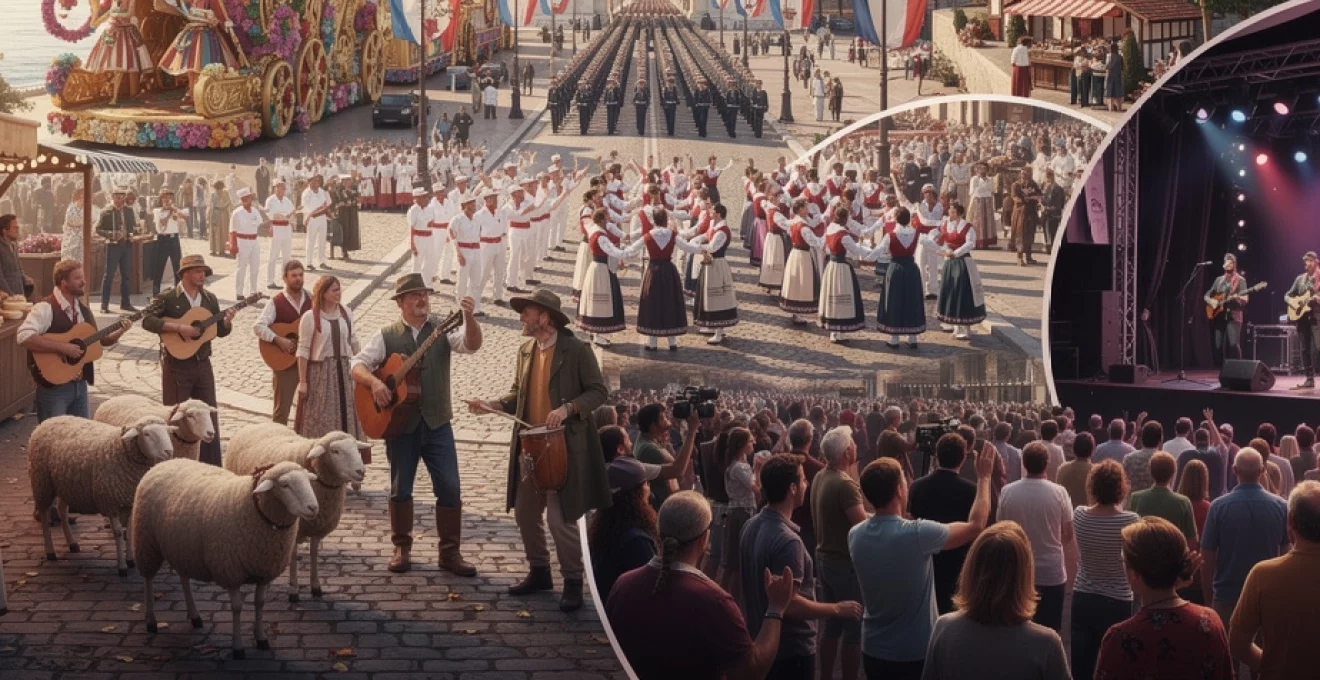
France’s cultural calendar presents a captivating mosaic of celebrations that stretch across centuries of tradition, regional pride, and republican values. From the snow-capped peaks of the Alps to the sun-drenched shores of the Mediterranean, these festivities represent far more than simple entertainment—they constitute living expressions of collective memory, cultural identity, and social cohesion. Each year, millions of participants and spectators engage with festivals that range from intimate village gatherings honouring agricultural cycles to spectacular national commemorations broadcast worldwide. This remarkable diversity reflects the complex tapestry of French society itself, where local particularism coexists harmoniously with national unity, and ancient customs find renewed relevance in contemporary contexts.
Regional folklore celebrations: preserving france’s ancestral heritage
France’s regional festivals serve as powerful mechanisms for preserving ancestral heritage in an increasingly globalised world. These celebrations demonstrate remarkable resilience, adapting to modern contexts while maintaining their essential character. Regional folklore festivities create opportunities for intergenerational transmission of customs, crafts, and cultural practices that might otherwise disappear in the face of standardisation pressures. The authenticity of these events attracts not only locals seeking to reconnect with their roots but also cultural tourists searching for genuine experiences beyond commercialised attractions.
The fête de la transhumance in provence: alpine pastoral traditions
The seasonal migration of sheep from lowland winter pastures to high mountain meadows represents one of Europe’s oldest agricultural practices. The Fête de la Transhumance celebrates this pastoral tradition with remarkable pageantry, particularly in towns such as Saint-Rémy-de-Provence and Digne-les-Bains. Thousands of sheep traverse village streets accompanied by shepherds in traditional costume, their passage marked by folk music, regional cuisine, and artisanal markets. This spectacle, typically occurring in June, provides urban populations with tangible connections to agricultural heritage whilst supporting rural economies through tourism revenue. The festival has evolved beyond mere commemoration to become an assertion of sustainable land management practices and resistance against industrial agriculture’s homogenising influence.
Carnival of nice: baroque pageantry and mediterranean exuberance
The Carnival of Nice stands as one of the world’s premier winter festivals, attracting over one million spectators annually during its two-week February celebration. Originating in medieval festivities preceding Lenten austerity, this event has transformed into a sophisticated cultural production featuring monumental floats, elaborate costumes, and the famous bataille de fleurs (flower battles). Each year’s thematic programming reflects contemporary concerns whilst maintaining baroque aesthetic traditions. The carnival generates significant economic impact for the Côte d’Azur region, with hospitality sectors experiencing peak demand and local artisans securing commissions for float construction and costume design. Beyond tourism economics, the event serves crucial social functions, fostering community participation across demographic boundaries and providing creative outlets for thousands of volunteers.
Basque country’s fêtes de bayonne: white and red festival dynamics
The Fêtes de Bayonne represent France’s largest festival, transforming the Basque city into a sea of white clothing and red scarves each July. Drawing inspiration from Pamplona’s San Fermín celebrations, this five-day event attracts approximately one million participants who engage in traditional Basque sports, musical performances, and street celebrations. The festival’s success demonstrates how regional identity can be celebrated whilst welcoming outsiders—participants need only adopt the prescribed white and red attire to join the communal experience. This inclusive approach has enabled the festival to expand dramatically since its 1932 inception without compromising its Basque cultural authenticity. The event generates substantial economic benefits whilst raising questions about sustainable tourism management and the preservation of local character amidst overwhelming visitor numbers.
Brittany’s Fest-Noz: celtic musical revival and breton dance traditions
Brittany’s Fest-Noz tradition exemplifies successful cultural revitalisation through grassroots mobilisation. These nocturnal gatherings, where communities assemble for traditional Breton dancing accompanied by live Celtic music, nearly disappeared during the mid-twentieth century before experiencing remarkable renaissance from the 1970s onwards. UNESCO
Brittany’s Fest-Noz tradition exemplifies successful cultural revitalisation through grassroots mobilisation. These nocturnal gatherings, where communities assemble for traditional Breton dancing accompanied by live Celtic music, nearly disappeared during the mid-twentieth century before experiencing remarkable renaissance from the 1970s onwards. UNESCO has since inscribed the Fest-Noz on its Representative List of the Intangible Cultural Heritage of Humanity, recognising its role in sustaining regional languages, music, and choreographic repertoires. For visitors, participating in a Fest-Noz offers an immersive initiation into Breton culture: dances are circular and collective rather than individual, and experienced dancers informally teach newcomers on the spot. The format illustrates how French regional festivals can remain resolutely contemporary—often featuring modern arrangements and fusion influences—while still serving as powerful vehicles for ancestral expression.
Alsatian wine festivals: viticulture celebrations along the route des vins
Along the Alsatian Route des Vins, dozens of summer and autumn wine festivals punctuate the agricultural calendar, from the Fête du Vin in Colmar to smaller village celebrations in Ribeauvillé, Eguisheim, or Riquewihr. At their core, these events celebrate the intimate relationship between landscape, climate, and grape varieties—what the French refer to as terroir. Processions featuring harvest queens, folk costumes, and brass bands mingle with professional tastings organised by winegrowers’ associations. For travellers seeking authentic wine tourism in France, these festivals provide rare access to family-owned estates, cellar visits, and vertical tastings that go well beyond standard commercial tours. They also highlight current challenges facing Alsatian viticulture, from climate change impacting harvest dates to debates over organic and biodynamic practices.
National commemorative events: republican values and civic identity
Beyond regional folklore, nationwide commemorations structure the French civic calendar and articulate core republican values such as liberty, equality, and secularism. These national celebrations function as collective rituals through which the community remembers pivotal historical events and reaffirms shared political ideals. Participation can range from highly choreographed state ceremonies to simple acts like displaying the tricolour flag from a balcony. For visitors, attending a commemoration offers unique insight into how contemporary France interprets its past and negotiates sometimes sensitive memories of revolution, war, and occupation. In many municipalities, schools, veterans’ associations, and local officials collaborate to transmit historical knowledge to younger generations, blending solemn remembrance with educational outreach.
Bastille day (14 juillet): military parades and revolutionary symbolism
France’s national day, commonly known as Bastille Day, commemorates both the storming of the Bastille prison on 14 July 1789 and the Fête de la Fédération of 1790, which celebrated national unity. The centrepiece of the day is the military parade on the Champs-Élysées in Paris, the oldest and largest regular military parade in Europe. Broadcast live to millions of viewers, the ceremony showcases the armed forces while also symbolising the republic’s capacity for defence and cohesion. Yet 14 July is far from a purely martial celebration: municipal fire stations host popular bals des pompiers, and fireworks illuminate town squares across the country. For travellers, planning a French holiday around 14 July allows you to experience both the official grandeur of state rituals and the convivial street-level festivities that define the national holiday.
Armistice day ceremonies: wwi remembrance at arc de triomphe
On 11 November, France observes Armistice Day to mark the 1918 ceasefire that ended fighting on the Western Front. The most emblematic ceremony unfolds at the Arc de Triomphe in Paris, where the President rekindles the eternal flame at the Tomb of the Unknown Soldier. Similar rituals take place at war memorials in almost every commune, often accompanied by readings of names of the fallen and the singing of the Marseillaise. These ceremonies highlight the extraordinary human cost borne by French communities—some villages lost an entire generation of young men in World War I. For visitors interested in memory tourism, combining attendance at an 11 November ceremony with visits to battlefield sites in Verdun or the Somme can provide a powerful, if sobering, understanding of how the Great War still shapes French identity.
Victory in europe day: liberation commemorations and historical memory
Victory in Europe Day, celebrated on 8 May, commemorates the 1945 German surrender and the end of World War II in Europe. Official ceremonies again centre on the Arc de Triomphe, but many towns in France also hold wreath-laying events and school-led commemorations focusing on local stories of resistance, occupation, and liberation. The day provides a framework for addressing complex historical questions: collaboration versus resistance, the experience of deported Jews and political prisoners, and the role of Allied forces in France’s liberation. As we reflect on these narratives, we see how VE Day serves not only as a celebration of victory but also as a moment of critical remembrance. For travellers, museum visits—such as the Mémorial de la Shoah in Paris or the Caen Memorial in Normandy—can enrich understanding of the themes evoked each 8 May.
Fête de la musique: cultural democratisation through open-air concerts
Launched in 1982 by the French Ministry of Culture, the Fête de la Musique takes place every 21 June, the summer solstice, and has since been adopted by more than 120 countries. Its founding principle is simple yet radical: music should be everywhere and for everyone, free of charge and free of barriers between professionals and amateurs. On this night, streets, parks, and squares across France transform into open-air concert halls where rock bands, classical ensembles, choirs, DJs, and solo artists perform side by side. For those keen to experience French festival culture without buying tickets or making complex reservations, this is an ideal entry point. The event also raises urban governance questions—noise regulations, crowd control, and safety—but most cities now have well-honed strategies to balance festive freedom with public order.
Gastronomic festivities: terroir-based culinary celebrations
French festivals are inseparable from gastronomy; indeed, many celebrations exist primarily to honour emblematic products and regional cuisines. These gastronomic festivities reinforce the notion that food in France is not merely sustenance but a crucial component of cultural identity and social life. Whether you are sipping young wine in Beaujolais, tasting oysters on the Atlantic coast, or admiring citrus sculptures on the Riviera, you participate in rituals that link agriculture, craftsmanship, and conviviality. In a sense, each food festival serves as a living showcase for the country’s protected designations of origin and its commitment to preserving local know-how in an era of globalised consumption.
Beaujolais nouveau release: third thursday wine marketing phenomenon
The annual release of Beaujolais Nouveau on the third Thursday of November epitomises the successful fusion of tradition and modern marketing. What began as a local celebration of the new vintage evolved, especially from the 1960s onward, into an international event synchronised across time zones, with the slogan “Le Beaujolais Nouveau est arrivé!” transmitted worldwide. At midnight, bars, bistros, and wine shops in France uncork the fresh, fruit-forward red, often accompanied by charcuterie and seasonal dishes. While critics sometimes question the wine’s oenological merits, its cultural significance is undeniable: it democratises wine consumption and transforms a technical phase of the viticultural calendar into a moment of collective celebration. If you plan a trip to France in late autumn, seeking out a Beaujolais Nouveau evening can be a memorable way to engage with local communities.
Fête du citron in menton: citrus sculpture art and côte d’azur tourism
Each February, the coastal town of Menton hosts the dazzling Fête du Citron, a festival dedicated to the region’s famed citrus production. Giant sculptures made from thousands of lemons and oranges line the Biovès Gardens, while themed parades of fruit-adorned floats wind along the seafront by day and night. The event originated in the 1930s as a way to promote local agriculture and extend the Riviera’s winter tourist season; today it attracts over 200,000 visitors annually. For families, the festival offers an almost surreal visual experience, blending public art, horticulture, and carnival traditions. Behind the scenes, the meticulous planning and logistical coordination—securing hundreds of tons of fruit, designing and assembling ephemeral structures—illustrate how French festivals often operate like temporary, open-air museums.
Lyon’s festival of lights (fête des lumières): urban illumination installations
Lyon’s Festival of Lights, held around 8 December, has its roots in a 19th-century religious gesture when residents placed candles on their windowsills to honour the Virgin Mary. In recent decades, the city has transformed this local custom into a globally recognised urban art event, drawing several million visitors over four evenings. International artists and lighting designers create monumental projections and interactive installations that reinvent Lyon’s façades, rivers, and public spaces. Walking through the illuminated city feels almost like traversing a vast outdoor gallery where architecture becomes a canvas and light the medium. For urbanists, the festival also serves as a laboratory for testing new technologies in public lighting and crowd management, illustrating how French cultural events can stimulate innovation beyond the artistic sphere.
Oyster festivals in arcachon bay: mariculture and aquitaine seafood heritage
On the Atlantic coast, particularly around Arcachon Bay and the Île d’Oléron, numerous fêtes de l’huître celebrate the oyster-farming heritage that underpins much of the local economy. These festivals typically occur in late summer or during the Christmas season, when oyster consumption peaks in France. Long communal tables, live music, and competitions for the fastest oyster-shuckers create a relaxed, maritime atmosphere. For gourmets, it is an unparalleled opportunity to taste different oyster varieties—fines de claire, spéciales, or pousse en claire—directly from producers, often at prices far below those in major cities. At the same time, educational stands and guided tours introduce visitors to issues such as water quality, climate change, and sustainable aquaculture, reminding us that festive indulgence depends on fragile coastal ecosystems.
Religious and secular syncretism in french festival culture
One of the most intriguing features of French festivities is the constant interplay between religious origins and secular reinterpretations. Many contemporary French festivals and holidays began as Catholic feast days or agrarian rites, only to be gradually reframed as cultural events, tourist attractions, or opportunities for local promotion. Rather than erasing their sacred roots, this process often layers new meanings onto older ones, creating rich palimpsests of symbolism. For observers, it raises stimulating questions: when you attend a procession or a Christmas market, are you participating in a religious ritual, a civic tradition, or a commercial spectacle—or all three at once?
Lourdes pilgrimage: catholic devotion and mass tourism infrastructure
The Marian sanctuary of Lourdes in the Pyrenees is one of the world’s most visited Catholic pilgrimage sites, welcoming approximately three million pilgrims and tourists each year. The town’s festival calendar is punctuated by major feast days such as the Assumption and the Immaculate Conception, when torchlight processions, masses in multiple languages, and blessings of the sick create an intense spiritual atmosphere. Simultaneously, Lourdes operates as a sophisticated tourism hub, with hundreds of hotels, medical facilities, and transport services configured to accommodate large groups, including those with limited mobility. This juxtaposition of fervent devotion and industrial-scale hospitality illustrates, perhaps more starkly than anywhere else in France, the coexistence of sacred practice and economic pragmatism. Visitors who are not religious often still find the choreography of ceremonies and the architecture of belief deeply compelling.
Assumption of mary processions: rural parish traditions across regions
On 15 August, the Feast of the Assumption remains a public holiday in France and a key marker in both liturgical and summer holiday calendars. In many rural parishes—from Corsican hilltop villages to Provençal towns—processions carry statues of the Virgin Mary through streets adorned with flowers and banners. Bands play hymns, bells ring, and residents gather on doorsteps to watch or join the cortege. For local communities, these rituals reinforce social ties and provide continuity with generations past, even as regular religious practice declines. For travellers vacationing in France in mid-August, stumbling upon an Assumption procession can feel like stepping momentarily into a slower, more communal rhythm of life, where faith, tradition, and village identity converge.
Secular christmas markets: alsatian christkindelsmärik commercial model
France’s booming Christmas market culture owes much to Strasbourg’s Christkindelsmärik, one of Europe’s oldest such markets, which dates back to the late 16th century. While its origins lie in preparations for religious festivities, today’s market—and the dozens that have copied its model across France—operates largely as a secular event centred on artisanal gifts, regional food, and atmospheric décor. Wooden chalets, mulled wine, and illuminated façades create a romanticised vision of winter that appeals to both domestic and international tourists. At the same time, municipal authorities view these markets as strategic tools for winter economic development, extending the tourist season and supporting small producers. The result is a fascinating hybrid: a festival that gestures toward spiritual anticipation while functioning primarily as a celebration of convivial consumption.
Contemporary cultural festivals: modern entertainment and creative industries
Alongside traditional and religious celebrations, France has cultivated a dense network of contemporary cultural festivals that position the country as a global stage for cinema, theatre, music, and the visual arts. These events showcase not only artistic excellence but also the economic vitality of the creative industries in France. Cities compete to host high-profile festivals, recognising their potential to drive urban regeneration, enhance international visibility, and attract investment in cultural infrastructure. For culture enthusiasts planning a French itinerary, aligning travel dates with one or more of these festivals can transform a standard visit into a deep dive into cutting-edge creativity.
Cannes film festival: international cinema prestige and red carpet diplomacy
The Cannes Film Festival, founded in 1946, ranks among the world’s most influential film events, rivalled only by Venice and Berlin. Each May, the Croisette becomes a magnet for filmmakers, distributors, critics, and celebrities, while the iconic red carpet steps of the Palais des Festivals generate global media coverage. Official selections, side sections like Directors’ Fortnight, and the Marché du Film (one of the industry’s largest film markets) make Cannes a crucial platform for launching films and negotiating international co-productions. Although access to gala screenings is restricted, ordinary visitors can still experience the festival atmosphere by attending outdoor screenings on the beach, spotting film crews around town, or exploring retrospective programmes in local cinemas. In diplomatic terms, Cannes also serves as a soft-power instrument, projecting an image of France as a guardian of cinematic art and a hub for international cultural dialogue.
Avignon theatre festival: performing arts in papal palace setting
Every July, the medieval city of Avignon transforms into a vast theatre during the Festival d’Avignon, founded in 1947 by director Jean Vilar. The official programme (In) presents avant-garde productions in prestigious venues such as the Cour d’honneur of the Palais des Papes, while the off-festival (Off) hosts thousands of performances in improvised spaces across the city. The density of shows, debates, and professional meetings turns Avignon into a temporary republic of artists and spectators; wandering the streets, you are constantly approached by performers distributing flyers and inviting you to their plays. For anyone curious about contemporary theatre in France, even a short stay during the festival offers a panoramic view of current trends—from experimental stagings of classical texts to politically engaged new writing.
Festival d’aix-en-provence: opera productions and classical music programming
The Festival d’Aix-en-Provence, held in early summer, has built a reputation as one of Europe’s leading opera and classical music events. Its intimate open-air venues, including the Cour de l’Archevêché, provide atmospheric settings for innovative productions that often reinterpret canonical works. In recent years, the festival has also invested heavily in contemporary composition and international co-productions, positioning itself at the forefront of operatic renewal. Masterclasses, public rehearsals, and outreach projects allow audiences to engage more deeply with the creative process, demystifying what can sometimes seem like an elitist art form. For travellers combining cultural tourism with a Provence holiday, attending a performance under the stars in Aix can be a highlight of the season.
Nuits sonores in lyon: electronic music and urban nightlife economy
Nuits Sonores, launched in Lyon in 2003, showcases electronic and independent music across a network of industrial sites, public spaces, and clubs each May. Unlike many traditional festivals confined to a single venue, Nuits Sonores deliberately disperses audiences throughout the city, turning Lyon into a multi-sited playground of sound and light. Daytime conferences and workshops address topics such as digital culture, urban design, and the future of nightlife, underlining the festival’s ambition to be more than a sequence of concerts. For the local economy, the event has become a significant driver of creative tourism, filling hotels and restaurants during what was once a shoulder season. For visitors, it offers a compelling snapshot of how younger generations in France appropriate urban spaces and reimagine the nocturnal city.
Socioeconomic impact of festival tourism on french municipalities
Behind the colour and emotion of French festivities lies a complex web of economic and social dynamics that profoundly affect host territories. Festivals generate direct revenue through ticket sales, accommodation, and restaurant spending, but their indirect benefits—job creation in the cultural sector, enhanced city branding, and long-term tourism growth—can be equally significant. According to several regional studies, major events can boost local turnover by double-digit percentages during their duration, a vital injection for small businesses and seasonal workers. However, the gains are not automatic; municipalities must invest in infrastructure, security, and sustainable mobility to avoid congestion and resident backlash.
From a planning perspective, successful festival management in France increasingly resembles a balancing act. On one side sits the desire to maximise economic impact and international visibility; on the other, the need to preserve quality of life for residents and the authenticity that initially made a festival attractive. Over-tourism at certain events—such as the Fêtes de Bayonne or the Strasbourg Christmas market—has prompted authorities to introduce crowd-control measures, environmental charters, and partnerships with local associations to maintain social acceptance. For travellers, being mindful of these issues by choosing off-peak days, using public transport, and supporting local artisans can help ensure that their participation contributes positively to host communities.
In the long term, festivals also play a crucial role in territorial cohesion and cultural democracy. By funding events in medium-sized cities and rural areas—not only in global hubs like Paris or Cannes—the French state and regional authorities aim to reduce geographic inequalities in cultural access. Many festivals now integrate educational programmes, inclusive pricing, and collaborations with schools or social organisations, turning festive moments into opportunities for learning and social mixing. As we navigate the vibrant landscape of French holidays and celebrations, it becomes clear that these events are not mere spectacles for tourists; they are engines of local development, laboratories of collective imagination, and vital expressions of how communities choose to live together.