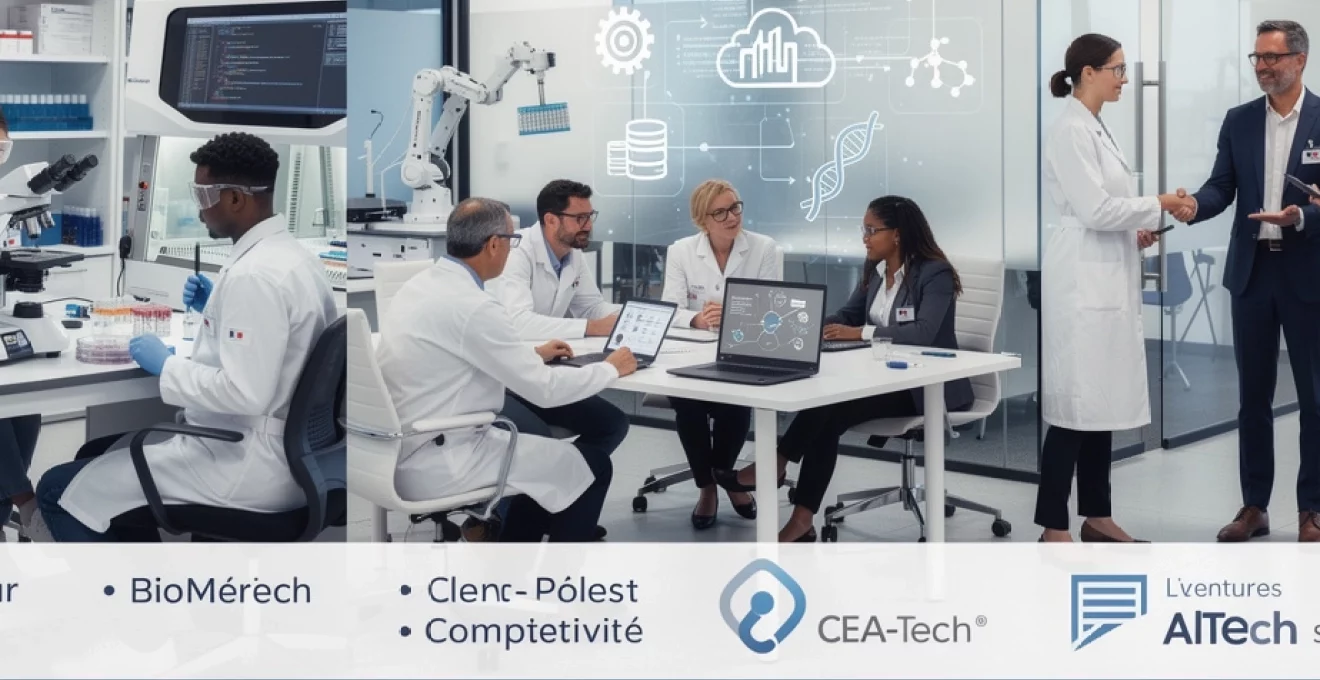
France stands at a fascinating crossroads in global innovation, where world-class scientific research meets increasingly sophisticated commercialisation mechanisms. The country’s research institutions produce groundbreaking discoveries daily, yet the challenge lies not in creating breakthrough technologies but in successfully transitioning these innovations from laboratory benches to market-ready products and services. With France investing 2.2% of its GDP in research and development compared to 3.5% in the United States, the nation has recognised that strategic commercialisation pathways are essential for maintaining its competitive edge in the global innovation landscape.
French innovation ecosystem: from CNRS research excellence to technology transfer mechanisms
The French innovation landscape operates through a sophisticated network of public research institutions, each developing distinct approaches to technology transfer and commercialisation. This ecosystem has evolved significantly over the past decade, driven by recognition that scientific excellence alone cannot guarantee economic impact without robust pathways to market.
National centre for scientific research (CNRS) technology transfer operations
CNRS operates as France’s premier research organisation, generating approximately €1 billion annually through research contracts and licensing agreements. The organisation has established comprehensive technology transfer protocols that identify promising innovations at early stages and provide structured support throughout the commercialisation journey. CNRS Innovation, the dedicated transfer subsidiary, employs over 150 professionals who specialise in intellectual property management, market analysis, and partnership development.
The CNRS model emphasises early-stage detection of commercially viable technologies, often before researchers themselves recognise the market potential of their work. Technology transfer ambassadors embedded within research units actively monitor ongoing projects, identifying opportunities that align with industry needs. This proactive approach has resulted in the creation of over 40 spin-off companies annually and maintains an active portfolio of more than 3,000 patents.
Institut pasteur biotechnology commercialisation pathways
Institut Pasteur has developed specialised commercialisation pathways tailored to the unique challenges of biotechnology innovation. The institute’s approach recognises that biotechnology commercialisation requires longer development timelines and substantial regulatory compliance investments compared to other technology sectors. Their dedicated business development team works closely with researchers to navigate the complex landscape of clinical trials, regulatory approvals, and pharmaceutical partnerships.
The Pasteur model includes dedicated incubation facilities where research teams can develop proof-of-concept demonstrations while maintaining access to institute resources. This approach has proven particularly effective for diagnostic technologies and therapeutic developments, where the transition from research discovery to commercial application requires sustained technical support and regulatory expertise.
Cea-tech deep technology valorisation programmes
The French Atomic Energy Commission’s technology division, CEA-Tech, has established itself as a leader in deep technology commercialisation, particularly in areas such as microelectronics, digital systems, and advanced materials. CEA-Tech operates through a distributed network of technology institutes that combine fundamental research capabilities with industrial partnerships.
Their valorisation approach emphasises collaborative development programmes where industrial partners engage directly with research teams throughout the innovation process. This model reduces the traditional gap between research and application by ensuring that commercial considerations influence research directions from early stages. CEA-Tech currently manages over 500 collaborative projects annually, with industrial partners contributing approximately 60% of research funding.
INRIA software licensing and spin-off creation models
INRIA, France’s national research institute for digital sciences, has developed sophisticated mechanisms for commercialising software innovations and digital technologies. The institute’s approach recognises that software commercialisation often follows different pathways compared to hardware or biotechnology innovations, requiring specialised expertise in open-source licensing, software-as-a-service models, and digital platform development.
INRIA’s technology transfer office maintains active relationships with major technology companies while simultaneously supporting the creation of innovative startups. The institute has established clear protocols for managing intellectual property in collaborative software development projects, ensuring that both academic and industrial partners can benefit from joint innovations. This balanced approach has resulted in the successful licensing of core technologies to companies such as Adobe and Microsoft while supporting the creation of over 150 spin-off companies.
Public-private partnership frameworks: CIFRE doctoral training and collaborative research agreements
France has developed
France has developed an extensive framework of public-private partnerships that connect research laboratories, companies and investors, ensuring that high-potential projects do not stall between proof-of-concept and commercial deployment. Rather than relying on a single mechanism, the country has layered complementary tools that support innovation at different stages: from doctoral training embedded in industry to large-scale collaborative research agreements and international talent attraction programmes.
Industrial conventions for training through research (CIFRE) implementation strategies
The CIFRE scheme (Conventions Industrielles de Formation par la REcherche) is one of France’s flagship instruments for linking academic research with industrial innovation. Under a CIFRE contract, a doctoral candidate is employed by a company while conducting their PhD research in partnership with a public laboratory. The company pays the researcher’s salary, and in return receives a substantial subsidy from the French National Research and Technology Association (ANRT), typically around €14,000 per year for three years.
From an innovation commercialisation perspective, CIFRE operates as an early bridge between fundamental research and market needs. The thesis subject must be strategically relevant for the company, which encourages research topics with clear application potential. For the laboratory, CIFRE creates a structured channel to test ideas in real industrial environments, whether in healthcare, digital technologies, manufacturing or environmental solutions. More than 1,500 new CIFRE contracts are signed each year, and many lead directly to patented technologies, joint publications and, in some cases, the creation of deep tech startups once the PhD is completed.
Implementing a successful CIFRE strategy requires careful alignment between the three stakeholders: the company, the academic supervisor and the doctoral candidate. Companies that get the most value out of the scheme typically treat the PhD project as a strategic R&D investment rather than a side experiment, integrating the researcher into innovation teams and planning for post-thesis exploitation (e.g. licensing, internal deployment, or spin-off creation). For researchers, CIFRE offers a unique opportunity to acquire both scientific and business skills, which is increasingly essential in an innovation ecosystem where hybrid profiles are in high demand.
Carnot institute label system for industry-academia collaboration
The Carnot Institute label is another cornerstone of France’s innovation ecosystem, designed to reward research organisations that demonstrate strong, long-term partnerships with industry. Institutes that receive the Carnot label obtain additional public funding proportional to the volume of contracted research they conduct with companies. This incentive mechanism encourages laboratories to structure their technology transfer strategies, professionalise their project management and prioritise research programmes with clear industrial relevance.
Carnot-labelled institutes operate a continuum of services, from upstream research collaborations to contract R&D, prototyping and pilot industrialisation. In practice, this can mean co-developing a new diagnostic platform with a healthtech SME, optimising advanced materials for an aerospace prime contractor, or working with energy utilities on grid-scale digital solutions. The Carnot Curie Cancer institute, for example, has used this model to accelerate translational oncology research, combining basic science at Institut Curie with partnerships involving pharma and medtech companies.
For companies—especially SMEs and mid-sized firms—the Carnot network acts as a “one-stop shop” to access cutting-edge public research without having to navigate the complexity of the wider system. It reduces transaction costs, de-risks early-stage R&D and shortens time-to-market for innovation. For laboratories, the label encourages a culture shift: researchers are supported and incentivised to engage with industrial partners, and successful transfer activities (patents, licences, collaborative projects) are increasingly recognised in career progression and institutional KPIs.
Competitiveness clusters (pôles de compétitivité) technology acceleration
Pôles de Compétitivité, or competitiveness clusters, bring together companies, research organisations and training institutions around specific thematic areas such as aerospace, health, mobility, digital technologies or energy transition. These clusters are designed to accelerate technology transfer by concentrating critical mass—skills, infrastructure, capital and networks—in defined geographic regions. Examples include Aerospace Valley in the southwest, Systematic Paris-Region for digital and deep tech, and Lyonbiopôle for infectious diseases and diagnostics.
The key value of competitiveness clusters lies in their ability to structure collaborative projects that might be too ambitious or risky for a single actor to undertake alone. Cluster management teams help consortia respond to calls for projects (national or European), coordinate technological roadmaps, and identify complementary partners along the innovation value chain—from lab to pilot line to industrial-scale deployment. Many projects supported by these clusters lead to demonstrators, pilot production lines or regulatory-ready prototypes, which are critical steps on the path to commercialisation.
From a practical standpoint, joining a competitiveness cluster can significantly improve a startup’s or SME’s visibility and credibility. You gain privileged access to large corporate partners, specialised investors and public funding instruments tailored to collaborative R&D. For research laboratories, the clusters function as listening posts to detect emerging industrial needs and to co-design applied research programmes that have a clear route to market, particularly in sectors where barriers to innovation are financial or market-related rather than technological.
French tech visa programme for international researcher mobility
The French Tech Visa is a fast-track residence permit scheme aimed at attracting international founders, employees and investors who want to participate in France’s innovation ecosystem. For research commercialisation, this programme is especially relevant for deep tech startups and scale-ups emerging from universities, CNRS or specialised institutes like INRIA and CEA-Tech—companies that often need rare scientific or technical talent to grow quickly and compete globally.
Unlike traditional immigration procedures, the French Tech Visa streamlines administrative steps and offers a four-year, renewable residence permit for eligible profiles. This makes it easier for French research-based startups to recruit postdoctoral researchers, AI specialists, biotech engineers or senior product managers from abroad. It also facilitates the arrival of foreign founders who may spin out companies from French labs or co-found ventures with local researchers, an increasingly common pattern in sectors such as quantum computing or biotech.
At a systemic level, the French Tech Visa supports the diversification of skills and perspectives within French innovation teams. By welcoming international profiles familiar with other commercialisation cultures—such as the US or Israel—it helps to cross-pollinate practices in areas like go-to-market strategy, venture capital fundraising and scaling operations. In a context where Europe tends to face brakes in commercialisation rather than in pure invention, this inflow of global experience is a strategic lever to strengthen the “lab-to-market” transition.
Intellectual property management through SATT network and technology transfer offices
Effective intellectual property (IP) management is a critical factor in transforming public research into marketable innovations. In France, this function is largely carried out by a combination of SATTs (Sociétés d’Accélération du Transfert de Technologies) and in-house Technology Transfer Offices (TTOs) within major institutions such as CNRS, Institut Curie, Université Paris Cité, INRIA or CEA-Tech. Together, they form a structured interface between laboratories, companies and investors.
SATTs were created to professionalise and accelerate technology transfer from universities and public research organisations. Their mandate is twofold: first, to detect promising inventions early—often through awareness campaigns and “tech transfer ambassadors” in laboratories—and second, to finance and manage the maturation phase. This may cover proof-of-concept experiments, prototype development, regulatory assessments or initial market studies. By taking on the financial risk at this stage, SATTs make technologies more attractive to industrial partners and venture capital funds.
Technology Transfer Offices complement this role by managing IP portfolios, negotiating licences and supporting spin-off creation. Their work includes drafting patent strategies, filing and maintaining patents internationally, and mediating co-ownership issues when several institutions are involved. In collaborative projects, early agreement on IP distribution and revenue-sharing is essential to avoid disputes that can slow or derail commercialisation. Experienced TTOs help define clear frameworks for joint ownership, exploitation rights and the role of each partner in future development.
For researchers, understanding how and when to engage with a SATT or TTO is increasingly part of their professional toolkit. Many universities now include training modules on IP, entrepreneurship and the PACTE law, which strengthened the status and remuneration of researcher-inventors in France. If you are developing a potentially patentable result, the general rule is simple yet crucial: speak to your technology transfer team before publishing or presenting your work publicly. Early dialogue allows optimal protection, which in turn opens more robust options for licensing or startup creation.
Venture capital landscape: bpifrance deep tech fund and private investment mechanisms
Even the most sophisticated technology transfer mechanisms are not enough without adequate financing to carry innovations from lab to market. France has made substantial progress in strengthening its venture capital ecosystem, particularly for deep tech ventures that require significant capital and long development cycles. Public investor Bpifrance plays a central role, alongside an increasingly mature private VC community that includes funds such as Partech, Idinvest (now Eurazeo), Alven and many others.
Deep tech startups—whether in AI, biotech, quantum computing or advanced materials—face a “valley of death” between proof-of-concept and industrial-scale deployment. They often need large seed and Series A rounds, followed by sustained follow-on funding, while navigating regulatory pathways and market adoption. France’s evolving investment landscape aims to address this gap by combining public catalysis with private expertise. How does this look in practice for founders emerging from French research labs?
Bpifrance digital venture fund portfolio management
Bpifrance operates several dedicated vehicles to support innovation, including the Digital Venture fund and a specific Deep Tech programme. The Digital Venture fund focuses on early-stage, high-growth potential digital startups, many of which build on academic research in areas such as machine learning, cybersecurity, data platforms or SaaS infrastructure. In parallel, the Deep Tech programme offers non-dilutive grants and loans to support technological maturation and industrialisation.
As both an investor and a public bank, Bpifrance’s approach to portfolio management is distinctive. It seeks to crowd in private capital rather than crowd it out, co-investing with private funds and using its presence as a quality signal for other investors. Its teams work closely with incubators, SATTs and TTOs to identify promising projects early, sometimes even before a company is formally created. For researchers considering entrepreneurship, engaging with local Bpifrance representatives or deep tech programmes can provide clarity on funding milestones, eligibility criteria and expected readiness levels.
From a risk management perspective, Bpifrance accepts that many deep tech projects will not reach large-scale commercial success. However, by diversifying across sectors and stages, and by combining equity investments with repayable advances, it can support a broad pipeline of innovation while maintaining portfolio resilience. For the broader ecosystem, this patient capital helps push the frontier in domains where private investors alone might hesitate due to long time-to-market and technological uncertainty.
Partech partners enterprise software investment strategies
Partech Partners is one of Europe’s best-known venture capital firms, with strong roots in France and a global footprint. In the context of research commercialisation, Partech’s focus on enterprise software and data-driven business models is particularly relevant to spin-offs from INRIA, CNRS digital labs and engineering schools. The firm typically looks for startups that can transform cutting-edge algorithms or infrastructure technologies into scalable products addressing large, clearly defined markets.
Partech’s investment strategy emphasises repeatable go-to-market models, robust unit economics and international expansion potential from an early stage. For academic founders, this often means moving quickly beyond the “technology push” mindset to validate customer problems, pricing strategies and sales channels. Partech and similar funds bring more than capital: they provide mentorship on building sales teams, structuring partnerships with large enterprises and preparing for later-stage financing or exits.
Practically, if you are a researcher developing a software-based innovation—say a novel optimisation engine, AI-based diagnostic tool or cybersecurity solution—engaging with enterprise-focused investors early can help refine your product-market fit. Even informal feedback on your pitch or roadmap can highlight gaps between your technological vision and what potential customers are actually willing to pay for. This alignment is crucial in a country where many obstacles to innovation are not technological, but financial or market-related.
Idinvest partners life sciences commercialisation approach
Idinvest Partners, now part of Eurazeo, has long been a reference investor in European life sciences, backing companies across biotech, medtech and digital health. Its approach illustrates how specialist investors can complement public research institutes like Institut Pasteur, INSERM or university hospitals when bringing health innovations to market. Life sciences commercialisation is notoriously capital-intensive and regulated, often requiring 10 or more years from lab discovery to marketed product.
Specialised funds like Idinvest evaluate not only the scientific merit of a project, but also its clinical strategy, regulatory path (EMA, FDA, ANSM), reimbursement prospects and potential for strategic partnerships with pharma or major diagnostics players. They often invest in spin-offs that already have strong IP protection, early clinical data or clear biomarker strategies. For TTOs and researchers, understanding these criteria can help optimise the timing and structure of a spin-out, for example by aligning preclinical milestones with likely Series A expectations.
Moreover, life sciences investors typically bring board-level expertise in trial design, industrial partnerships and international expansion. They can help navigate complex issues such as co-development agreements, out-licensing strategies or negotiations with big pharma. In a sector where one patent out of a hundred might become a “killer application”, this expert guidance can significantly increase the probability that a promising French innovation becomes a globally adopted therapeutic or diagnostic solution.
Alven capital early-stage technology funding models
Alven Capital focuses on early-stage investments, with a strong emphasis on French and European tech startups. Its portfolio includes companies in SaaS, AI, consumer internet and more recently, deep tech. For projects emerging from public research—especially in digital and data-intensive fields—Alven’s model illustrates how early-stage VCs can help shape the trajectory from prototype to scalable product.
Alven typically invests at seed or Series A, often when teams are still refining their business model and have limited commercial traction. This is particularly relevant for researcher-founded startups that may have solid technical proof-of-concept but are still exploring applications and customer segments. In these cases, Alven and similar funds work closely with founders to conduct market experiments, test pricing strategies and prioritise product features that drive adoption.
One of the key lessons for academic entrepreneurs is that fundraising is not only about capital— it is also about choosing partners who understand the specifics of technology transfer. Funds that are familiar with the French ecosystem (SATTs, Carnot institutes, Bpifrance instruments) can help coordinate different financing sources and avoid duplication or gaps. In an ideal scenario, public maturation funding, early-stage VC capital and industrial partnerships are sequenced strategically, each de-risking the next step on the path from lab to market.
Regulatory compliance pathways: ANSM medical device approval and industrial standards integration
For innovations in healthcare and other regulated sectors, regulatory compliance is not a mere administrative hurdle; it is a core component of the commercialisation strategy. In France, the ANSM (Agence nationale de sécurité du médicament et des produits de santé) oversees the safety of medicines and medical devices, working in coordination with European frameworks such as the Medical Device Regulation (MDR) and In Vitro Diagnostic Regulation (IVDR). Understanding these pathways early can save years of delay and substantial costs.
Medical device startups emerging from hospitals, universities or research institutes must first classify their product (e.g. software as a medical device, implantable device, diagnostic test) and then design their development plan accordingly. This often involves setting up a quality management system (e.g. ISO 13485), conducting preclinical and clinical evaluations, and preparing a robust technical file for conformity assessment with a notified body. ANSM’s role includes market surveillance, vigilance and in some cases, specific authorisations for clinical investigations conducted in France.
Beyond healthcare, industrial standards (such as ISO, IEC or sector-specific norms in aerospace, automotive or energy) play a similar role in enabling market access. Integrating these standards from the design phase, rather than retrofitting compliance later, can be compared to building a bridge with the right foundations from the start. It may seem slower at first, but it prevents costly redesigns and rejected certifications down the line. For research teams, collaborating early with regulatory experts—either within their institution or through specialised consultancies—can transform compliance from a barrier into a competitive advantage.
A practical tip for innovators is to map regulatory and standards requirements alongside technical milestones. For instance, in digital health, you might align algorithm development and validation with data protection rules (GDPR), cybersecurity standards, and medical device classification criteria. This integrated approach helps you answer investor questions early: “What is your regulatory strategy?” and “How will you ensure compliance in key markets?” In an environment where time-to-market and trust are critical, clear answers to these questions can be as important as the underlying technology itself.
Success case studies: criteo AdTech platform development and BioMérieux diagnostic innovation scaling
Concrete success stories illustrate how France’s research and innovation ecosystem can deliver global impact when the pieces—science, funding, IP, regulation and market strategy—come together. Two emblematic examples are Criteo in advertising technology and BioMérieux in in vitro diagnostics. Both demonstrate different, yet complementary, pathways from lab to market.
Criteo originated from research in machine learning and data analysis, initially conducted within French academic environments and later refined through entrepreneurial experimentation. The company’s breakthrough came from its ability to industrialise sophisticated recommendation algorithms and deploy them at scale in the advertising ecosystem. Rather than staying within the confines of a research lab, the founding team embraced a global market vision early, establishing operations in multiple countries and iterating rapidly on product-market fit.
From a technology transfer perspective, Criteo shows the power of combining strong scientific assets with a clear commercial strategy and international ambition. The company leveraged France’s pool of quantitative talent, local early-stage investors and later-stage international capital to become a world leader in adtech. Its trajectory highlights the importance of moving beyond a purely “technology push” approach to deeply understand customer needs, monetisation models and ecosystem partnerships.
BioMérieux offers a contrasting but equally instructive case in the highly regulated health sector. Rooted in a long tradition of microbiology and diagnostics research in France, the company has built its success on close collaboration with hospitals, laboratories and public research institutions. Many of its diagnostic platforms and tests stem from joint R&D programmes with academic partners, leveraging public funding, Carnot-labelled institutes and clinical research networks.
Scaling diagnostic innovations requires not only scientific excellence, but also mastery of industrialisation, quality systems and global regulatory pathways. BioMérieux has consistently integrated these dimensions into its development processes, ensuring that new assays and instruments meet stringent requirements from entities like ANSM, EMA, FDA and international standards bodies. Its ability to rapidly deploy diagnostic solutions during public health crises illustrates how well-designed technology transfer frameworks can translate directly into societal impact.
Together, Criteo and BioMérieux show that there is no single “French model” of research commercialisation; rather, there are multiple routes adapted to sectoral realities and company ambitions. Whether you are working on AI algorithms, new materials, biotech therapies or industrial processes, the key is to navigate—and actively combine—the mechanisms France has put in place: SATTs and TTOs for IP, CIFRE and Carnot for collaboration, competitiveness clusters for ecosystems, Bpifrance and private VCs for funding, and robust regulatory strategies for market access. When these elements are aligned, the journey from research lab to market becomes not only possible, but scalable.