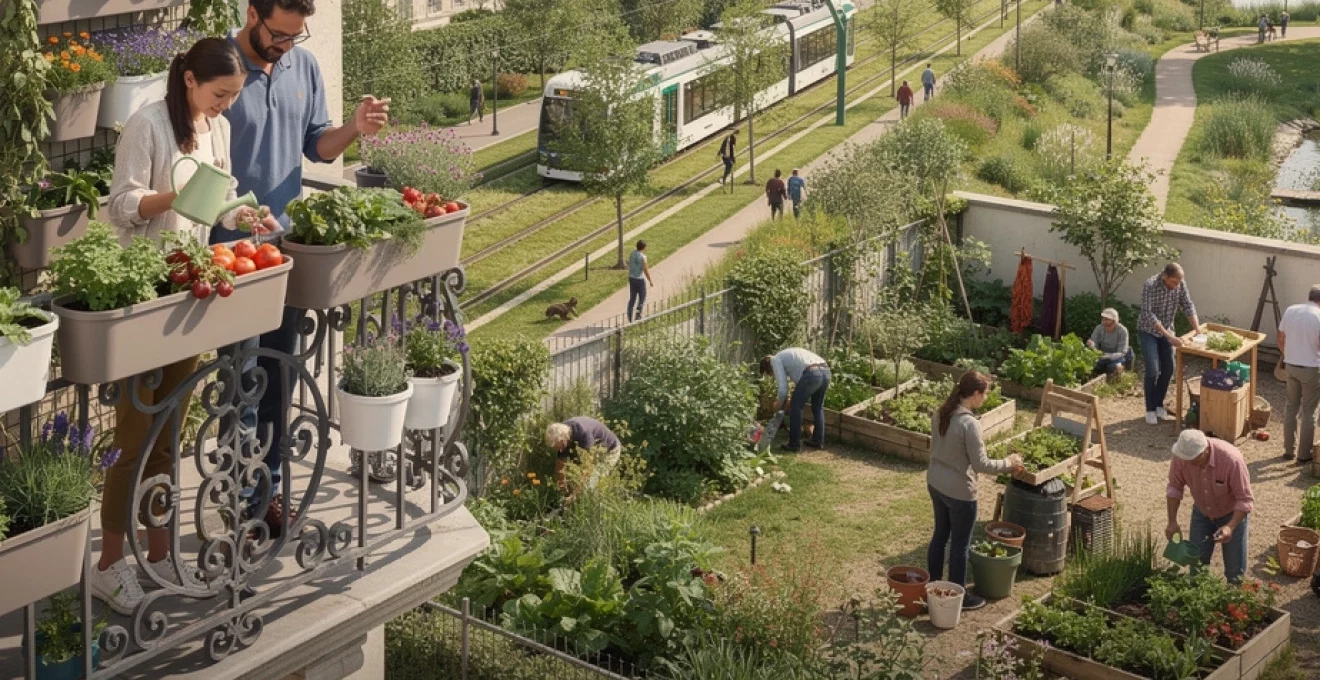
France’s relationship with urban nature has evolved dramatically over recent decades, transforming from formal municipal gardens to a vibrant ecosystem of micro-gardens, community spaces, and green infrastructure networks. This transformation reflects a broader cultural shift towards sustainable living and biophilic design principles that integrate nature seamlessly into daily urban life. French cities now serve as innovative laboratories for urban greening initiatives, from the smallest balcony potager to expansive biodiversity corridors that connect metropolitan areas with surrounding natural landscapes.
The French approach to urban nature emphasises both functionality and beauty, creating spaces that serve multiple purposes: food production, air purification, biodiversity conservation, and social cohesion. This holistic vision has positioned French municipalities at the forefront of urban sustainability initiatives, influencing policy frameworks across Europe and beyond. The integration of nature into French urban environments represents more than aesthetic enhancement—it embodies a fundamental reimagining of how cities can coexist harmoniously with natural systems.
Micro-jardinages on french balconies: permaculture techniques for limited urban spaces
French urban dwellers have embraced balcony gardening as an essential component of sustainable city living, developing sophisticated micro-jardinage techniques that maximise productivity in minimal spaces. These intimate growing environments typically range from two to fifteen square metres, yet French gardeners consistently achieve remarkable harvests through careful planning and innovative space utilisation strategies.
The potager de balcon concept has gained tremendous popularity across French cities, with approximately 35% of urban households now maintaining some form of balcony garden according to recent horticultural surveys. These miniature food forests incorporate permaculture principles such as companion planting, vertical growing systems, and natural pest management techniques that mirror larger agricultural operations while adapting to container-based growing conditions.
Container gardening systems using lechuza and elho Self-Watering planters
Self-watering container systems have revolutionised French balcony gardening by addressing the primary challenge of consistent moisture management in exposed urban environments. Lechuza planters, manufactured in Germany but widely adopted across France, feature integrated water reservoirs that maintain optimal soil moisture levels for extended periods, reducing daily maintenance requirements for busy urban gardeners.
These sophisticated container systems typically incorporate a capillary action mechanism that draws water from the reservoir through specialised growing substrates. French gardeners particularly favour the Lechuza Cubico and Classico series for their weather-resistant construction and elegant aesthetic that complements modern balcony design schemes. The systems prove especially effective for Mediterranean herbs such as thyme, rosemary, and oregano, which thrive in the controlled moisture environment these planters provide.
Elho planters offer a more budget-conscious alternative while maintaining many advanced features that appeal to French urban gardeners. Their modular design philosophy allows for creative arrangements that maximise growing space while creating visually appealing displays. The company’s Green Basics line incorporates recycled materials, aligning with French sustainability values while providing reliable performance in demanding urban microclimates.
Vertical growing solutions with treillis modulaires and living wall technologies
Vertical gardening systems have become indispensable tools for French balcony gardeners seeking to multiply their growing capacity without expanding their horizontal footprint. Treillis modulaires, or modular trellis systems, provide flexible frameworks that adapt to various balcony configurations while supporting climbing vegetables such as tomatoes, cucumbers, and pole beans throughout the growing season.
These modular systems typically consist of powder-coated steel or aluminium frames with adjustable mounting brackets that accommodate different balcony railing styles and wall surfaces. French manufacturers like Nortene and Hozelock have developed specialised products that withstand the country’s diverse climate conditions, from the mistral winds of Provence to the heavy rains of Normandy. The systems often incorporate integrated planter boxes that create seamless growing environments for root vegetables and leafy greens at ground level while supporting vertical crops above.
Living wall technologies represent the cutting edge of French balcony gardening innovation, with systems ranging from simple pocket planters to sophisticated hydroponic installations. These vertical growing environments can support dozens of plants in the same footprint as a traditional single planter, making them particularly valuable for north-
facing balconies in dense city centres. By mixing trailing strawberries, compact salad greens, and aromatic plants like mint and basil, French gardeners create true vertical ecosystems that cool façades, filter urban air, and provide continuous harvests. Many living wall manufacturers now offer lightweight, modular panels specifically calibrated for balcony railings, simplifying installation even for renters.
Companion planting strategies for balcony potagers in mediterranean and continental climates
Companion planting lies at the heart of French balcony permaculture, allowing gardeners to increase yields and resilience without chemical inputs. In Mediterranean climates such as Marseille or Nice, heat-tolerant associations are prioritised: tomatoes paired with basil and marigolds, for example, both shade the soil and help repel pests like whitefly and aphids. By combining deep-rooted plants with shallow feeders in the same container, balcony gardeners optimise limited substrate volume and water use.
In continental climates typical of Paris, Lyon, or Strasbourg, the emphasis shifts towards extending the productive season and protecting sensitive crops from temperature swings. Classic French combinations such as carrots and leeks, or lettuce interplanted with radishes, perform well in balcony boxes exposed to cooler spring and autumn conditions. Low-growing herbs like thyme and chives are often used as living mulches around larger vegetables, providing both culinary diversity and improved soil structure in small containers.
Effective companion planting on balconies also considers pollinator attraction and biodiversity. French urban gardeners frequently integrate flowering species such as nasturtiums, calendula, or borage into their micro-potagers to draw bees and hoverflies to upper-storey spaces. This approach transforms even a five-square-metre balcony into a mini ecological node that supports urban biodiversity corridors, linking street trees, courtyard gardens, and rooftop terraces.
Seasonal crop rotation methods for year-round french balcony harvests
To maintain soil health and continuous production in confined containers, French balcony gardeners rely on simplified crop rotation schemes adapted from traditional potager practices. Rather than rotating across large beds, they rotate by container or by vertical tier, ensuring that heavy feeders like tomatoes or aubergines do not occupy the same planter in consecutive years. This helps reduce nutrient depletion and disease build-up, which can be particularly problematic in small volumes of potting mix.
Year-round balcony harvests typically follow a four-season rhythm. In late winter and early spring, cold-hardy greens such as spinach, mâche, and rocket occupy railing planters and window boxes, often under simple fleece covers. By late spring and summer, these containers transition to sun-loving crops like cherry tomatoes, bush beans, peppers, and Mediterranean herbs, which take advantage of longer days and higher temperatures common in many French cities.
As autumn approaches, French urban gardeners replant with fast-growing brassicas and root crops suited to cooler conditions: baby kale, Asian greens, radishes, and small carrots are frequent choices. Even in winter, many balconies support evergreen herbs, perennial strawberries, and hardy alliums, ensuring a constant connection to edible urban nature. This cyclical rotation mimics the seasonal choreography of rural potagers while fully adapted to balcony constraints, proving that even the smallest urban spaces can remain productive twelve months of the year.
Urban biodiversity corridors: french cities’ green infrastructure networks
Beyond individual balconies, French cities are weaving together networks of green infrastructure that function as biodiversity corridors and climate adaptation tools. These trames vertes et bleues (green and blue networks) link parks, riverbanks, street trees, community gardens, and even vegetated tram lines into continuous ecological pathways. For residents, they provide daily access to nature; for wildlife, they offer routes for movement, feeding, and reproduction across an otherwise built-up matrix.
Urban ecologists in France increasingly view these corridors as essential to making cities more resilient to heatwaves, flooding, and biodiversity loss. Studies in Paris, Montpellier, and other metropolitan areas show that connected green spaces can lower local temperatures by several degrees, store stormwater, and host a surprising diversity of spontaneous flora and fauna. In this way, urban nature becomes an active component of the city’s infrastructure rather than a decorative afterthought.
Paris’s coulée verte René-Dumont linear park system and wildlife connectivity
The Coulée Verte René-Dumont, often cited as one of the world’s first elevated linear parks, is a flagship example of how Paris integrates biodiversity corridors into dense urban fabric. Built on a former railway viaduct in the 12th arrondissement, this 4.7-kilometre greenway connects the Bastille area to the Bois de Vincennes, linking inner-city neighbourhoods with one of Paris’s largest peri-urban forests. Along its length, carefully curated plantings alternate with areas of semi-spontaneous vegetation, offering varied microhabitats for birds, insects, and small mammals.
From a connectivity perspective, the Coulée Verte functions like a “green highway” above the streets, allowing species to move across districts that would otherwise be separated by traffic and buildings. Pollinators travel along its flowering borders, while birds use its trees and shrubs as stepping stones between larger parks. For Parisians, the elevated path provides a quiet promenade and jogging route immersed in greenery, demonstrating how infrastructure reuse can support both human wellbeing and urban wildlife.
The success of the Coulée Verte has inspired similar projects in Paris and beyond, including the ongoing transformation of disused rail lines into ecological corridors. As residents stroll or cycle along these greenways, they become active participants in a living urban ecosystem, observing seasonal changes and spontaneous plants colonising walls and embankments. This everyday contact with nature helps shift public perceptions of urban “weeds” towards recognition of their role in biodiversity and ecological resilience.
Lyon’s trames vertes et bleues implementation along rhône river corridors
Lyon’s approach to green infrastructure centres on its two major waterways, the Rhône and the Saône, which form natural backbones for the city’s trames vertes et bleues. Over the past two decades, the city has redesigned many riverbank areas to prioritise pedestrian promenades, riparian vegetation, and habitat restoration. Terraced quays, planted embankments, and pocket wetlands now punctuate the Rhône corridors, softening hard edges and creating habitat stepping stones for aquatic and terrestrial species.
These interventions serve multiple purposes: they improve flood management by allowing water to spread into vegetated zones during high flows, enhance water quality through natural filtration, and provide shaded refuge for residents during increasingly frequent summer heatwaves. The riverfront paths have become popular routes for cycling and walking, allowing people to follow a continuous ribbon of nature from the city centre out towards peri-urban landscapes. For urban biodiversity, this continuity is crucial, enabling fish, amphibians, and riparian plants to recolonise areas once dominated by concrete.
Lyon’s experience illustrates how urban river corridors can function like green spines, from which smaller branches of parks, street trees, and community gardens extend into surrounding neighbourhoods. When you walk from a balcony-lined boulevard down to the Rhône and then along its banks, you are effectively travelling through a layered ecological network that connects private micro-jardins to metropolitan-scale habitats. This integrated vision is increasingly central to French urban planning policy.
Strasbourg’s parc de l’orangerie native species conservation programming
In Strasbourg, Parc de l’Orangerie plays a key role in the city’s strategy to conserve native species within an urbanised context. Located near the European institutions, this historic park has gradually shifted from ornamental displays towards more ecologically informed management. Lawns are partially converted into flower meadows, deadwood is left in discrete zones as habitat for insects and birds, and native tree species are prioritised in new plantings to support local biodiversity.
The park also functions as a living laboratory for environmental education and citizen science. Interpretive panels explain the importance of native flora, pollinator-friendly management, and reduced mowing regimes. School groups and families are invited to participate in butterfly counts, birdwatching events, and workshops on urban ecology, helping to foster a new generation of residents who see parks as dynamic ecosystems rather than static decor. This participatory approach echoes broader French trends in co-managing green spaces with local communities.
From a connectivity standpoint, Parc de l’Orangerie forms part of a chain of green spaces that links Strasbourg’s historic core with the Ill riverbanks and surrounding agricultural landscapes. Native hedgerows, ponds, and woodland patches within the park act as refuges and staging posts for species moving through the city. In combination with street trees and canal-side plantings, they create a mosaic of habitats that supports both everyday recreation and long-term ecological resilience.
Nantes’s green tram lines integration with urban forest management
Nantes, often cited as one of France’s “greenest” cities, has taken an innovative approach to integrating public transport and urban nature. Its tram lines are flanked in many sections by vegetated corridors, including grassed tracks, tree-lined avenues, and shrub beds that act as linear parks in their own right. Rather than treating tramways as purely technical infrastructure, the city has designed them as moving windows onto urban biodiversity, allowing passengers to experience a shifting landscape of trees, grasses, and seasonal flowers.
These green tram lines are closely linked to Nantes’s broader urban forest management strategy. Tree species along the routes are selected for their resilience to climate stress, ability to capture pollutants, and value for urban wildlife. In some districts, tram corridors connect directly to larger parks, wetlands, or community gardens, functioning as ecological “threads” that stitch together disparate green spaces. For residents whose only outdoor space might be a small balcony, these verdant transport routes provide daily visual and sensory contact with nature.
By combining low-carbon mobility with green infrastructure, Nantes demonstrates how cities can address climate, biodiversity, and quality-of-life goals simultaneously. The tram corridors moderate heat on adjacent streets, manage stormwater through permeable surfaces, and host spontaneous flora in less-managed zones between tracks. In this way, public transport becomes not just a means of moving people, but a tool for rewilding the city at multiple scales.
Jardins partagés movement: community-driven urban agriculture across french municipalities
While balconies and linear parks transform private and infrastructural spaces, the jardins partagés movement has reshaped how French communities collectively inhabit urban land. These shared gardens, which began to proliferate in the 1990s and 2000s, now number in the thousands across major cities like Paris, Marseille, Toulouse, and Lille. They occupy vacant lots, former industrial sites, and interstitial spaces between housing blocks, turning overlooked parcels into vibrant centres of urban agriculture and social life.
Typically managed by neighbourhood associations under agreements with municipalities, jardins partagés blend food production with cultural programming and environmental education. Individual plots coexist with common areas, composting zones, and sometimes small orchards or beehives. Residents without access to private outdoor space can grow vegetables, herbs, and flowers, experiment with permaculture techniques, and share seeds and knowledge with neighbours they might otherwise never meet.
These community-driven spaces also play an important role in urban biodiversity. Less formal management, reduced use of chemicals, and deliberate tolerance for spontaneous flora create habitats for pollinators, birds, and soil organisms. In many French cities, corridors of jardins partagés link to larger parks or riverbanks, adding another layer to the wider green infrastructure network. For urban planners and sociologists alike, they represent both a tool for ecological resilience and a subtle form of reclaiming public space through everyday gardening practices.
Biophilic design integration in french residential architecture
As French cities densify, architects and developers are increasingly turning to biophilic design to maintain a strong connection with nature in residential projects. Biophilic design seeks to integrate natural elements—plants, water, light, and organic materials—directly into built environments, supporting mental health, comfort, and environmental performance. In France, this approach is visible in everything from green inner courtyards and planted loggias to vegetated façades and rooftop gardens.
The French housing market has responded positively to these innovations, with surveys indicating that access to private or shared green space ranks among the top criteria for urban residents. Developers now commonly highlight features such as communal rooftop gardens, shared potagers, and planted atriums in marketing materials for new apartment buildings. For existing housing stock, especially the emblematic Haussmannian blocks, architects are exploring sensitive retrofits that introduce greenery without compromising heritage value.
Jean nouvel’s institut du monde arabe botanical integration principles
Although primarily a cultural institution, Jean Nouvel’s Institut du Monde Arabe in Paris offers valuable lessons for integrating botanical elements into dense urban architecture. While its most recognisable feature is the kinetic façade that modulates light like an intricate mashrabiya, the building’s terraces and surrounding landscaping create layered transitions between built form and planted space. Views frame the Seine, trees, and nearby gardens, reinforcing visual connections to urban nature even in highly formal architectural contexts.
Nouvel’s broader design philosophy often emphasises the dialogue between architecture and landscape, with vegetation used not merely as decoration but as a structural component of spatial experience. For residential projects inspired by these principles, this might translate into planted winter gardens buffering noisy streets, tree-filled courtyards as communal living rooms, or loggias that function as semi-outdoor rooms for everyday life. In each case, botanical integration aims to blur the boundary between interior and exterior, encouraging residents to treat plants as co-inhabitants rather than ornamental objects.
For urban dwellers in France who may already maintain balcony micro-jardins, such architecture provides an expanded canvas. When a building’s design anticipates soil depth, irrigation, and structural support for vegetation, residents can adopt more ambitious planting schemes—from small fruit trees to vertical herb gardens—without technical constraints. As more architects draw on biophilic design principles, the distinction between private potager, shared courtyard, and public park begins to soften into a continuous urban ecosystem.
Green roof technologies in parisian haussmannian building renovations
Renovating Haussmannian buildings to include green roofs poses both technical and regulatory challenges, yet progress in this field has accelerated in recent years. Structural assessments, lightweight substrate technologies, and improved waterproofing systems now make it possible to establish extensive or semi-intensive green roofs on many 19th-century buildings without compromising their integrity. These retrofits contribute to urban cooling, stormwater retention, and biodiversity, while offering residents new shared outdoor spaces above the city’s characteristic zinc rooftops.
In practice, Parisian green roofs on Haussmannian structures often adopt a layered approach. Extensive zones with sedums, grasses, and low-maintenance perennials provide ecological benefits with minimal upkeep, while more accessible terraces host planters for herbs, vegetables, and small shrubs. Municipal incentives and planning guidelines linked to the city’s climate and biodiversity plans encourage such projects, viewing them as a means to meet ambitious targets for urban greening and heat island reduction.
For residents used to cultivating plants on narrow balconies, the transformation of underused rooftop surfaces into shared gardens can be transformative. Rooftop spaces suddenly become extensions of daily life—places to relax, host neighbours, and experiment with collective micro-agriculture. In many ways, green roofs on Haussmannian buildings act as vertical counterparts to jardins partagés on the ground, knitting together the social and ecological fabric of Paris from street level to skyline.
Living wall systems by patrick blanc in french commercial developments
French botanist and artist Patrick Blanc has been instrumental in popularising living wall systems, or murs végétalisés, across France and internationally. His pioneering projects in Paris, such as the Musée du Quai Branly – Jacques Chirac and various commercial façades, demonstrate how vertical plantings can radically alter the perception and microclimate of urban streetscapes. By carefully selecting plant species according to orientation, light levels, and local climate, Blanc’s systems create dense, layered plant communities that function like vertical gardens.
In commercial developments, these living walls serve multiple functions. They act as visual landmarks, attract customers by softening hard architectural lines, and contribute to building insulation and sound absorption. At the same time, they provide microhabitats for insects and birds, adding biodiversity to zones typically dominated by glass and concrete. The success of these high-profile projects has helped familiarise the French public with the idea that even the most vertical surfaces can host thriving plant life.
As living wall technologies become more accessible, their principles filter down to smaller scales, including residential balconies and interior walls. Simplified versions using modular pockets, felt panels, or lightweight hydroponic systems allow apartment dwellers to create their own vertical jungles, echoing the aesthetic and ecological benefits of major commercial installations. In this way, Patrick Blanc’s visionary work continues to inspire a broader cultural shift towards embracing plants as integral components of architecture and everyday urban experience.
French government initiatives: plan biodiversité and urban greening legislation
National and local policies have been crucial in mainstreaming urban green spaces and biodiversity into French daily life. The national Plan Biodiversité, launched and updated over the past decade, explicitly recognises cities as key arenas for nature conservation and climate adaptation. It encourages municipalities to develop green and blue networks, protect existing natural areas, and create new habitats through green roofs, street trees, and permeable surfaces. Financial incentives, regulatory frameworks, and technical guidance help translate these broad goals into concrete urban projects.
Many French cities have adopted their own biodiversity and greening strategies in response. Paris’s biodiversity plan, for instance, sets targets for increasing canopy cover, expanding green roofs and walls, and enhancing ecological continuity between parks and smaller green spaces. Planning regulations may now require new developments to include a minimum proportion of vegetated surfaces, integrate stormwater management on site, or preserve mature trees wherever possible. These measures gradually shift the baseline for what is considered “normal” in urban design, moving from grey to green.
Beyond hard regulations, French legislation also supports citizen participation in urban greening. Programs such as Permis de végétaliser in Paris and similar schemes in other cities grant residents the right to plant at the base of street trees, along building façades, or in designated micro-plots on sidewalks. By simplifying administrative procedures and providing basic support like soil or seeds, municipalities empower citizens to become co-creators of urban nature. The result is a patchwork of small but meaningful interventions—flowering tree pits, herb-lined pavements, vertical planters—that collectively enrich the urban ecosystem.
Therapeutic horticulture programs in french healthcare institutions
One of the most powerful expressions of nature’s role in French daily life emerges in the healthcare sector, where therapeutic horticulture programs are increasingly integrated into hospitals, clinics, and long-term care facilities. These initiatives draw on growing evidence that contact with plants and green spaces can reduce stress, speed recovery, and improve overall wellbeing. In France, they take many forms, from sensory gardens in geriatric units to rooftop potagers managed by patients and staff.
Several university hospitals have developed dedicated healing gardens designed in collaboration with landscape architects, medical staff, and psychologists. These spaces often feature accessible raised beds, fragrant plantings, gentle water features, and sheltered seating areas, creating calm environments for patients and visitors. Rehabilitation programs may incorporate light gardening tasks—sowing seeds, watering plants, or harvesting herbs—as part of physical and occupational therapy, helping patients regain motor skills and confidence in a non-clinical setting.
In psychiatric and paediatric care, horticultural activities provide additional psychological and social benefits. Working with soil and plants can offer a grounding, sensory-rich experience that contrasts with the abstract nature of many therapies. Group gardening sessions encourage cooperation, responsibility, and routine, while the visible growth of plants provides a tangible sense of progress and care. Some institutions also involve local volunteers or partner with nearby jardins partagés, reinforcing connections between healthcare environments and the wider community.
As French society continues to rethink the boundaries between city and nature, therapeutic horticulture in healthcare settings underscores a central insight: green spaces are not luxuries, but vital components of healthy urban life. Whether on a balcony, along a tram line, in a shared garden, or within a hospital courtyard, plants become partners in shaping more liveable, resilient, and humane cities across France.