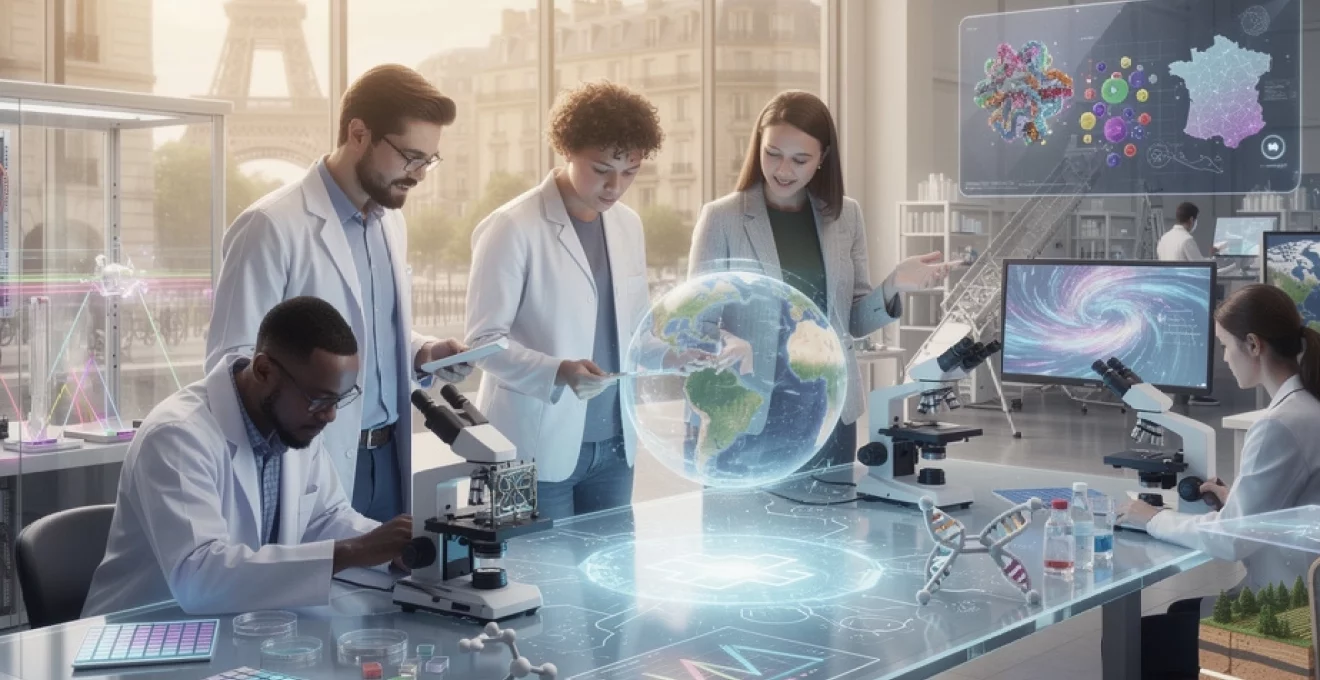
France has emerged as a powerhouse in global scientific research, with its universities and research institutions consistently delivering groundbreaking discoveries that reshape our understanding of the world. From quantum computing innovations to revolutionary climate science solutions, French academic institutions are pioneering cutting-edge research across multiple disciplines. The nation’s commitment to scientific excellence is evident in its substantial investment in research infrastructure, collaborative networks, and the cultivation of world-class talent.
The French higher education landscape encompasses some of the most prestigious institutions globally, each contributing unique expertise to the scientific community. These universities have fostered an environment where theoretical research meets practical application, resulting in innovations that address humanity’s most pressing challenges. With significant government backing and international partnerships, French research institutions continue to attract brilliant minds from across the globe, creating a dynamic ecosystem for scientific advancement.
Pioneering research institutions leading france’s scientific renaissance
France’s scientific renaissance is largely driven by a constellation of elite institutions that have established themselves as global leaders in research and innovation. These universities have created synergistic research environments where interdisciplinary collaboration flourishes, enabling breakthrough discoveries that transcend traditional academic boundaries. The strategic positioning of these institutions within France’s research ecosystem has facilitated unprecedented levels of scientific output and international recognition.
École normale supérieure paris: theoretical physics and mathematical modelling excellence
École Normale Supérieure (ENS) Paris stands as a beacon of excellence in theoretical physics and mathematical modelling, producing some of the world’s most influential scientists and mathematicians. The institution’s rigorous academic programmes have cultivated twelve Nobel Prize winners and eleven Fields Medal recipients, demonstrating its unparalleled commitment to scientific excellence. ENS Paris’s research laboratories focus on fundamental physics, including particle physics, condensed matter physics, and complex systems analysis.
The university’s Department of Physics houses state-of-the-art facilities for theoretical research, including advanced computational clusters that enable complex mathematical simulations. Recent breakthroughs at ENS Paris include revolutionary work in quantum field theory and the development of novel mathematical frameworks for understanding emergent phenomena in complex systems. These achievements have positioned the institution at the forefront of theoretical physics research globally.
Sorbonne université: multidisciplinary research clusters and nobel prize contributors
Sorbonne Université represents the epitome of multidisciplinary research excellence, combining the strengths of former universities Paris-Sorbonne and Pierre and Marie Curie University. This merger has created one of Europe’s largest and most comprehensive research institutions, with over 55,000 students and 6,400 faculty members. The university’s research spans humanities, sciences, engineering, and medicine, fostering innovative cross-disciplinary collaborations.
The institution’s research clusters focus on emerging scientific challenges, including climate change mitigation, artificial intelligence applications, and biomedical innovations. Sorbonne’s researchers have made significant contributions to marine biology and oceanography, with groundbreaking studies on ocean acidification and marine ecosystem dynamics. The university’s commitment to excellence is reflected in its current hosting of several Nobel Prize laureates and its consistent ranking among the world’s top research institutions.
École polytechnique: applied sciences and engineering innovation programmes
École Polytechnique, often referred to as “X,” has established itself as France’s premier institution for applied sciences and engineering research. The school’s unique approach combines rigorous theoretical foundations with practical engineering applications, producing graduates who become leaders in industry and academia. École Polytechnique’s research centres specialise in advanced materials, energy systems, and digital technologies.
The institution’s innovation programmes have resulted in numerous patents and spin-off companies, particularly in the fields of renewable energy and advanced manufacturing. Recent developments include breakthroughs in metamaterials and novel approaches to energy storage systems. École Polytechnique’s close partnerships with industry leaders facilitate the rapid translation of research discoveries into practical applications, strengthening France’s position in technological innovation.
Université Paris-Saclay: quantum computing and artificial intelligence research centres
Université Paris-Saclay represents one of the most ambitious higher education projects in recent French history, bringing together world-class institutions to create a comprehensive research ecosystem. The university’s quantum computing research centre has emerged as a
continuing global reference point for quantum information science and artificial intelligence research. Drawing on the combined expertise of institutions such as CentraleSupélec, ENS Paris-Saclay, and several CNRS laboratories, its researchers work on quantum algorithms, fault-tolerant quantum architectures, and hybrid quantum-classical computing models. The campus also hosts AI institutes dedicated to deep learning, reinforcement learning, and trustworthy AI, with applications ranging from autonomous systems to medical diagnostics.
One of the university’s most prominent initiatives is the development of integrated quantum computing platforms that bring together hardware, software, and algorithm design under a single umbrella. By fostering collaboration between physicists, computer scientists, and engineers, Université Paris-Saclay accelerates the path from theoretical concepts to experimental prototypes. For students and early-career researchers, this ecosystem offers a unique opportunity to work at the intersection of quantum technologies and advanced AI, positioning them at the forefront of tomorrow’s digital revolution.
Quantum technologies and advanced computing breakthroughs
Quantum technologies and advanced computing have become strategic priorities for France, with universities and national laboratories playing a central role in driving innovation. In this rapidly evolving field, French research institutions are not only competing with major global players but also carving out niche areas of excellence in quantum communication, high-performance computing, and neuromorphic architectures. For anyone interested in the future of secure communications, powerful simulations, or intelligent systems, the French research landscape offers a glimpse of what is coming next.
These breakthroughs are powered by a dense network of collaborations between universities, CNRS units, CEA research centres, and industrial partners. By pooling resources and expertise, France is able to tackle complex scientific challenges that no single institution could address alone. As we look at each major actor in this ecosystem, it becomes clear how complementary strengths in physics, engineering, and computer science are reshaping modern computing paradigms.
CNRS quantum information processing laboratories and photonic systems
The National Centre for Scientific Research (CNRS) operates several leading laboratories dedicated to quantum information processing and photonic technologies. These labs investigate how individual photons and atoms can be used to store, manipulate, and transmit information in ways that far exceed the capabilities of classical systems. Research topics range from entangled photon sources and quantum repeaters to integrated photonic circuits capable of performing complex computations at the speed of light.
To make these concepts more tangible, think of photons as ultra-fast, ultra-secure messengers that can never be intercepted without leaving a trace. CNRS teams work on harnessing these properties to build quantum networks and optical quantum computers that could revolutionise fields such as cryptography, optimisation, and materials design. By collaborating closely with universities like Sorbonne Université and Université Paris-Saclay, CNRS ensures that fundamental discoveries in quantum optics quickly translate into real-world demonstrators and pilot projects.
Cea-leti semiconductor research and neuromorphic computing applications
CEA-Leti, based in Grenoble, is a world-renowned institute for microelectronics and nanotechnology, specialising in advanced semiconductor research. Its scientists and engineers develop next-generation chips that push the limits of energy efficiency and computational power, addressing the growing demands of data-intensive applications. A major focus area is neuromorphic computing, which aims to design processors that mimic the architecture and functioning of the human brain.
Instead of processing information in a strictly linear way, neuromorphic systems operate through networks of artificial neurons and synapses, enabling massively parallel, low-power computation. This is particularly promising for edge AI, where devices such as drones, smart sensors, or medical implants need to analyse data locally with minimal energy consumption. By combining expertise in semiconductor fabrication, 3D integration, and advanced packaging, CEA-Leti is laying the technological foundations for a new generation of intelligent hardware that could transform how we design AI-powered systems.
Institut pasteur computational biology and bioinformatics algorithms
The Institut Pasteur is globally recognised for its contributions to microbiology and infectious diseases, but it is also a major player in computational biology and bioinformatics. Its researchers develop sophisticated algorithms to analyse genomic data, model the spread of pathogens, and predict how viruses or bacteria might evolve. During recent health crises, such computational tools have been crucial for tracking variants, identifying potential drug targets, and informing public health strategies.
To understand the impact of this work, imagine trying to read and interpret billions of letters in a genetic code; without advanced algorithms and high-performance computing, this task would be impossible. The Institut Pasteur leverages machine learning, network analysis, and structural modelling to make sense of such vast datasets. By training a new generation of scientists who are fluent in both biology and data science, the institute helps bridge the gap between wet lab experiments and digital research, accelerating biomedical discovery worldwide.
Thales quantum key distribution networks and cryptographic security
Thales, a major French industrial group, has positioned itself as a leader in quantum key distribution (QKD) and secure communications. Working hand in hand with universities and public research organisations, Thales develops quantum communication systems that protect sensitive data against increasingly sophisticated cyber threats. QKD relies on the laws of quantum mechanics to distribute encryption keys in a way that makes eavesdropping not only detectable but fundamentally impossible without disturbing the system.
As the prospect of large-scale quantum computers threatens current cryptographic standards, quantum-safe security solutions are no longer optional; they are essential. Thales is actively deploying pilot QKD networks in Europe, testing their integration with existing fibre infrastructure and satellite links. For students and researchers interested in cybersecurity, cryptography, or quantum engineering, these projects offer a unique opportunity to work on technologies that will underpin the secure internet of the future.
Biomedical innovation and pharmaceutical research excellence
Biomedical innovation and pharmaceutical research form another pillar of France’s scientific leadership. French universities, university hospitals, and specialised institutes collaborate closely with biotech start-ups and pharmaceutical companies to develop new therapies, vaccines, and diagnostic tools. From personalised medicine to gene editing, these institutions are shaping how we understand and treat disease in the 21st century.
In major clusters such as Paris, Lyon, and Marseille, interdisciplinary teams combine clinical expertise, molecular biology, and advanced imaging with data science and AI. This integrated approach allows researchers to move more quickly from basic discoveries to clinical trials and, ultimately, patient care. If you are wondering where the next generation of targeted cancer therapies or AI-assisted diagnostics might come from, there is a strong chance that French universities will play a significant role.
Climate science and environmental technology solutions
As climate change intensifies, French universities and research organisations are at the forefront of developing climate science and environmental technology solutions. Their work ranges from high-resolution climate modelling to innovative approaches for sustainable agriculture, biodiversity protection, and low-carbon energy systems. By partnering with government agencies and international bodies, these institutions ensure that scientific insights feed directly into climate policy and adaptation strategies.
Environmental research in France is highly interdisciplinary, drawing on physics, chemistry, ecology, economics, and social sciences. This holistic perspective is essential when designing solutions that are not only technically effective but also socially acceptable and economically viable. In the following sections, we explore how specialised institutes are tackling different aspects of the climate challenge, from atmospheric physics to soil management and geological storage.
IPSL climate modelling systems and atmospheric physics research
The Pierre-Simon Laplace Institute (IPSL) is a consortium of laboratories affiliated with major Parisian universities and CNRS, dedicated to understanding the Earth system as a whole. Its researchers develop sophisticated climate modelling systems that simulate the interactions between the atmosphere, oceans, ice sheets, and biosphere. These models are among the key tools used by the Intergovernmental Panel on Climate Change (IPCC) to assess future climate scenarios and inform global negotiations.
Climate models can be thought of as virtual laboratories where scientists test “what if” questions about greenhouse gas emissions, land use changes, or aerosol pollution. By running ensembles of simulations on supercomputers, IPSL teams explore the range of possible futures and identify critical tipping points. Their work in atmospheric physics, including studies of cloud formation, radiative transfer, and extreme weather events, helps improve the accuracy of climate projections and provides actionable information for policymakers and urban planners.
INRAE sustainable agriculture and carbon sequestration technologies
The French National Research Institute for Agriculture, Food and Environment (INRAE) focuses on transforming agricultural systems to make them more sustainable, resilient, and climate-friendly. Its researchers investigate how farming practices can reduce greenhouse gas emissions, enhance soil health, and increase biodiversity while maintaining high productivity. A key area of interest is carbon sequestration, which involves capturing carbon in soils and vegetation through practices such as agroforestry, cover cropping, and reduced tillage.
Think of healthy soil as a giant natural battery for carbon: the more organic matter it stores, the less carbon dioxide remains in the atmosphere. INRAE scientists work with farmers, cooperatives, and local authorities to test and deploy such techniques in real-world conditions. By combining field experiments, remote sensing, and economic modelling, they offer practical roadmaps for transitioning towards climate-smart agriculture that benefits both the environment and rural communities.
BRGM geothermal energy extraction and geological carbon storage
BRGM, the French Geological Survey, plays a central role in researching subsurface resources and their sustainable use. Among its key priorities are geothermal energy extraction and geological carbon storage, both essential components of a low-carbon energy strategy. Geothermal projects explore how heat from the Earth’s interior can be harnessed for district heating, industrial processes, or electricity generation, reducing reliance on fossil fuels.
Geological carbon storage, on the other hand, involves injecting captured CO2 into deep rock formations, where it can be safely contained for thousands of years. You can think of this approach as returning carbon to the underground reservoirs from which fossil fuels were originally extracted. BRGM scientists study the chemistry, hydrology, and mechanical behaviour of these formations to ensure long-term safety and stability. Their findings help guide pilot projects in France and abroad, demonstrating how subsurface technologies can complement renewable energy deployment and energy efficiency measures.
Space technology and aerospace engineering advancements
Space technology and aerospace engineering are areas where French universities collaborate closely with the European Space Agency (ESA), CNES (the French space agency), and major industrial partners such as Airbus and Safran. Together, they drive innovation in satellite technology, launch systems, and space exploration missions. French engineering schools and universities offer specialised programmes in aeronautical engineering, astrophysics, and space systems design, preparing students to contribute to ambitious international projects.
Research activities cover a wide spectrum, from lightweight composite materials for launchers to advanced propulsion, autonomous navigation, and Earth observation payloads. Satellite data collected by French-led missions support applications in climate monitoring, disaster management, agriculture, and urban planning. For those fascinated by questions like “How can we better monitor our planet from orbit?” or “What technologies will enable future missions to the Moon and Mars?”, French universities provide both the training and the research environment to explore these frontiers.
Materials science and nanotechnology research frontiers
Materials science and nanotechnology constitute another domain where French universities excel, often in partnership with CNRS and CEA laboratories. Researchers explore how manipulating matter at the atomic and nanoscale can yield materials with entirely new properties, such as ultra-high strength, tailored electrical conductivity, or exceptional catalytic activity. These innovations underpin advances in renewable energy, electronics, healthcare, and transportation.
Key research topics include two-dimensional materials, quantum dots, organic electronics, and nanoscale coatings that improve durability or reduce friction. By combining theoretical modelling, advanced microscopy, and large-scale facilities such as synchrotron light sources, French teams can observe and engineer materials with unprecedented precision. For students and professionals alike, this field offers a wealth of opportunities to work on applications ranging from more efficient solar cells to next-generation batteries and smart implants, highlighting once again how French universities sit at the leading edge of scientific breakthroughs.