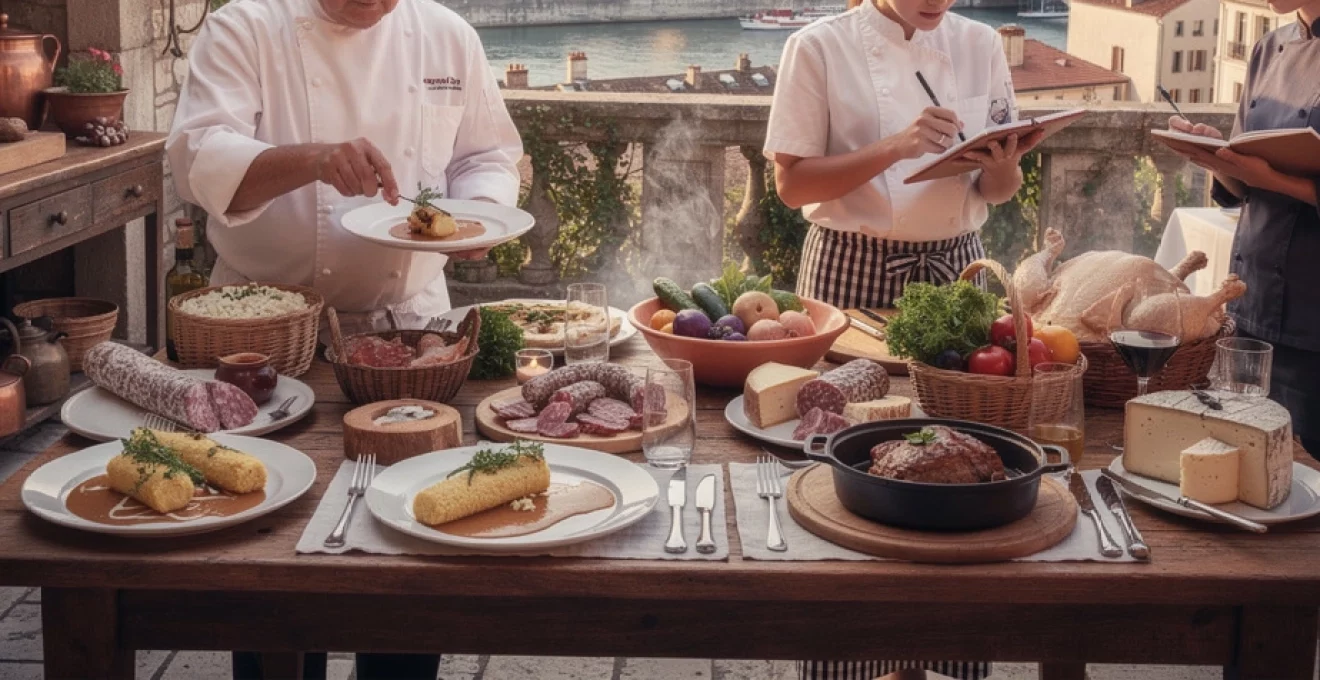
Nestled at the confluence of the Rhône and Saône rivers, Lyon stands as an undisputed titan in the world of culinary excellence. This remarkable French city has earned its prestigious title as the “Capital of Gastronomy” through centuries of culinary innovation, unwavering dedication to traditional techniques, and an extraordinary commitment to gastronomic artistry. From its ancient Roman foundations to its contemporary Michelin-starred establishments, Lyon represents a living tapestry of culinary heritage that continues to influence global cuisine today.
The city’s gastronomic reputation extends far beyond its borders, attracting food enthusiasts, professional chefs, and culinary students from around the world. With over 4,000 restaurants, including 16 Michelin-starred establishments, Lyon demonstrates an unparalleled concentration of culinary excellence. This extraordinary density of gastronomic venues creates a unique ecosystem where traditional bouchons coexist harmoniously with innovative contemporary establishments, each contributing to the city’s rich culinary narrative.
Historical foundations of lyonnaise culinary traditions from roman lugdunum to renaissance trade routes
Roman gastronomic influences at the confluence of rhône and saône rivers
The culinary heritage of Lyon traces its origins to the ancient Roman settlement of Lugdunum, established in 43 BCE. As the capital of the Roman province of Gallia Lugdunensis, this strategic location at the meeting point of two major rivers positioned the city as a crucial trading hub for the entire Roman Empire. The Romans introduced sophisticated culinary techniques, including advanced preservation methods, fermentation processes, and the cultivation of vineyards that would later become the foundation of the renowned Beaujolais and Côtes du Rhône wine regions.
Archaeological evidence reveals that Roman Lugdunum possessed elaborate dining customs and sophisticated food preparation facilities. The wealthy Roman citizens established garum production facilities, creating fermented fish sauces that would influence the development of Lyon’s distinctive umami-rich flavour profiles. These early culinary innovations laid the groundwork for what would eventually evolve into the complex charcuterie traditions that define Lyonnaise cuisine today.
Medieval guild system development and culinary craft specialisation
During the medieval period, Lyon’s culinary landscape underwent significant transformation through the establishment of powerful trade guilds. The Corporation of Butchers, founded in 1182, established stringent quality standards for meat preparation and processing that continue to influence modern Lyonnaise charcuterie. Similarly, the Bakers’ Guild implemented rigorous apprenticeship programmes that ensured consistent quality across the city’s bread production.
These guild systems created a culture of culinary excellence that emphasised craftsmanship, quality ingredients, and traditional techniques passed down through generations. The medieval period also saw the development of Lyon’s famous traboules, hidden passageways that connected buildings and facilitated the discreet transport of high-quality ingredients between workshops and kitchens, protecting trade secrets and maintaining competitive advantages.
Renaissance silk trade impact on exotic ingredient accessibility
The Renaissance period marked a transformative era for Lyon’s culinary development, largely driven by the city’s emergence as Europe’s silk capital. Wealthy silk merchants established extensive international trading networks that brought exotic spices, herbs, and culinary techniques from across Europe and beyond. Italian merchants, in particular, introduced sophisticated pasta-making techniques and innovative sauce preparations that would later influence the development of Lyon’s famous quenelle traditions.
The influx of foreign merchants created a cosmopolitan dining culture that blended traditional Gallic ingredients with exotic flavours from distant lands. Saffron from Spain, exotic spices from the Orient, and Mediterranean herbs became increasingly accessible to Lyon’s wealthy bourgeoisie, elevating the sophistication of local cuisine and establishing precedents for culinary innovation that continue to characterise the city’s gastronomic approach.
Industrial revolution transformation of lyon’s food production methods
The Industrial Revolution brought profound changes to Lyon’s food production landscape, introducing mechanisation to traditional processes while paradoxically strengthening the city’s commitment to artisanal quality. The development of steam-powered mills improved flour production efficiency, whilst refrigeration technologies
The Industrial Revolution brought profound changes to Lyon’s food production landscape, introducing mechanisation to traditional processes while paradoxically strengthening the city’s commitment to artisanal quality. The development of steam-powered mills improved flour production efficiency, whilst refrigeration technologies
allowed butchers, cheesemakers, and restaurateurs to store perishable ingredients safely over longer periods. This technological leap meant that iconic Lyonnaise products such as saucisson, poultry from Bresse, and delicate cream-based sauces could be prepared with greater consistency and distributed more widely. At the same time, canning and improved transport networks connected Lyon more closely to surrounding terroirs, from Beaujolais vineyards to Alpine dairy farms. Rather than diluting local identity, these advances reinforced Lyon’s role as a distribution hub for high-quality regional produce. By the late 19th century, factory workers, silk weavers, and bourgeois families alike could access a broader range of fresh ingredients, helping to democratise gastronomy while preserving the city’s deep respect for traditional recipes.
Traditional lyonnaise culinary techniques and bouchon cooking methodologies
Charcuterie artisanale and andouillette de troyes preparation standards
Charcuterie is at the heart of traditional Lyonnaise cuisine, and understanding it is essential if you want to grasp why Lyon is regarded as the food capital of France. Local charcutiers still rely on precise butchery, controlled curing, and slow maturation techniques that have changed little since the 19th century. Signature products such as rosette de Lyon, jésus de Lyon, and saucisson à cuire are all produced from carefully selected cuts of pork, seasoned with a restrained blend of salt, pepper, and sometimes garlic, then air-dried in cellars with very specific humidity and temperature levels. This combination of time, microclimate and craftsmanship produces the deep, savoury flavours that define authentic Lyonnaise charcuterie artisanale.
Although andouillette de Troyes originates from Champagne, it has been enthusiastically adopted and interpreted in Lyon’s bouchons. High-quality andouillette follows strict preparation standards: it must be made from carefully cleaned pork chitterlings and stomach, hand-cut rather than minced, and encased in natural casings to retain its characteristic texture. The sausage is then slowly poached and often finished on the grill or in a hot oven, developing a browned, crispy exterior while keeping the interior moist. In traditional bouchon cooking methodologies, you will often see andouillette served with a mustard or white wine sauce and accompanied by humble sides such as gratin dauphinois or sautéed potatoes. For visitors exploring Lyon’s culinary heritage, choosing establishments that clearly highlight artisanal charcuterie and transparent sourcing is a simple way to ensure you are tasting the real thing.
Quenelle de brochet shaping techniques and sauce nantua integration
The quenelle de brochet is perhaps the most emblematic dish of Lyon, and its apparent simplicity hides an impressive level of technical skill. At its core, a quenelle is a delicate dumpling made from a panade (a paste of flour or semolina, butter, milk, and eggs) enriched with finely processed pike. Achieving the right texture is crucial: the mixture should be smooth, elastic and light, almost like a savoury custard. Traditional cooks beat the mixture vigorously to incorporate air, which helps the quenelles puff up when they are poached. Shaping is done with two spoons or by hand-rolling to form oval, torpedo-like forms that cook evenly and hold their shape.
Sauce Nantua is the classic partner for quenelle de brochet, and integrating it correctly elevates the dish from comforting to unforgettable. Originating from the town of Nantua, this sauce is built on a rich béchamel base, intensified with crayfish butter, shellfish stock, and occasionally a splash of Cognac. Once the quenelles are gently poached in simmering water or court-bouillon, they are nestled into a gratin dish, generously coated with Sauce Nantua, then baked until the top takes on a light golden glaze. When done properly, each bite feels like a cloud infused with the flavours of river fish and freshwater shellfish—a perfect expression of Lyon’s riverside terroir. For home cooks, using very fresh fish and taking time to emulsify the crayfish butter into the sauce are the two most important steps in recreating this classic at home.
Coq au vin regional variations using côtes du rhône wine reductions
While coq au vin is a classic French recipe found in many regions, the Lyonnaise version has its own personality, shaped by proximity to the Côtes du Rhône vineyards. Traditionally, this dish was a way to tenderise an older rooster through slow braising in red wine, and it remains an excellent example of how Lyon’s cooks transform modest ingredients into memorable meals. In and around Lyon, chefs often favour robust yet balanced Côtes du Rhône reds, rich in Syrah and Grenache, to create deep, aromatic reductions. These wines bring notes of black fruit, pepper, and dried herbs that pair beautifully with lardons, mushrooms, and pearl onions.
The technique centres on layering flavour. The poultry is first marinated in wine with aromatics, then seared to develop caramelisation before being slowly braised. The cooking liquid is later reduced into a glossy sauce that clings to the meat, much like a well-tailored coat follows the lines of a body. In some bouchons and country kitchens north of Lyon, you will encounter variations using Beaujolais rather than Côtes du Rhône, resulting in a slightly lighter, fruitier profile. For travellers keen to explore regional coq au vin variations, paying attention to the wine used in the reduction is a practical way to understand how Lyonnaise chefs integrate local vineyards into everyday cooking.
Traditional cervelle de canut cheese preparation with herb emulsification
Cervelle de canut is one of the most revealing recipes if you want to understand Lyon’s social and culinary history. Despite its rather provocative name—“silk worker’s brains”—this speciality is actually a fresh cheese preparation made from fromage blanc whipped with herbs, shallots, and seasoning. Historically eaten by the canuts, the silk workers of Croix-Rousse, it is a brilliant example of how simple dairy products were transformed into something both nourishing and flavourful. The base fromage blanc needs to be very fresh, with a fine, creamy texture to allow proper emulsification.
The key technique lies in creating a stable herb emulsification, rather like building a light, savoury mousse. Chives, parsley and sometimes tarragon are very finely chopped, then blended into the cheese with a generous drizzle of good-quality olive oil, white wine vinegar, and occasionally a splash of dry white wine. As you whisk, the fat from the oil and the proteins in the cheese bind together, trapping tiny air bubbles and producing a smooth, slightly airy texture. Seasoned with salt and freshly ground pepper, cervelle de canut is served chilled, often with crusty bread or boiled potatoes. If you prepare it at home, letting the mixture rest in the refrigerator for an hour allows the flavours to meld, proving that even the humblest Lyonnaise dishes owe their depth to patience and technique.
Michelin-starred establishments and contemporary gastronomic innovation in lyon
Beyond its traditional bouchons, Lyon has become a laboratory for contemporary gastronomy, home to a remarkable concentration of Michelin-starred restaurants. As of the mid-2020s, the metropolitan area counts well over a dozen Michelin distinctions, ranging from long-established institutions to daring new venues led by young chefs. The legacy of Paul Bocuse, often called the “Pope of French gastronomy”, still looms large, particularly through his eponymous restaurant in Collonges-au-Mont-d’Or and his influence on generations of chefs. Yet Lyon’s current fine-dining scene is far from static. It continuously evolves, embracing lighter sauces, plant-forward menus, and creative tasting formats while maintaining the precision and respect for produce that define Lyonnaise cuisine.
What does modern innovation look like on the plate in the world capital of gastronomy? In many maisons, you will find classic techniques applied to unexpected ingredients: local trout cured with Beaujolais, Bresse poultry paired with fermented vegetables, or desserts that reinterpret praline and pink coussins de Lyon with contemporary plating. Chefs draw on global influences—from Japanese fermentation to Nordic-style foraging—yet they anchor these ideas firmly in Rhône Valley terroir. Tasting menus often read like concise essays on seasonality, with each course showcasing one or two key ingredients in different textures and temperatures. For visitors, booking at least one Michelin-starred meal offers a fascinating contrast to the hearty fare of the bouchons, illustrating how tradition and experimentation coexist in today’s Lyon.
Many of these restaurants also prioritise sustainability and local sourcing, echoing broader European trends in high-end dining. Short supply chains, nose-to-tail cooking, and reduced food waste have become cornerstones of their philosophy. Some chefs collaborate directly with urban farms around Lyon or with small wine producers in Beaujolais and the Northern Rhône to design pairings at the vineyard level. Others experiment with vegetarian or low-meat tasting menus, proving that Lyonnaise gastronomy can be both indulgent and environmentally conscious. If you are planning a gastronomic tour, it is wise to reserve several weeks in advance, especially around major food and wine events such as the annual Festival of Gastronomy or the release of Beaujolais Nouveau.
Bouchon culture and authentic lyonnaise restaurant traditions
No exploration of Lyon’s culinary heritage is complete without stepping into a traditional bouchon. These intimate, often family-run establishments are the living memory of the city’s working-class cuisine. Dining in a bouchon feels a bit like sitting in a friend’s kitchen: wooden tables close together, checkered tablecloths, copper pots hanging on the walls, and a menu filled with generous, straightforward dishes. Here, you will encounter classics such as salade lyonnaise, tablier de sapeur, quenelles, and hearty gratins—usually served in plentiful portions and accompanied by carafes of Beaujolais or Coteaux du Lyonnais. The emphasis is on conviviality and authenticity rather than formality or refinement.
Because “bouchon” has become a powerful marketing term, not every restaurant using the label truly reflects this tradition. To protect the city’s gastronomic identity, the Chamber of Commerce created the “Les Bouchons Lyonnais” label, awarded to establishments that respect specific criteria of home-style cooking, local sourcing, and warm hospitality. For travellers, this label can be a useful guide when choosing where to eat, especially in areas with a high density of tourist-oriented restaurants. Once seated, do not be surprised if the owner or server explains the menu in detail or recommends a dish based on what is freshest that day. In many ways, a bouchon meal is as much about human connection as it is about food.
Service rituals also form part of this restaurant culture. It is common to find fixed-price menus that follow a traditional structure: an entrée (starter), a generous main course, cheese, and dessert. Shared platters of charcuterie may arrive at the table for everyone to help themselves, reinforcing a sense of community. You might even be invited to taste a wine before it is poured for the whole table, a small but telling sign of trust. For those keen to experience Lyon “like a local”, visiting a bouchon at lunchtime, when office workers and families fill the room, provides a vivid snapshot of everyday gastronomic life in the capital of gastronomy.
Regional ingredient sourcing from rhône valley terroir and bresse agricultural systems
Lyon’s culinary reputation would be unthinkable without the extraordinary diversity of ingredients that surround the city. Positioned between the Beaujolais hills to the north, the fertile plains of the Bresse and Dombes to the east, and the Northern Côtes du Rhône vineyards to the south, Lyon sits at the crossroads of several distinct terroirs. Chefs benefit from short supply chains and close relationships with producers, allowing them to work with ingredients at peak freshness. This proximity explains why menus in both bouchons and Michelin-starred restaurants are so intensely seasonal, shifting as quickly as the harvests and fishing conditions.
The Bresse region, recognised by its protected designation of origin (AOP) for poultry, provides some of the finest chickens in the world. These birds are raised slowly, with strict standards for feed and living conditions, resulting in meat that is both tender and richly flavoured. In Lyon, Bresse poultry appears in iconic preparations such as poularde demi-deuil, where truffles are slipped under the skin before poaching. The nearby Dombes region contributes freshwater fish and game, while dairy farms across the Rhône-Alpes area supply the milk that becomes Saint-Marcellin, Saint-Félicien, and other much-loved cheeses. When you see these names on a menu or in a market stall, you are witnessing the tight bond between Lyonnaise gastronomy and its surrounding countryside.
Viticulture is another pillar of regional ingredient sourcing. From the Gamay-based reds of Beaujolais to the Syrah and Viognier wines of the Northern Rhône, local bottles are deeply integrated into Lyon’s cooking and dining rituals. Wines do not merely accompany food; they are often an ingredient in themselves, forming the backbone of sauces, marinades, and braises. Think of poires à la Beaujolaise, coq au vin made with Côtes du Rhône, or a simple gratin de cardons enlivened with a splash of white wine. For visitors eager to explore this dimension of the city’s culinary heritage, visiting markets such as Croix-Rousse or Saint-Antoine is an excellent way to see, taste, and buy products directly from producers who supply Lyon’s restaurants.
Lyon’s gastronomic education infrastructure and culinary training excellence
Given its status as the capital of gastronomy, it is no surprise that Lyon has developed a robust ecosystem for culinary education and training. The city hosts prestigious institutions that attract aspiring chefs, pastry chefs, and hospitality professionals from around the world. These schools combine classical French technique with modern innovation, ensuring that students can master everything from sauce making and charcuterie to food science and restaurant management. Their programmes often include internships in local restaurants, giving trainees hands-on experience in both traditional bouchons and cutting-edge Michelin-starred kitchens.
Lyon’s culinary education infrastructure extends beyond formal schools. Professional guilds, apprenticeship programmes, and continuing education courses help maintain high standards across all segments of the food industry, from bakers and butchers to sommeliers and chocolatiers. This network functions rather like the medieval guilds that once shaped the city’s trades, but updated for the 21st century: knowledge is shared, best practices are codified, and excellence is rewarded through competitions and certifications. Festivals, food conferences, and public workshops further deepen the connection between professionals and the wider community, allowing residents and visitors alike to learn about topics such as sustainable sourcing, wine pairing, or the science behind fermentation.
For travellers who are passionate about cooking, Lyon offers numerous ways to engage directly with this educational culture. You can book short courses that teach you how to prepare classic Lyonnaise dishes, join guided tastings that explore the subtleties of Rhône Valley wines, or visit indoor markets with a chef to learn how to select the best seasonal ingredients. These experiences provide more than just recipes; they offer insight into the values that underpin Lyon’s gastronomic identity—respect for terroir, precision in technique, and a deep belief that sharing food is one of the most meaningful ways we connect with others. In a city where every meal tells a story, learning even a small part of the local craft can transform the way you cook and eat long after you return home.