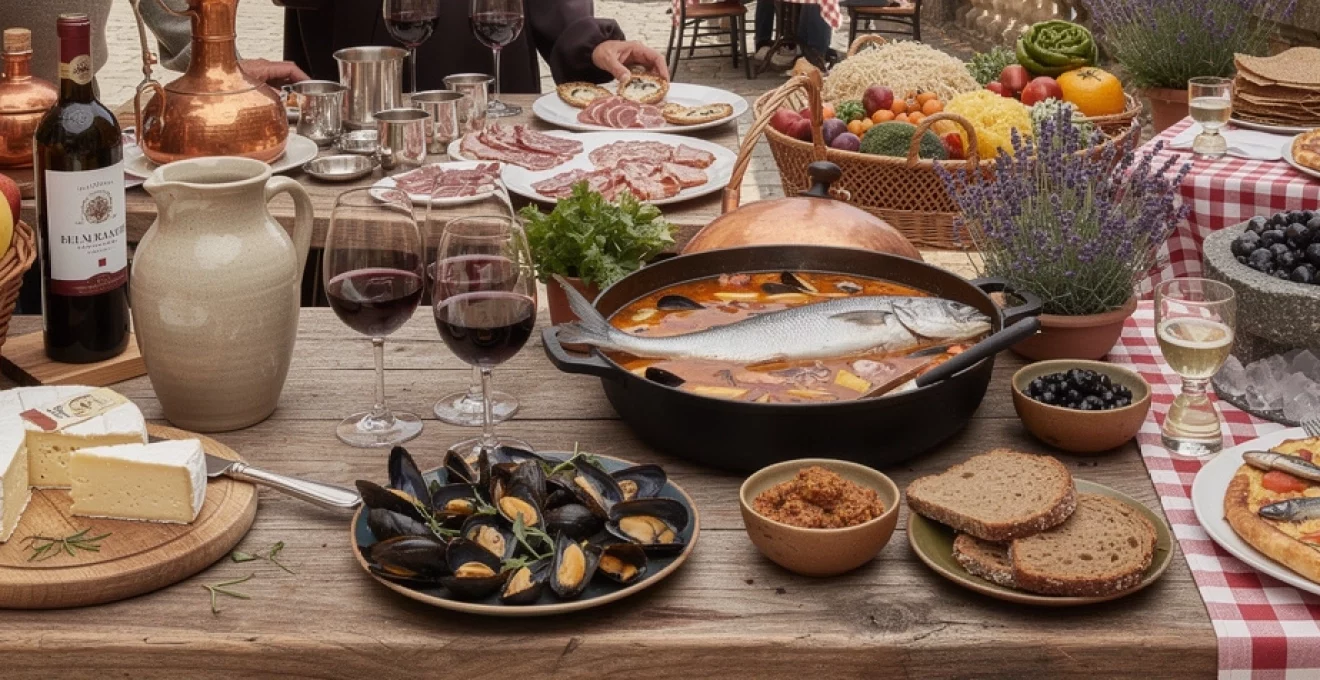
France’s culinary identity extends far beyond recipes and ingredients—it lives in the rituals, ceremonies, and time-honored practices that define regional gastronomic culture. From the misty apple orchards of Normandy to the sun-drenched markets of Provence, each French region maintains distinctive food traditions that have been refined over centuries. These culinary rituals reflect not merely what people eat, but how they eat, when they gather, and why certain preparations demand specific techniques passed down through generations. Understanding these practices offers a profound window into the soul of French gastronomy, where food transcends nourishment to become a living expression of cultural heritage and communal identity.
The ritualistic nature of French food culture manifests in everything from cheese affinage protocols to wine brotherhood induction ceremonies. These traditions aren’t museum pieces—they’re vibrant, evolving practices that continue to shape daily life across France’s diverse regions. Whether you’re observing the precise dilution techniques for pastis in a Marseille café or participating in a Burgundian harvest celebration, you’re engaging with cultural practices that have survived industrialization, globalization, and countless social transformations. Each ritual carries meaning that extends beyond the immediate sensory experience, connecting participants to their landscape, history, and community.
Gastronomic heritage and Terroir-Driven traditions in normandy
Normandy’s culinary rituals spring directly from its geographical character—a region defined by fertile pastures, abundant apple orchards, and a dramatic coastline. The Norman relationship with food is deeply seasonal, shaped by Atlantic weather patterns and agricultural cycles that have remained remarkably consistent for centuries. Here, tradition dictates not just what appears on the table, but the proper timing, preparation methods, and social contexts for consumption. These practices reflect a profound respect for terroir, the untranslatable French concept linking food quality to its specific geographical origin.
The Norman table celebrates dairy with an intensity matched by few other regions. Butter—particularly the prized beurre d’Isigny—features in virtually every traditional preparation, from morning pastries to evening sauces. This isn’t mere preference; it’s cultural identity made tangible. The region’s exceptional dairy products result from the mineral-rich grasses its cattle graze upon, creating a direct connection between landscape and flavor that Normans recognize instinctively. This geographical determinism shapes eating rituals throughout the region, where seasonal abundance dictates consumption patterns with an authority that transcends personal preference.
Calvados production ceremonies and apple harvest rituals in pays d’auge
The Pays d’Auge region maintains some of France’s most elaborate traditions surrounding apple cultivation and transformation. The apple harvest, typically occurring in October, triggers a cascade of ceremonial practices that have changed little since the 17th century. Families gather in orchards for ramassage, the traditional hand-picking that ensures only properly ripened fruit enters production. This communal labor carries social significance beyond agricultural efficiency—it’s a moment when neighbors reconnect, stories circulate, and younger generations learn techniques through demonstration rather than instruction.
Calvados production itself follows ritualistic precision. The double distillation process occurs between November and March, with master distillers monitoring copper stills using methods that blend scientific precision with intuitive judgment developed over decades. The ceremonial first taste of new distillate—the première goutte—involves the distiller, orchard owner, and often a small gathering of community elders. This moment carries weight; the distiller’s assessment determines whether the batch merits aging in oak barrels or requires adjustments. The ritual concludes with a toast using the previous year’s production, symbolically linking past and future harvests.
Camembert de normandie AOC affinage practices and tasting protocols
Authentic Camembert de Normandie production follows protocols so exacting they’ve been codified in AOC (Appellation d’Origine Contrôlée) regulations. Yet beyond legal requirements, traditional cheesemakers maintain ceremonial practices surrounding affinage—the aging process that transforms fresh curd into complex, aromatic cheese. The affinage cellars themselves are treated with almost religious reverence, their specific microbial environments cultivated over generations
and guarded as closely as family heirlooms. Affineurs still rely on tactile and visual cues—gentle pressure of the thumb against the rind, subtle shifts in aroma, the way the paste yields at the edges—to decide when each cheese is ready. Wheels are turned and salted according to a strict schedule, but decisions about extending or shortening affinage by a day or two are guided by experience that is difficult to quantify, much like a musician knowing when a note has been held for just long enough.
Tasting Camembert de Normandie also follows its own quiet ritual. Locals insist the cheese be served at à-point maturity, neither chalky at the core nor entirely liquefied, and always at room temperature. The first cut is made from the center outwards, ensuring each slice contains both heart and rind—anything else can be seen as a breach of etiquette. A simple country loaf, perhaps a slice of rustic apple, and a glass of Norman cider complete the tableau. In homes and traditional fromageries, this seemingly simple act becomes a structured tasting protocol, where texture, aroma, and flavor are discussed with the same seriousness you might associate with a formal wine tasting.
Moules marinières preparation techniques along the cotentin peninsula
Along the windswept Cotentin Peninsula, moules marinières is far more than a tourist-friendly classic; it is a dish anchored in maritime routines and tidal rhythms. Mussel farming families time their harvest to specific tides, collecting shellfish from wooden stakes or longlines that have dotted these shores for generations. Before cooking, mussels are carefully sorted, tapped to check for life, and rinsed repeatedly in cold seawater or lightly salted fresh water, a cleansing ritual that coastal cooks often perform almost automatically while chatting in the kitchen.
The preparation of moules marinières itself follows a minimalist but codified sequence. Onions or shallots are sweated in butter—never oil—in a heavy pot, often with a discreet clove of garlic depending on local preference. White wine (or occasionally Norman cider) is added in measured quantities, not to drown the mussels but to create a fragrant steam. Mussels are then added in one swift movement, pot covered tightly, and shaken periodically as they open. The cook listens to the rattle of shells and uses scent as much as sight to know when to stop the heat. At the table, it is customary to use an empty shell as a pair of improvised tongs, a small, playful ritual reminding us that even simple seaside food can carry its own etiquette.
Cidre bouché fermentation methods and seasonal consumption customs
Norman cidre bouché—cider bottled under cork like wine—emerges from fermentation practices that are both technical and deeply traditional. After pressing, the raw apple juice undergoes a slow, cool fermentation in tanks or barrels, often over several months, allowing native yeasts to work gradually. Producers still speak of “listening” to their cider, carefully monitoring temperature and sugar density to decide when to rack, blend, or bottle. The decision to bottle under cork with natural sediment, rather than sterile-filtering, preserves a living product whose light effervescence and complexity evolve over time, akin to a gently sparkling wine.
Seasonal customs govern when and how cidre bouché is consumed. Dry cider accompanies savory dishes such as andouille de Vire or buckwheat galettes, while sweeter versions appear with crêpes or apple desserts, particularly around autumn harvest and winter holidays. In rural areas, it is still common to open the first bottles of a new vintage at Epiphany, served with the galette des rois, creating a subtle link between orchard cycle and liturgical calendar. Guests may be offered a choice between cidre brut and demi-sec, and clinking glasses over a farmhouse table becomes its own quiet ceremony, reaffirming ties between family, land, and tradition.
Burgundian wine culture and vinous ceremonial practices
Burgundy’s gastronomic identity is inseparable from its vineyards, where ritual and hierarchy structure almost every aspect of wine culture. Here, the concept of terroir reaches its most intricate expression: tiny parcels of land, sometimes no bigger than a city block, are distinguished by centuries of observation and codified into strict classifications. This meticulous attention to place has given rise not only to coveted wines but also to elaborate ceremonial practices that frame how these wines are produced, judged, and enjoyed.
In Burgundian villages, the wine calendar functions almost like a civic liturgy. Pruning in winter, budbreak in spring, flowering, and finally the vendanges (harvest) each prompt their own rituals, informal or highly organized. You might wonder: how can a simple act like tasting a barrel sample become a ceremony? In Burgundy, it does so through shared vocabulary, established roles, and an almost theatrical sense of occasion, particularly in the region’s famous wine brotherhoods and harvest feasts.
Confrérie des chevaliers du tastevin induction rituals at château du clos de vougeot
The Confrérie des Chevaliers du Tastevin, founded in 1934, embodies the formal side of Burgundian wine ritual. Based at the historic Château du Clos de Vougeot, the brotherhood stages elaborate induction ceremonies that blend medieval pageantry with modern hospitality. New members—often winemakers, restaurateurs, or notable ambassadors of Burgundian culture—are presented in robes inspired by Renaissance costumes, under the vaulted ceilings of the old Cistercian winery. The atmosphere is closer to a solemn academic convocation than a simple wine tasting.
During the ceremony, candidates are evaluated not on blind tasting scores but on their declared commitment to promoting Burgundy’s wines and traditions. A symbolic tastevin, the traditional silver tasting cup, is often used as both emblem and tool, highlighting the historical techniques once used to judge wine in dim cellars. Speeches, songs, and toasts punctuate the evening, and the ritual conclusion—a communal meal accompanied by carefully chosen wines—reinforces the idea that membership is less a private honor than a collective duty to safeguard a cultural legacy.
Paulée de meursault harvest festival and communal feasting traditions
If the brotherhood ceremonies reflect Burgundy’s formal side, the Paulée de Meursault captures its festive, communal heart. Held each November at the end of the famous Trois Glorieuses (three days of wine celebrations), the Paulée brings together growers, négociants, and wine lovers for a sprawling banquet. Traditionally, each domain brings bottles from its own cellar, often rare vintages, and these are shared along the long tables in a spirit of generous conviviality that feels almost countercultural in a world of scarce grand crus.
The ritual here lies less in a fixed script and more in repeated patterns: the informal passing of bottles, the exchange of tasting impressions with strangers, and the toasts that rise in volume as the afternoon progresses. Singing, particularly Burgundian drinking songs, plays a central role, creating an atmosphere where hierarchy briefly softens and everyone becomes part of the same vinous community. For visitors, participating—even as an observer—offers a vivid example of how French culinary rituals can transform a meal into a collective celebration of identity and craft.
Grand cru classification systems and côte d’or tasting hierarchies
To understand Burgundian wine rituals, we must also grasp the region’s nuanced classification system, which shapes tasting hierarchies and etiquette. Vineyards are ranked from régionale appellations up through village, Premier Cru, and finally Grand Cru status. This system, largely formalized in the 1930s, codifies centuries of empirical observation by monks and vignerons who noted that some slopes—due to soil, exposure, and drainage—consistently produced superior wines. The hierarchy is not just legal; it deeply influences how locals approach tasting and serving.
In traditional Burgundy cellars, tasting follows a clear progression from simpler wines to more structured and complex cuvées, mirroring the climb up the classification ladder. Hosts may invite you first to taste a Bourgogne rouge before ascending through village-level wines and finishing with a Grand Cru from the Côte de Nuits or Côte de Beaune. This sequence is more than practical palate management—it becomes a narrative, telling the story of the region’s geography through each glass. You might think of it as reading a novel chapter by chapter, rather than skipping straight to the final page.
Marc de bourgogne distillation ceremonies and post-prandial service etiquette
Marc de Bourgogne, the region’s potent grape pomace spirit, adds another layer to Burgundian ceremonial life. Traditionally distilled from the skins and seeds left after pressing, it was once the domain of itinerant distillers who traveled from village to village with portable copper stills. The arrival of these stills was a minor event in itself, with growers gathering to watch the transformation of their harvest remnants into a warming digestif. Modern regulations have curtailed some of these practices, but in certain areas you still find small-scale distillation that feels more like a rite than a production step.
Serving Marc de Bourgogne after a meal follows an unspoken code. It is rarely offered automatically in restaurants, but in homes and traditional inns, a host may bring out a cherished bottle once coffee has been served. Guests are poured small measures in tulip-shaped glasses, and sipping is done slowly, with conversation easing into more reflective territory. As with many French digestifs, the ritual here is less about the alcohol itself than about signaling that the meal is entering its final, more intimate phase—an edible punctuation mark at the end of a long, carefully structured sentence.
Provençal market culture and mediterranean culinary rhythms
In Provence, culinary rituals orbit around light, rhythm, and the abundance of the Mediterranean basin. Markets, rather than supermarkets, set the tempo of daily life, and cooking is guided by what appears fresh on the stalls rather than by fixed weekly menus. Olive oil, sun-ripened vegetables, and aromatic herbs form the backbone of regional cuisine, but it is the way they are chosen, combined, and shared that reveals Provence’s distinctive food culture.
For travelers, stepping into a Provençal market is like entering a living textbook of seasonal eating. You see the calendar in edible form: asparagus and strawberries in spring, tomatoes and courgettes in summer, wild mushrooms and game in autumn. Have you ever noticed how a market can teach you more about a place than any guidebook? In Provence, that lesson is amplified by long-standing etiquette and informal “rules” that locals respect almost instinctively.
Bouillabaisse ritual preparation in marseille’s Vieux-Port district
Few dishes are as steeped in ritual as bouillabaisse, the emblematic fish stew of Marseille. Originally a humble fishermen’s meal composed of unsold rockfish, it has evolved into a codified recipe with clear expectations regarding ingredients and service. In the Vieux-Port district, serious establishments adhere to a two-part serving ritual: first, the broth is presented alone in a tureen, accompanied by slices of toasted bread and rouille, a garlicky saffron sauce. Diners ladle the broth into their bowls, add bread, and enrich it with rouille according to taste, creating an almost participatory act of final seasoning.
Only after this initial tasting are the pieces of fish—traditionally a mix of at least three species like rascasse, conger eel, and John Dory—served separately on a platter. This sequence underscores the dish’s dual identity as both soup and fish course, and many Marseille locals would argue that reversing the order breaks with tradition. The choice of wine, often a structured white from Cassis or Bandol, and the leisurely pace of the meal complete the ritual. Like a well-choreographed performance, each step is designed to highlight the complexity of the broth and the freshness of the catch.
Cours saleya market protocols and seasonal ingredient selection in nice
In Nice, the Cours Saleya market acts as a daily stage for Provençal and Niçoise culinary rituals. Vendors and regular customers navigate the stalls according to patterns that might seem mysterious at first glance but quickly reveal their logic. Early morning is the domain of restaurant chefs and seasoned home cooks, who arrive before 9 a.m. to secure the best tomatoes, basil, and local courgettes for dishes like ratatouille or farcis niçois. Later in the morning, the atmosphere becomes more relaxed, with visitors mingling among locals collecting fragrant bunches of herbs and flowers.
Seasonal ingredient selection follows unwritten yet widely respected rules. For instance, locals will avoid purchasing strawberries long before or after their natural season, viewing such choices as a betrayal of both flavor and ecological sense. Many shoppers bring reusable baskets and engage in brief but meaningful exchanges with producers, asking about ripeness or suggested preparations. These conversations form a kind of oral cookbook, transmitting knowledge about how best to handle ingredients—from how long to salt aubergines to which varieties of olive are best suited to oil versus table service.
Pastis anise apéritif dilution techniques and social drinking customs
Pastis, the anise-flavored apéritif ubiquitous in Provence, comes with its own set of small but significant rituals. Served as a concentrated spirit in a glass alongside a carafe of chilled water, it is never drunk neat. The drinker controls dilution, typically adding five to seven parts water for one part pastis, though personal preferences vary. As water meets the anise oils, the liquid turns cloudy—this louche effect is almost a small ceremony in itself, watched with quiet satisfaction at café terraces from Marseille to Aix-en-Provence.
Social customs around pastis underscore its role as a marker of leisure and conviviality rather than excess. It is an afternoon or early evening drink, often sipped during games of pétanque or while reading the newspaper at a café. Ordering multiple rounds too quickly or consuming pastis with a meal might raise local eyebrows. For visitors, mastering the simple act of slowly diluting and sipping pastis can be an easy way to blend in—a reminder that in France, how you drink is as important as what you drink.
Tapenade production methods using nyons AOC olives
Tapenade, the robust olive paste typical of Provence, showcases another blend of technique and tradition, especially when prepared with Nyons AOC olives. These small, wrinkled black olives, harvested late in the season, are valued for their sweet, almost pruney flavor. In traditional kitchens, tapenade begins with pitting the olives by hand—an unhurried, communal task often accompanied by conversation. Capers, anchovies, garlic, and olive oil are then added, and the mixture is pounded in a mortar with a pestle rather than blitzed in a food processor, preserving a rustic, slightly coarse texture.
The resulting paste is more than a simple spread; it is a versatile component of Provençal culinary ritual. Tapenade appears at apéritif time on toasted bread, in picnic sandwiches, or as a seasoning for grilled fish and roasted vegetables. Hosts often prepare it a day in advance to allow flavors to meld, treating it almost like a marinating process. For anyone keen to recreate Provençal food culture at home, learning to make tapenade in this slow, deliberate way is an accessible first step—an analogy, perhaps, to learning a few key phrases before attempting fluent conversation in a new language.
Alsatian germanic-influenced food ceremonies and festive traditions
Alsace, straddling the cultural frontier between France and Germany, offers some of the country’s most distinctive food rituals. Half-timbered houses, vineyard-clad hills, and church steeples set the stage for a cuisine rich in pork, sauerkraut, and aromatic white wines. Yet beyond individual dishes, it is the ceremonial aspects—Christmas markets, harvest parades, and family Sunday lunches—that define Alsatian gastronomic identity. Here, Germanic heartiness and French finesse coexist in a way that feels entirely natural to locals.
One of the most visible expressions of these traditions is the region’s Advent and Christmas season. Strasbourg’s Christkindelsmärik, widely considered one of Europe’s oldest Christmas markets, transforms the city into a glowing maze of wooden chalets, each offering bredele (spiced biscuits), vin chaud, and regional specialties. Visiting families often follow a set route year after year, stopping at favorite stalls and sharing a choucroute or flammekueche in a winstub, the traditional wood-paneled taverns where gingham tablecloths and closely spaced tables encourage conversation between strangers.
Throughout the year, Alsatian food rituals also revolve around wine and beer. The Fête des Vendanges in villages along the Route des Vins combines processions in traditional costume with barrel-tapping ceremonies and communal meals. At these gatherings, choucroute garnie—sauerkraut topped with an assortment of sausages and cured meats—is served on large platters meant for sharing, reinforcing a sense of collective abundance. Even everyday customs, such as the mid-morning snack of kougelhopf cake and coffee on weekends, speak to a regional rhythm where food and festivity are never far apart.
Breton maritime culinary practices and celtic-rooted customs
On France’s Atlantic edge, Brittany’s culinary rituals are inseparable from the sea and from a distinct Celtic heritage. Rugged coastlines, fishing ports, and windswept moors inform both what Bretons eat and how they celebrate it. Seafood—oysters, scallops, langoustines—features prominently, but so do buckwheat galettes, salted butter, and rustic cakes enriched with sugar and dairy. Underlying many of these foods are customs linked to tides, religious feasts, and local festivals that preserve a strong sense of regional identity.
In fishing communities such as Concarneau or Douarnenez, daily life once revolved around the return of the boats; even today, fish auctions and harbor-side markets follow schedules set by the sea. Mussels and oysters are eaten according to seasonal guidelines that locals often summarize as “months with an R,” although modern aquaculture has nuanced this rule. Breton households still mark special occasions with seafood platters served on crushed ice, accompanied by simple rye or buckwheat bread and local butter. The act of cracking crab claws or opening oysters at the table becomes a shared performance, requiring skill, patience, and a certain sense of humor when shells misbehave.
On land, Brittany’s Celtic roots emerge in gatherings like the Fest Noz, night-long dances recognized by UNESCO as intangible cultural heritage. These events are often fueled by simple but deeply satisfying foods: galettes filled with ham, cheese, and egg; far breton (a dense prune flan); and, increasingly, artisanal ciders and chouchen, a local mead. Eating here is not a separate activity but woven into the fabric of music and dance, with breaks for food and drink punctuating the night. For visitors, joining a Fest Noz meal is a vivid way to feel how Breton culinary practices remain embedded in living, communal ritual rather than staged folklore.
Lyonnais bouchon culture and working-class gastronomic rituals
Lyon, long regarded as the gastronomic capital of France, owes much of its reputation to the humble bouchon—small, convivial bistros that originated as working-class eateries for silk workers. These establishments retain a distinct set of rituals that differentiate them from standard restaurants. Checkered tablecloths, closely packed tables, and blackboard menus are more than décor choices; they signal a style of service where generosity, informality, and hearty portions are the norm. The atmosphere encourages conversation between neighboring tables, blurring the line between private and public dining.
The structure of a traditional bouchon meal reflects its roots in laborers’ needs for substantial, affordable nourishment. Starters might include salade lyonnaise with poached egg and bacon, or cervelle de canut, a herbed fromage blanc spread served with bread and charcuterie. Main courses tend toward offal and slow-cooked dishes—tablier de sapeur (crumbed tripe), quenelles de brochet in rich sauce, or andouillette—presented without pretension but with clear pride. Dessert often comes as a selection of simple classics, from praline tart to île flottante, passed around the table on shared platters in some of the most traditional addresses.
Rituals in bouchons extend beyond the plate. Carafes of local Beaujolais or Côtes du Rhône are commonly placed on the table with minimal ceremony, and it is not unusual for the patron to come and chat, sharing stories about suppliers or the history of particular recipes. Fixed-price menus encourage lingering, with no rush to vacate your seat for the next service. In a world increasingly dominated by fast food and standardized chains, the bouchon stands as a reminder that working-class gastronomic rituals—rooted in frugality, conviviality, and respect for every part of the animal—can form the backbone of a great culinary city.