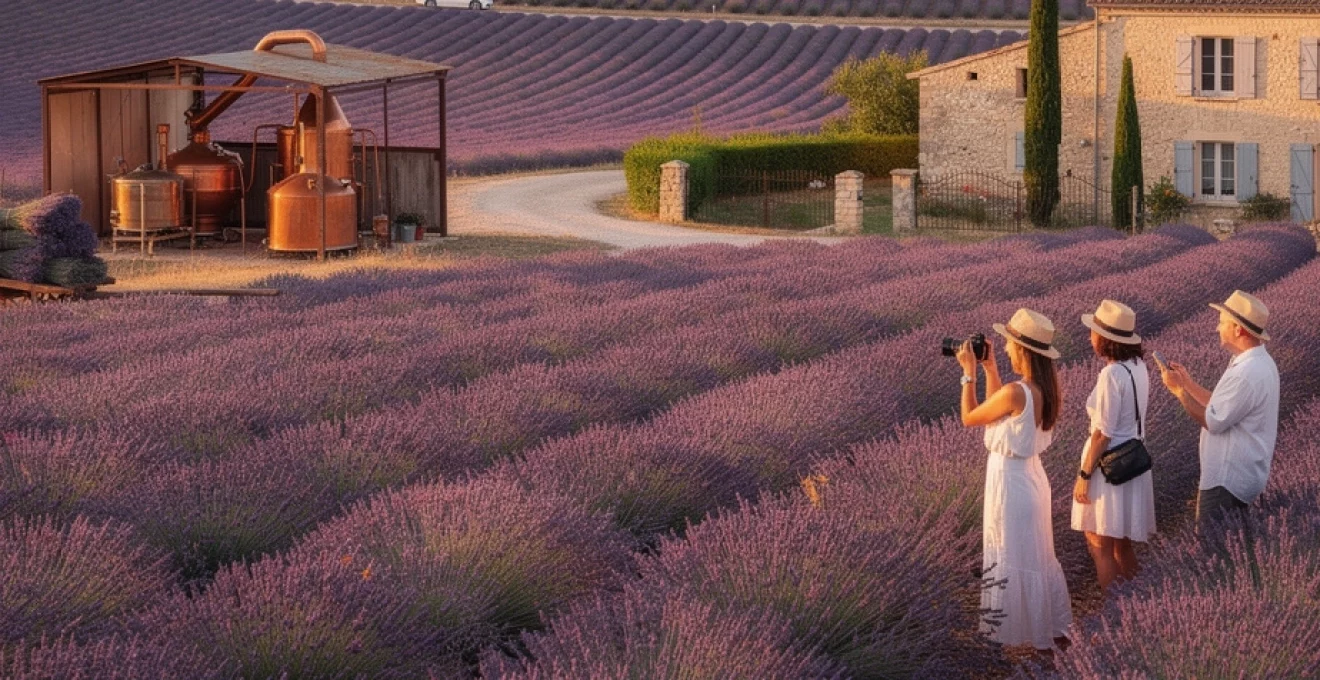
Few landscapes captivate the senses quite like the lavender fields of Provence during peak bloom. Between mid-June and early August, the hillsides, plateaus, and valleys of southeastern France transform into an ocean of purple, where the air itself seems to shimmer with fragrance. This annual spectacle draws photographers, wellness seekers, and travelers from across the globe, all searching for that perfect moment when light, color, and scent converge. Beyond the visual poetry, these fields represent centuries of agricultural tradition, botanical diversity, and an economy built on the distillation of one of the world’s most cherished essential oils. Understanding where to go, when to visit, and what distinguishes one lavender region from another can transform a casual trip into an unforgettable immersion in Provençal heritage.
Geographical distribution of lavender cultivation across the Provence-Alpes-Côte d’azur region
Lavender cultivation in Provence spans multiple departments, each offering distinct microclimates, soil compositions, and farming traditions. The Alpes-de-Haute-Provence, Vaucluse, Drôme, and parts of the Alpes-Maritimes collectively form what many consider the lavender heartland of Europe. These regions account for approximately 80% of France’s total lavender and lavandin production, with an estimated 20,000 hectares under cultivation. The geographical diversity creates natural zones where different lavender species thrive, from the low-lying plains where hybrid lavandin dominates to the high plateaus where true Lavandula angustifolia flourishes at altitudes exceeding 800 meters.
Plateau de valensole: Industrial-Scale lavandin production and peak blooming periods
The Plateau de Valensole remains the most photographed lavender destination in Provence, and for good reason. This vast expanse stretches across approximately 800 square kilometers between the towns of Manosque, Riez, and Valensole itself, offering what many describe as the quintessential Provençal landscape. Here, lavandin—a sterile hybrid between true lavender and spike lavender—grows in perfectly aligned rows that create mesmerizing geometric patterns across rolling terrain. The plateau’s relatively low altitude, between 400 and 600 meters, combined with generous sunlight and well-drained soil, makes it ideal for lavandin cultivation. Blooming typically begins around June 20th, with peak color occurring during the first two weeks of July. What sets Valensole apart is not just the scale of cultivation but also the interspersing of sunflower fields, which bloom simultaneously, creating a striking contrast of purple and gold. Can you imagine standing at a vantage point where these two colors stretch to the horizon in alternating bands?
Sault and the vaucluse highlands: true lavandula angustifolia terroir
Perched on the southern slopes of Mont Ventoux, the commune of Sault and its surrounding plateau represent the geographic heart of fine lavender production. At altitudes ranging from 750 to 1,200 meters, this region provides the cooler temperatures and shorter growing season that Lavandula angustifolia requires. The soil here—predominantly limestone with excellent drainage—further contributes to the production of essential oils with superior olfactory profiles. Sault proudly carries the unofficial title of “Lavender Capital,” hosting an annual festival on August 15th that celebrates the harvest with traditional distillation demonstrations, artisan markets, and cultural performances. The blooming period here extends slightly later than lower-altitude regions, typically reaching full intensity between July 15th and early August. This timing offers a second chance for visitors who missed the earlier bloom at Valensole. The landscape around Sault differs markedly from the plateau—here you’ll find lavender cascading down hillsides, tucked into small valleys, and framing panoramic views of Mont Ventoux’s limestone summit.
Drôme provençale: organic lavender farming in montélimar and grignan districts
The Drôme Provençale, particularly the areas surrounding Montélimar, Grignan, and the
Nyons form a natural transition zone between Mediterranean influences and pre-Alpine freshness. This climatic balance, combined with high sunshine hours and low pollution, has encouraged a strong movement toward organic and biodynamic lavender farming. Many producers here cultivate both true Lavandula angustifolia and lavandin using minimal-input methods, rotating fields with cereals and aromatic herbs like thyme and rosemary to preserve soil structure. As you drive through the Grignan and Valréas sectors, you will notice smaller, more fragmented plots than in Valensole, often bordered by vines and truffle oaks. This mosaic landscape is ideal if you are looking for quieter lavender fields, direct sales from farms, and a deeper insight into sustainable Provençal agriculture.
Luberon valley microclimates and their influence on essential oil composition
The Luberon Valley, stretching between Cavaillon and Manosque, is defined by striking variations in altitude, exposure, and wind patterns over short distances. North-facing slopes, such as those on the Plateau des Claparèdes between Bonnieux and Saignon, remain cooler and slightly more humid, while south-facing vineyards near Lourmarin and Apt experience warmer, drier conditions. These microclimates influence not only when lavender blooms but also the chemical composition of its essential oil. Plants growing higher and cooler tend to produce oils richer in esters, prized for their calming properties, while lower, sunnier plots may show a slightly higher camphor content, adding a more invigorating note to the fragrance profile.
For visitors, the Luberon offers a more intimate lavender experience than the sweeping industrial fields of Valensole. Around villages like Bonnieux, Gordes, and Roussillon, you will encounter modest parcels of lavender tucked between cherry orchards, olive groves, and stone farmhouses. Distilleries such as Les Agnels or small family-run operations often work with mixed harvests from various microclimates, blending oils to achieve a desired aromatic balance. Walking or cycling through these landscapes, you become keenly aware that lavender here is part of a broader agricultural and cultural ecosystem rather than a single-crop monoculture.
Optimal visiting windows for lavender tourism: phenological stages and regional variations
Planning your trip around the phenological stages of lavender—the observable phases of growth from bud to bloom to harvest—can dramatically improve your experience in Provence. While guidebooks often suggest “July” as a blanket answer, the reality on the ground is far more nuanced. Altitude, latitude, and local weather patterns can shift flowering dates by one to three weeks from one valley to the next. Lower-altitude lavandin fields near Valensole or Forcalquier may already be in full bloom when high plateaus around Sault are just starting to color. By understanding these regional variations, you can align your itinerary with the kind of landscape you want to see: fresh green spikes just opening, dense purple rows at their peak, or the more rustic charm of post-harvest fields and steaming distilleries.
Mid-june blooming in lower-altitude fields of pays de forcalquier
The Pays de Forcalquier, situated between 350 and 700 meters in altitude, is one of the earliest areas to show color each season. Thanks to its relatively mild winters and warm springs, lavandin fields here often begin to bloom from around June 15th, sometimes even earlier in exceptionally warm years. During this phase, the plants pass from tight green buds to soft mauve spikes, and the contrast with the surrounding wheat fields and oak forests can be particularly striking. If you are visiting Provence in late June and fear you may be “too early” for lavender, Forcalquier and its neighboring villages like Mane and Saint-Étienne-les-Orgues are reassuring options.
Another advantage of an early visit is the reduced crowding on country roads and at key viewpoints. You will find easier parking, calmer conditions for photography, and more time to speak with farmers who are not yet in the intense rush of high-season harvesting. Morning and late-afternoon light, already generous in June, enhances the pastel tones of the fields and keeps temperatures more comfortable for walking. Of course, there is a trade-off: you may miss the deepest violet tones of mid-July, but you gain a quieter, more contemplative encounter with Provence’s “blue gold.”
Peak season timing across plateau de valensole and abbaye de sénanque
For many travelers, the image of Provence is inseparable from the intense, saturated purple of lavender at peak bloom. On the Plateau de Valensole, this peak typically falls between the last week of June and around July 10th, depending on the year. During this short window, fields appear almost opaque in color, with individual stems blending into a continuous wave of violet. The air is heavy with fragrance, and the buzzing of bees forms a constant background soundtrack. This is also when bus tours and self-drive visitors are most numerous, so patience and planning become essential if you want to enjoy the landscape without feeling rushed.
A similar, though slightly shifted, pattern occurs around the Abbaye de Sénanque near Gordes. Here, at a slightly higher altitude and in a more enclosed valley, lavender usually reaches its zenith from early to mid-July. The monastery’s iconic façade framed by purple rows has become one of the most reproduced images of Provence, which means timing your visit is crucial. Aim for early morning (before 9 a.m.) or late afternoon to avoid heavy crowds and harsh midday light. Keep in mind that the monks adjust their agricultural calendar based on weather conditions, so some years the fields may be cut a bit earlier than expected. If you arrive and find short stems instead of full blooms, the consolation is that distillation may be underway nearby, offering a different but equally fascinating experience.
Late july to early august flowering at higher elevations near mont ventoux
If your travel dates fall later in the summer, all is not lost—in fact, higher-elevation areas near Mont Ventoux may be in their prime when lower fields have already been harvested. Around Sault, the Plateau d’Albion, and the villages of Aurel and Ferrassières, true lavender often peaks between July 20th and the first week of August. Cooler nights and a shorter growing season slow the plant’s development, resulting in a delayed but often very intense flowering. From these vantage points, you can gaze across vast mosaics of lavender and ancient cereal crops, with Mont Ventoux’s pale summit providing a dramatic backdrop.
The atmosphere in these highlands is different, too—less dominated by mass tourism and more by local life. Roadside stands sell lavender honey, essential oils, and small artisanal products straight from nearby farms. The annual lavender festival in Sault on August 15th marks the symbolic end of the season, with traditional harvesting demonstrations using sickles and scythes, horse-drawn carts, and parades. If you are sensitive to heat, this late-July to early-August period can actually be more comfortable here than in the lowlands; breezes are cooler, and evening temperatures drop quickly, making it pleasant to linger outdoors long after sunset.
Harvesting schedules and their impact on tourist accessibility
One of the most common questions travelers ask is, “Will the lavender still be there when I arrive?” The answer depends not only on bloom dates but also on harvesting schedules, which vary by species, altitude, and end use of the crop. Lavandin in lowland fields destined for industrial distillation is often cut as soon as the oil content reaches its optimum level, usually in early to mid-July. This means that a field you admired in photographs from the previous week may already be a neat row of trimmed stems when you arrive. True lavender cultivated for high-end essential oil or artisanal products is sometimes harvested slightly later, especially at higher altitudes, to capture more complex aromatic compounds.
From a visitor’s perspective, this creates a moving target that can be hard to predict. Weather events—such as a heatwave or late frost—can push the entire calendar forward or backward by up to ten days. To reduce uncertainty, it is wise to contact local tourism offices or specific distilleries a week or two before your trip, asking about the current state of the fields. You can also adopt a flexible strategy: plan your route through a mix of low, medium, and high-altitude zones, increasing the odds of encountering blooming lavender somewhere along the way. And remember, even after harvest, the region remains deeply engaging—distilleries are in full operation, markets overflow with lavender-based products, and the golden stubble of cut fields has its own quiet beauty.
Distinguished lavender routes and designated scenic itineraries
To help travelers navigate this complex geography, regional authorities and local tourism boards have developed a number of designated lavender routes. These itineraries link the most picturesque fields with villages, viewpoints, and distilleries, turning a simple drive into a structured journey through Provence’s aromatic heritage. Following one of these circuits can feel a bit like tracing the veins of a leaf—you move from main arteries of cultivation into smaller, more intimate side valleys and plateaus. Whether you prefer a full-day road trip or shorter loops around a single base, these lavender routes allow you to balance spontaneity with the reassurance of proven scenic highlights.
Routes de la lavande official circuit: Alpes-de-Haute-Provence to drôme
The “Routes de la Lavande” is an umbrella term for a network of signposted itineraries extending from the Alpes-de-Haute-Provence to the Drôme Provençale. These routes typically combine lavender fields with other regional assets such as Romanesque churches, olive groves, and perched villages. In practice, this means you might start your day among the vast lavandin fields of Valensole, continue through the Verdon foothills, and end in the softer, more fragmented landscapes around Nyons and Buis-les-Baronnies. Panels along the way explain the difference between true lavender and lavandin, outline local history, and sometimes direct you to producers offering visits or tastings.
While it is possible to follow these routes strictly as mapped, many travelers use them as a flexible framework. You can choose sections that match your interests—perhaps focusing on organic farms in the Drôme, or on large-format photography opportunities in the Alpes-de-Haute-Provence. Because the Routes de la Lavande cross several departments, they also provide a useful way to extend a trip beyond Provence’s most famous postcards. Have you ever imagined pairing a morning among purple fields with an afternoon in the canyons of the Verdon or the shaded squares of Sisteron? On this circuit, such combinations are easy to arrange.
Circuit between gordes, sénanque abbey, and roussillon ochre cliffs
For those based near Avignon or the Luberon, a classic scenic itinerary forms a triangle between Gordes, the Abbaye de Sénanque, and the ochre cliffs of Roussillon. Starting from Gordes, you descend into the narrow valley that shelters Sénanque, where rows of lavender align with the Cistercian abbey’s austere stone façade. From there, you can loop back via country roads across the Plateau de Vaucluse, passing smaller, less-known fields and traditional farmhouses. Continuing toward Roussillon, the landscape shifts again as red and orange ochre deposits emerge, contrasting dramatically with any remaining lavender patches and the deep green of pine forests.
This circuit is especially interesting if you are looking to combine natural color contrasts with architectural heritage on a single outing. Time your visit to coincide with early morning light at Sénanque, midday exploration of Gordes’ streets and viewpoints, and late-afternoon wanderings in the ochre quarries of Roussillon. Because parking can be limited and roads narrow in high season, it is wise to start early and, if possible, visit on a weekday. If you have extra time, detours to the Plateau des Claparèdes or to small producers around Joucas and Murs will reward you with quieter lavender encounters away from the main tourist flow.
Photography-focused routes through valensole’s geometric field patterns
Photographers, both amateur and professional, are particularly drawn to the Plateau de Valensole for its vast, repeating patterns of lavender rows. Here, gentle hills and open horizons allow you to experiment with leading lines, symmetry, and vanishing points, especially along the D6 and D8 departmental roads. Iconic viewpoints often include a solitary stone cabanon, a lone tree, or power lines receding into the distance, all of which provide visual anchors against the sea of purple. Sunset and sunrise produce the most flattering light, softening contrasts and sometimes tinting the fields with pink or orange undertones.
If your goal is to bring home striking images of the lavender fields in Provence, consider planning a dedicated “golden hour” route. During the day, you can scout locations, noting where the sun will rise or set relative to specific compositions. In the evening or early morning, return to two or three of the most promising spots, allowing time to experiment rather than rushing from one car park to another. Be mindful, however, that these are working farms: stay on established paths or roadside edges, avoid stepping between rows, and keep an eye out for bees. With a bit of respect and patience, you will find that the geometry of Valensole offers almost endless creative possibilities.
Distillation heritage and essential oil production facilities
Beyond the fields themselves, the story of lavender in Provence is inseparable from its transformation into essential oil. For centuries, distillers have harnessed steam and copper to extract the plant’s aromatic essence, refining techniques from rustic stills to sophisticated industrial units. Visiting a distillery during your stay turns abstract terms like “ester content” or “AOP” into tangible experiences—suddenly you can see, smell, and even feel the difference between batches, species, and terroirs. Many facilities now welcome the public, offering guided tours that walk you from fresh-cut stems to bottled oil in a single, sensory-rich circuit.
Traditional copper alembic distillation methods at distillerie des 4 vallées
While large industrial plants dominate bulk production, smaller operations such as the Distillerie des 4 Vallées (and similar family-run sites across Haute-Provence) maintain traditional copper alembic stills. The principle is deceptively simple: steam passes through a chamber filled with freshly cut lavender, rupturing oil glands in the flowers and carrying aromatic molecules upward. This vapor then condenses in a cooling coil, separating into essential oil and hydrosol, or floral water. Standing beside a functioning alembic, you can hear the gentle bubbling of water, smell the growing intensity of the vapor, and watch as the first golden drops of oil appear in a glass separator.
From a technical standpoint, these traditional methods allow distillers to finely tune parameters such as temperature, pressure, and time to match the particularities of each harvest. A batch from an early-season lavandin field in Valensole will not behave the same way as late-harvested true lavender from the Plateau d’Albion. By speaking with distillers, you gain insights into how they adapt to these variations, much like winemakers adjusting their approach vintage by vintage. For visitors interested in the science of essential oils, many distilleries now provide explanatory panels or short workshops that demystify these processes without overwhelming you with jargon.
Musée de la lavande in coustellet: steam extraction processes and historical equipment
The Musée de la Lavande in Coustellet, near Gordes, offers one of the most comprehensive introductions to lavender distillation in Provence. Housed in a purpose-built space surrounded by fields and gardens, the museum showcases more than three centuries of equipment, from early handheld stills to intricate copper columns used by itinerant distillers. Exhibits explain the evolution of steam extraction, the shift from wood-fired boilers to more controlled energy sources, and the impact of technological changes on both yield and quality. Audioguides and interactive displays make the material accessible whether you are a casual visitor or a dedicated enthusiast of aromatherapy.
One of the museum’s strengths is its focus on authenticity. Emphasis is placed on fine lavender from Haute-Provence and on producers who adhere to strict quality and traceability standards. Demonstrations, held more frequently during the summer season, show how freshly cut lavender is loaded into stills and how the first fractions of oil can differ from the later ones, a bit like the “heads” and “tails” in spirits distillation. The on-site boutique, meanwhile, allows you to compare various oils, soaps, and cosmetic products derived from true lavender and lavandin, with clear labeling that helps you make informed choices.
AOP huile essentielle de lavande de Haute-Provence certification standards
To protect the reputation of its finest lavender, the region has established the AOP (Appellation d’Origine Protégée) label for “Huile Essentielle de Lavande de Haute-Provence.” This European certification guarantees that the oil comes exclusively from true Lavandula angustifolia grown between 800 and 1,250 meters in designated zones across the Alpes-de-Haute-Provence, Drôme, Vaucluse, and Hautes-Alpes. Beyond geographic restrictions, the AOP imposes strict criteria on cultivation methods, harvesting techniques, and distillation parameters. For instance, the oil must be obtained by direct steam distillation without chemical solvents, and its biochemical profile (levels of linalool, linalyl acetate, camphor, and other constituents) must fall within defined ranges.
For consumers and visitors, this label functions much like an appellation for wine: it signals both origin and style. When you buy an AOP-certified lavender essential oil, you know that it has been produced in relatively small quantities, under close supervision, and with a focus on aromatic complexity rather than sheer volume. Many farms proudly display the AOP logo on their signage and bottles, and some offer comparative tastings where you can smell certified oils alongside non-certified products. Such experiences make it easier to understand why certain oils command higher prices—they are the result of rigorous standards, challenging growing conditions, and a long tradition of expertise.
Lavandin grosso versus lavandula angustifolia: biochemical profiles and market applications
At first glance, a field of lavandin Grosso and one of true lavender may look similar, but their essential oils tell a different story. Lavandula angustifolia typically yields an oil rich in linalool and linalyl acetate, compounds associated with relaxation, skin tolerance, and a complex, sweet-floral aroma. Camphor content is generally low, contributing to a more rounded and subtle scent. Lavandin Grosso, by contrast, often contains higher levels of camphor and 1,8-cineole, giving it a sharper, more penetrating fragrance that some describe as “cleaner” or more medicinal. This difference is not a flaw but a reflection of the hybrid’s genetic heritage and its adaptation to lower-altitude environments.
These biochemical contrasts translate into distinct market applications. True lavender essential oil from Provence is favored in high-end perfumery, aromatherapy blends for relaxation and sleep, and dermo-cosmetic products where skin sensitivity is a concern. Lavandin oil, with its stronger aroma and higher yield per hectare, is widely used in household cleaners, detergents, air fresheners, and mass-market soaps, where impact and cost-effectiveness are key. When you visit a distillery or a farm shop, do not hesitate to ask which species you are smelling; most producers are happy to explain the differences and help you choose an oil that matches your intended use. In this sense, learning to distinguish between lavandin Grosso and Lavandula angustifolia is a bit like learning the basics of grape varieties in wine—it opens up a whole new dimension of appreciation.
Architectural heritage surrounding lavender-growing territories
The lavender fields of Provence do not exist in isolation; they are woven into a cultural landscape shaped by monasteries, fortified villages, and centuries-old farmhouses. As you travel from one plateau to another, you are just as likely to encounter Romanesque churches and medieval ramparts as you are to see tractors and distillation equipment. This architectural heritage adds depth to the visual experience, providing historical context and a sense of continuity. Standing before a stone abbey framed by purple rows, you can almost imagine the generations of monks and farmers who tended these lands long before lavender became an international symbol of Provence.
Abbaye Notre-Dame de sénanque: cistercian monastery and adjacent lavender fields
Founded in the 12th century, the Abbaye Notre-Dame de Sénanque remains one of the most emblematic sites in the region where spiritual and agricultural traditions converge. The Cistercian order, known for its emphasis on manual labor and self-sufficiency, has long cultivated crops around its monasteries, and lavender is no exception. The fields directly in front of the abbey, though modest in size compared to Valensole, are meticulously maintained and aligned with the stark elegance of the stone architecture. This creates a powerful visual dialogue between human order and natural abundance, especially when the plants bloom in early to mid-July.
Visitors are welcome to tour parts of the abbey, attend services, or simply walk the grounds in silence, respecting the fact that this is still an active monastic community. Photography is permitted from designated areas, but drones and off-path wandering are strictly prohibited to protect both the site and the crops. If you seek a more contemplative encounter with the lavender fields of Provence, Sénanque offers a rare opportunity to experience them within a context of prayer, history, and simplicity. Audio guides, available in multiple languages, provide insight into daily monastic life and the role agriculture continues to play in sustaining the community.
Fortified villages of Simiane-la-Rotonde and banon overlooking purple plateaus
Further east and north, perched villages like Simiane-la-Rotonde and Banon rise above broad plateaus planted with lavender and cereals. Their stone houses, narrow alleys, and defensive walls speak of a time when these hilltops were strategic lookouts rather than postcard subjects. Today, they serve as exceptional viewpoints from which to appreciate the patchwork of fields spread out below. In Simiane-la-Rotonde, the circular keep that gives the village its name hosts cultural events and occasionally exhibitions related to lavender and aromatic plants. From its terraces, you can see how the blue-violet fields follow the contours of the land, interrupted by groves of oak and patches of woodland.
Banon, famous for its soft goat cheese wrapped in chestnut leaves, offers a different but complementary experience. Here, small bookstores, artisanal shops, and cafes line the main streets, making it an ideal place to pause between field visits. The surrounding countryside, part of the Plateau d’Albion, is one of the strongholds of fine lavender cultivation, particularly for AOP-certified oils. Walking or driving just a few kilometers out of the village, you quickly find yourself amidst open plateaus where the horizon seems to stretch forever. The juxtaposition of ancient stone architecture and modern agricultural equipment reminds you that, in Provence, tradition and innovation often coexist side by side.
Provençal farmhouse architecture and traditional bastide accommodations
Scattered among the lavender fields of Provence, you will notice a distinctive rural architecture: low-slung stone farmhouses with thick walls, small windows, and gently sloping tile roofs. These traditional “mas” were designed to protect inhabitants from both summer heat and mistral winds, with living quarters often grouped around a sheltered courtyard. Outbuildings housed animals, tools, and, in some cases, small-scale distillation setups used to process lavender and other aromatic plants. Over time, many of these structures have been restored and converted into guesthouses or holiday rentals, allowing visitors to experience the landscape from within rather than as day-trippers.
In addition to these farmhouses, larger “bastides”—country estates once owned by wealthy families—dot the countryside around Aix-en-Provence, Luberon, and the Vaucluse highlands. These properties often feature formal gardens, plane-tree alleys, and views over nearby lavender fields, vineyards, or olive groves. Staying in such accommodations can deepen your connection to the region, as mornings begin with the sound of cicadas and the sight of mist lifting over violet rows. Some establishments collaborate directly with local farmers and distillers, offering on-site tastings, workshops, or guided excursions into the surrounding fields. In this way, architecture becomes not just a backdrop but an active part of your lavender journey.
Practical logistics for lavender field exploration in provence
Transforming your interest in the lavender fields of Provence into a successful trip requires a bit of practical planning. Distances between key areas—Valensole, Luberon, Sault, Drôme Provençale—are manageable but not negligible, and public transport options remain limited in rural zones. By thinking ahead about your arrival points, preferred mode of transport, and tolerance for driving on narrow country roads, you can design an itinerary that balances discovery with comfort. Whether you fly into Marseille, arrive by high-speed train in Avignon, or extend a stay on the Côte d’Azur, access to a rental car or organized tours will significantly enhance your flexibility.
Access points from Marseille-Provence airport and avignon TGV station
Marseille-Provence Airport (MRS) is the main international gateway to southern France and a convenient starting point for exploring lavender-growing regions. From the airport, major car rental agencies operate year-round, and within 60 to 90 minutes you can reach Aix-en-Provence, Valensole, or the southern Luberon via well-maintained motorways and national roads. If you prefer to rely on rail, shuttle buses connect the airport to the Aix TGV station, where high-speed trains link to Paris, Lyon, and other European cities. From Aix, regional trains and buses can bring you closer to certain areas, but last-mile access to the most scenic fields almost always requires a car or guided excursion.
Avignon TGV station is another excellent entry point, particularly if you are arriving from Paris or northern France. The high-speed journey from Paris takes about 2 hours and 40 minutes, after which you can pick up a rental car directly at the station. From Avignon, the Luberon villages, Sénanque Abbey, and the Vaucluse highlands are all within a 30- to 90-minute drive. This base works well if you want to combine lavender exploration with cultural visits to Avignon’s Palais des Papes, the pont Saint-Bénézet, or the theater festival in July. For eco-conscious travelers, consider using trains for long-distance travel and reserving car use for regional exploration.
Self-drive navigation through D6 and D8 departmental routes
Once in Provence, the most memorable lavender excursions often involve leaving the main highways and following departmental roads that weave through fields and villages. On the Plateau de Valensole, the D6 and D8 are two of the most iconic routes, lined with extensive lavandin fields, occasional sunflower patches, and viewpoints that have become favorites among photographers. These roads are generally well surfaced but can be quite busy during peak season, with cars pulling over at popular spots and tour buses navigating tight curves. Drive slowly, use designated lay-bys whenever possible, and avoid sudden stops that could surprise vehicles behind you.
Elsewhere in the region, similar departmental routes—such as those circling the Plateau de Sault, crossing the Plateau des Claparèdes, or winding through the Drôme Provençale—offer equally rewarding experiences. A GPS or smartphone mapping app is helpful but not strictly necessary; in fact, allowing yourself to follow signposts for small villages can lead to unexpected discoveries. However, fuel stations and rest stops are less frequent in rural areas than along the autoroutes, so it is wise to top up your tank and carry water and snacks before heading out. Think of these drives not just as transfers from point A to point B, but as integral parts of your lavender journey, where each bend in the road may reveal a new, unforgettable view.
Guided agritourism experiences at working lavender estates
If you prefer to leave navigation and scheduling to someone else—or if you want deeper insight into cultivation and distillation practices—guided agritourism experiences are an excellent option. Many working lavender estates in Provence now offer structured visits that include field walks, explanations of planting and harvesting techniques, and demonstrations of distillation. Some also propose thematic workshops, such as crafting lavender sachets, blending simple aromatherapy formulas, or pairing local honey and cheeses with lavender-infused products. These experiences not only enrich your understanding but also support local economies at a time when small farms face increasing competition and environmental challenges.
Group tours departing from cities like Aix-en-Provence or Avignon often combine several elements: visits to one or two estates, a stop at a viewpoint or historic village, and free time in a local market or museum. Private guides, meanwhile, can tailor itineraries to your interests, whether you are a photographer chasing golden-hour light, a botanist fascinated by species diversity, or a family seeking child-friendly activities. When booking, pay attention to group size, language options, and whether visits include access behind the scenes during harvest or distillation. By choosing thoughtfully, you can transform a simple sightseeing outing into an immersive exploration of Provence’s most fragrant tradition.