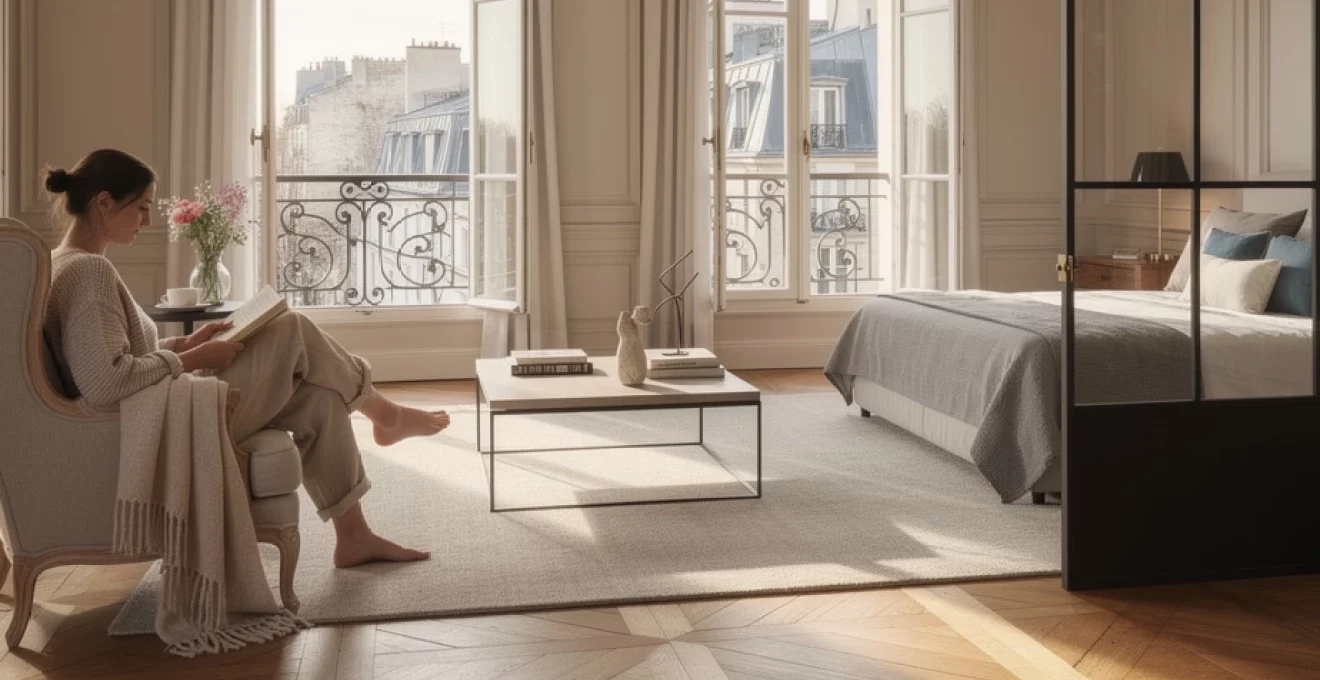
The allure of Parisian apartment living extends far beyond the romantic imagery of café culture and tree-lined boulevards. Authentic Parisian interiors embody a sophisticated balance between historical grandeur and contemporary functionality, creating spaces that feel both timeless and utterly liveable. The distinctive charm of these apartments lies in their ability to transform compact square footage into havens of elegance through thoughtful design choices and meticulous attention to architectural detail.
Modern Parisians have mastered the art of living beautifully within constraints, proving that spatial limitations need not compromise style or comfort. Their approach to interior design emphasises quality over quantity, favouring carefully curated pieces that serve multiple functions whilst maintaining an air of effortless sophistication. This philosophy creates interiors that feel both intimate and expansive, achieved through clever spatial planning and a deep understanding of how light, texture, and proportion interact within confined spaces.
Haussmannian architecture elements in modern parisian apartment design
The architectural legacy of Baron Haussmann’s 19th-century urban planning continues to define Parisian residential aesthetics today. These distinctive buildings, characterised by their uniform cream-coloured stone facades and wrought-iron balconies, provide the structural foundation for contemporary Parisian interior design. The marriage of these classical elements with modern living requirements creates spaces that honour historical tradition whilst meeting the demands of 21st-century urban life.
Original parquet de versailles flooring restoration techniques
The restoration of original parquet flooring requires a delicate balance between preservation and modernisation. Traditional Parisian apartments often feature intricate parquet patterns, including the chevron herringbone design that has become synonymous with French elegance. Professional restoration begins with careful assessment of the existing wood condition, identifying areas requiring repair or replacement whilst maintaining pattern integrity.
Modern restoration techniques employ eco-friendly sanding methods that preserve the wood’s natural character whilst removing decades of accumulated wear. The application of contemporary water-based polyurethane finishes provides superior durability compared to historical shellac treatments, whilst maintaining the subtle lustre that defines authentic Parisian floors. Restoration specialists recommend maintaining original nail patterns and wood grain direction to preserve the flooring’s historical authenticity.
Crown moulding and ceiling rose integration methods
Contemporary installation of period-appropriate crown moulding requires understanding both aesthetic proportions and modern building techniques. Traditional Haussmannian apartments feature elaborate plasterwork that creates visual drama and architectural interest, with ceiling roses serving as focal points for lighting fixtures. Modern restoration projects often involve creating custom moulding profiles that match existing details whilst accommodating contemporary electrical systems.
The integration process typically involves careful measurement of room proportions to ensure moulding scale remains appropriate for ceiling height. Professional installers recommend using high-quality MDF or polyurethane alternatives for durability, particularly in areas prone to moisture fluctuation. The painting process requires multiple primer and finish coats to achieve the smooth, seamless appearance characteristic of traditional French plasterwork.
Wrought iron balconette installation and Period-Appropriate hardware
The installation of authentic wrought iron balconettes requires specialised knowledge of both structural engineering and historical design principles. These decorative elements serve both aesthetic and functional purposes, providing safety barriers whilst maintaining the characteristic Parisian streetscape appearance. Modern installations must comply with contemporary building codes whilst preserving the delicate proportions and ornate detailing of traditional designs.
Period-appropriate hardware selection focuses on brass or bronze fittings that develop natural patina over time, avoiding modern stainless steel alternatives that compromise historical authenticity. Professional installation involves careful assessment of window frame structural capacity and proper weatherproofing to prevent moisture infiltration. The integration of modern security features within traditional designs requires specialist expertise to maintain both functionality and aesthetic integrity.
French window casement optimisation for natural light maximisation
Traditional French casement windows present unique opportunities for natural light optimisation through careful hardware selection and opening mechanism adjustment. The inward-opening design characteristic of Parisian apartments requires strategic furniture placement to maximise both light penetration and spatial functionality. Modern upgrades often involve installing contemporary glazing systems within existing frames to improve thermal performance whilst preserving historical appearance.
Weatherstripping, discreet draft excluders and high‑performance seals can be added to original frames without altering their visual rhythm. Where planning rules allow, slim double- or even vacuum-glazed units can be retrofitted into existing sashes, dramatically improving energy performance in a typical Parisian apartment. Light-coloured reveals, minimal window dressings, and reflective surfaces opposite the casements help bounce daylight deeper into the room, ensuring that even a compact living area feels bright and expansive throughout the day.
Contemporary french interior design principles and spatial planning
Contemporary French interior design in Parisian apartments is defined by a subtle dialogue between restraint and character. Rather than filling every corner, designers prioritise circulation, visual calm, and a clear hierarchy of functions, especially in small footprints. The goal is to create a cozy Parisian apartment that feels generous and breathable, even when the floor area is limited. This is achieved through open sightlines, multi-functional spaces, and thoughtful zoning instead of heavy architectural divisions.
Open-plan kitchen integration with traditional galley layouts
Many older Parisian homes feature narrow galley kitchens that feel disconnected from the social heart of the apartment. Modern renovations often reconfigure these into semi open-plan kitchens that preserve the efficiency of the galley layout while visually linking the space to the living or dining area. By removing a non-structural wall or creating a wide opening, you allow daylight and conversation to flow, transforming cooking into a shared ritual rather than an isolated task.
To maintain a sense of order in an open-plan scheme, cabinetry lines are kept simple and continuous, often in muted tones that echo the wall colour. Integrated appliances, concealed extractors, and flush fronts reduce visual noise so the kitchen reads almost like a piece of fitted furniture within the wider living space. A slim peninsula or bar-height counter can define the transition between kitchen and salon without blocking views, providing an extra work surface by day and an informal aperitif spot by night.
Bedroom alcove creation using verrière glass partition systems
When square metres are scarce, carving out a dedicated sleeping zone can dramatically increase comfort without requiring a separate bedroom. Parisian designers frequently use verrière glass partitions—slender, steel-framed internal windows—to create bedroom alcoves within studio or one-room apartments. These partitions preserve borrowed light and visual depth while offering acoustic separation and a sense of retreat at night. The result is a sleeping space that feels intimate but not cramped, like a cabin within a larger volume.
For maximum versatility, you can combine fixed glazed panels with operable sections or sliding doors, allowing the alcove to be closed off or opened entirely depending on the time of day. Frosted lower panels or linen blinds integrated into the frames provide privacy without sacrificing brightness. By aligning mullions with existing architectural lines—such as wall panelling or mouldings—you maintain the refined rhythm typical of Haussmannian and contemporary French interiors.
Bathroom space optimisation in sub-20 square metre configurations
Designing a bathroom in a sub-20 square metre Parisian apartment demands precision planning. Every centimetre counts, so layouts are often simplified to a single wet wall carrying the basin, WC and shower services. A walk-in shower with a flush tray or linear drain eliminates the visual bulk of a tub while keeping the floor plane as uninterrupted as possible, which is crucial for making a tiny room feel larger. Clear glass screens or partial partitions prevent splashing without interrupting sightlines.
Wall-hung sanitaryware and shallow-depth vanity units create a greater sense of floor space and make cleaning easier. Recessed niches for toiletries, mirrored cabinets for storage, and large-format tiles that continue from floor to wall help reduce grout lines and visual fragmentation. In many Parisian micro-apartments, a pocket door or discreet sliding panel replaces a traditional swing door, releasing precious circulation area in the hallway or main room.
Multi-functional furniture solutions for studio apartment living
Multi-functional furniture underpins contemporary French spatial planning, especially in studio apartments where a single room must accommodate sleeping, working, and entertaining. Rather than resorting to bulky sofa beds, many Parisian designers favour high-quality daybeds with concealed storage, or platform beds with integrated drawers and shelves. These pieces read as elegant seating during the day yet transform into a comfortable sleeping space at night, maintaining the refined look of the living area.
Fold-down desks, nesting side tables and extendable dining consoles allow the apartment to adapt fluidly to changing routines without feeling cluttered. A compact round table, for example, can serve as a breakfast spot for two but expand to host four for dinner when needed. By choosing pieces with slim legs, light-coloured upholstery and visible floor beneath, you preserve a sense of lightness and avoid the heaviness that can quickly overwhelm a compact Parisian apartment.
Colour psychology and french provincial paint schemes
Colour plays a pivotal role in shaping the mood of a cozy Parisian apartment, particularly when natural light is limited. French interiors tend to favour desaturated, gently “dirty” whites and soft greys over stark, brilliant whites, as these tones lend depth and sophistication while remaining calm and versatile. A warm off-white with a hint of grey on the walls creates a flattering backdrop for artwork and vintage furniture, echoing traditional Haussmannian schemes while feeling decidedly modern.
French provincial paint schemes often layer these neutrals with muted blues, sage greens or dusty blushes inspired by limestone villages and faded shutters. Used sparingly—on interior doors, panelling or a single accent wall—these colours introduce character without fragmenting the space. For small apartments, keeping skirting, architraves and ceilings lighter than the walls helps push boundaries outward visually. Thoughtful colour zoning can also subtly define functions: a deeper tone in the dining niche, for instance, creates a cocooning atmosphere without erecting physical partitions.
Textile selection and layering strategies for parisian comfort
Textiles are essential to achieving the layered, lived-in comfort that defines Parisian style. While the architectural envelope may be restrained, fabrics introduce softness, warmth and a tactile richness that make a small apartment feel welcoming rather than austere. The key is to combine a limited palette of high-quality materials—linen, wool, cotton, silk and cashmere—in varying weights and textures. This creates visual interest and seasonal flexibility without overwhelming the room with pattern.
By repeating a few core hues across your textiles—perhaps a soft grey, an inky blue and a warm beige—you can link different zones in an open-plan layout. Subtle contrasts in weave and finish, from nubby bouclé cushions to smooth sateen pillowcases, create depth when seen up close, much like the brushstrokes of a painting. This understated layering is what gives a Parisian apartment its sense of effortlessness and quiet luxury.
Linen blend upholstery choices for classic bergère chairs
Classic bergère chairs are a cornerstone of French interior design, and the right upholstery can make them feel at home in even the most contemporary Parisian apartment. Linen-blend fabrics offer the ideal balance of relaxed texture and durability: pure linen has a beautiful drape and a slightly rumpled charm, while the addition of cotton or synthetic fibres improves resistance to creasing and everyday wear. Opting for stone, dove grey or chalky greige tones keeps the chairs timeless and easy to pair with changing decor.
For small spaces, choosing a tight-weave linen blend with a medium weight prevents the fabric from stretching out of shape and keeps silhouettes crisp. Subtle piping in the same or a slightly darker tone can highlight the graceful curves of the frame without veering into formality. When restoring vintage bergères, it’s also worth upgrading the internal padding and springs; comfortable seating encourages you to actually use these pieces daily, rather than treating them as untouchable antiques.
Wool rug placement techniques for zone definition
Wool rugs are invaluable for defining zones in an open-plan Parisian apartment, particularly when original hardwood or parquet floors run seamlessly between areas. Placing a generously sized rug under the living area anchors the seating group and creates a visual “island” within the larger room. Ideally, the front legs of sofas and chairs should sit on the rug so the composition feels cohesive rather than scattered. A smaller complementary rug beneath a dining table can then delineate the eating area without requiring structural separation.
In narrow Haussmannian corridors or entryways, a runner adds warmth and acoustic softness while subtly guiding movement through the apartment. Choosing low- to medium-pile wool in solid or gently mottled tones keeps maintenance manageable and prevents patterns from overwhelming modest proportions. By echoing one or two colours from your upholstery or curtains, the rug helps tie the different elements together, enhancing the calm, ordered atmosphere characteristic of refined French interiors.
Silk curtain hanging methods using traditional tringle systems
Curtains play a major role in both light control and atmosphere in a Parisian apartment, and traditional tringle rod systems are still widely used for their elegance and practicality. When working with silk or silk-blend curtains, hanging them as high as possible—often just below the ceiling moulding—accentuates vertical lines and makes standard-height rooms feel taller. Allowing the fabric to kiss or gently pool on the floor adds a touch of understated luxury without appearing fussy.
To protect delicate silk from UV damage and improve insulation, many designers specify interlining and a cotton sateen lining, which also lends the drape a fuller, more sculptural quality. Discreet brass or wrought-iron tringles with simple finials complement both historic and contemporary schemes, echoing balcony railings and other metal details in the apartment. In small spaces, keeping curtain fabrics in the same tonal family as the walls helps the windows feel wider and prevents heavy visual breaks.
Cashmere throw integration for seasonal temperature regulation
Cashmere throws might seem like a purely indulgent accessory, but in a cozy Parisian apartment they serve a practical role in seasonal temperature regulation. Older buildings often experience slight drafts and fluctuating temperatures, even after window upgrades, so having lightweight yet warm layers at hand is essential. A finely woven cashmere or cashmere-blend throw draped over a sofa arm, the end of a bed, or a favourite armchair provides instant comfort during cooler evenings without the need to overheat the entire space.
Visually, these throws introduce an additional layer of softness and colour that can be easily updated from season to season. A deep navy or forest green adds depth in winter, while oatmeal or soft blush tones keep things light in spring. Because cashmere has a subtle sheen and a dense, smooth hand, it contrasts beautifully with rougher materials like linen and wool, reinforcing the tactile richness that defines Parisian comfort.
Lighting design using pierre paulin and charlotte perriand principles
Lighting is perhaps the most underestimated tool in crafting a Parisian-style interior, and designers often draw on the human-centred principles championed by Pierre Paulin and Charlotte Perriand. Rather than relying on a single overhead fixture, they create layered schemes that combine ambient, task and accent lighting to shape mood throughout the day. This approach is especially important in compact apartments, where flexible lighting can transform one room from a bright workspace to an intimate salon with minimal effort.
Inspired by Perriand’s functional minimalism, wall sconces and adjustable reading lamps with clean lines are positioned exactly where light is needed—over a dining banquette, beside a bed, or above a reading chair—reducing visual clutter on floors and side tables. Paulin’s sculptural sensibility, meanwhile, is echoed in the use of bold yet graceful pendant lights or floor lamps that act almost as art pieces. Warm white LED bulbs (around 2700–3000K) are favoured to flatter skin tones and materials, while dimmers allow you to fine-tune intensity for conversation, work or relaxation.
Art curation and gallery wall composition for compact spaces
Art is central to the character of a cozy Parisian apartment, but limited wall space demands a curated, intentional approach. Instead of scattering pieces randomly, many Parisians create focused gallery walls that become visual anchors in living rooms, corridors or above dining banquettes. Mixing media—photography, sketches, oil paintings and even small relief sculptures—adds depth, while a restrained palette of frames (black, natural wood, or gilt) keeps the arrangement coherent. Think of the wall as a salon-style composition, where each piece contributes to a larger story about your tastes and travels.
When hanging art in compact rooms, it’s helpful to start with one or two anchor pieces at eye level and build outwards, maintaining consistent spacing between frames. Aligning the top or bottom edges of groups creates a sense of order, even when sizes and styles differ. In narrow hallways, a single, strong horizontal piece can visually widen the space, while in a small bedroom, art placed above a low headboard draws the eye upward and away from limited floor area. By rotating smaller works seasonally or rearranging within the same zone, you can refresh the apartment’s energy without adding clutter or compromising its carefully balanced simplicity.