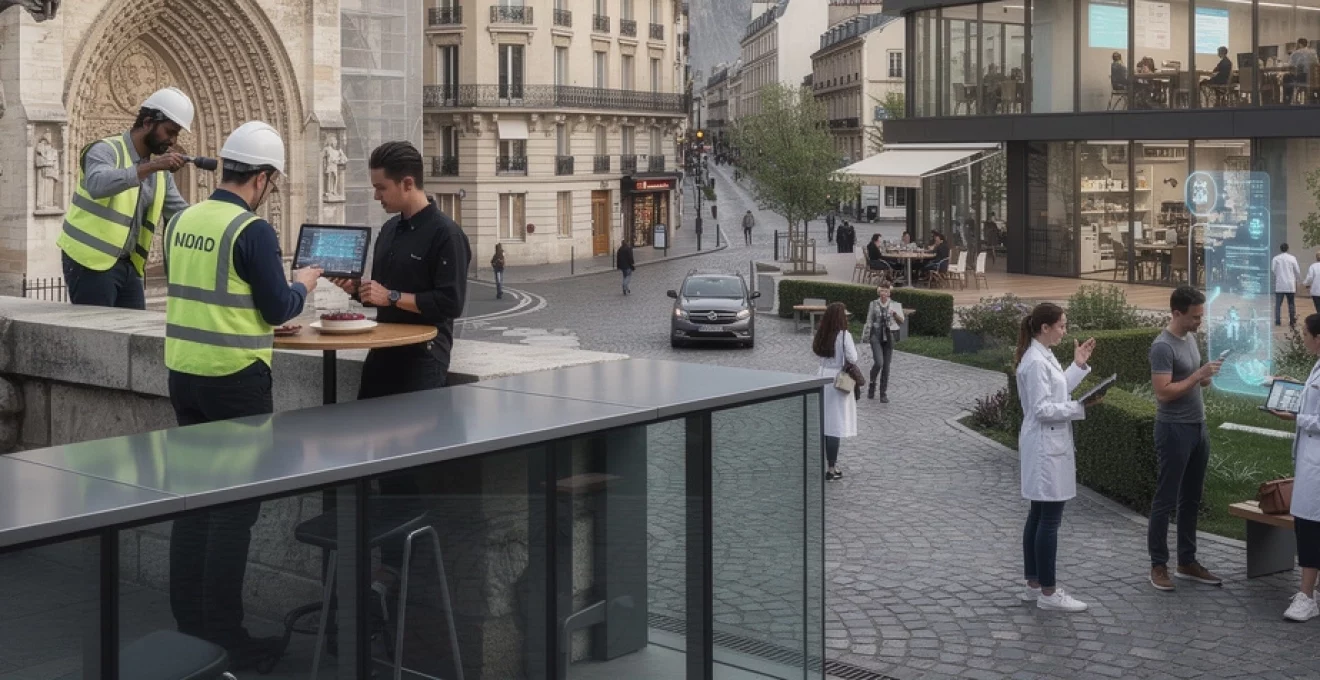
France stands at a fascinating crossroads where centuries-old heritage meets cutting-edge innovation. The nation’s commitment to preserving its rich cultural legacy while simultaneously embracing technological advancement creates unique challenges and opportunities. From the meticulous restoration of Gothic cathedrals to the development of artificial intelligence research centres, France demonstrates that tradition and progress need not be mutually exclusive. This delicate balance requires sophisticated approaches to heritage management, strategic investment in innovation ecosystems, and thoughtful integration of new technologies into historic contexts. The French model offers valuable insights for other nations grappling with similar tensions between preservation and modernisation.
Architectural conservation strategies in french cultural heritage management
French architectural conservation represents one of the world’s most sophisticated approaches to heritage preservation, combining rigorous academic research with practical restoration techniques. The system has evolved significantly since the 19th century, when Eugène Viollet-le-Duc first established principles for architectural restoration that continue to influence modern practice. Today’s conservation strategies encompass everything from medieval fortresses to 20th-century modernist buildings, each requiring specialised knowledge and techniques.
Monument historique classification system and legal framework
The Monument Historique classification system forms the backbone of French heritage protection, providing legal safeguards for approximately 45,000 protected monuments across the country. This comprehensive framework distinguishes between classement (classification) for the most significant sites and inscription (inscription) for monuments of regional importance. The system requires property owners to obtain ministerial approval for any modifications, ensuring that alterations respect historical authenticity while accommodating necessary modernisation.
The legal framework extends beyond individual buildings to encompass entire historic districts through secteurs sauvegardés (protected sectors) and ZPPAUP (zones for the protection of architectural, urban and landscape heritage). These designations create buffer zones around major monuments, controlling development to maintain historic urban landscapes. Recent legislative changes have streamlined the approval process while strengthening protection measures, demonstrating France’s commitment to adaptive heritage management.
Restoration methodologies for gothic cathedrals and medieval fortifications
Gothic cathedral restoration exemplifies the sophisticated methodologies employed in French heritage conservation. The ongoing restoration of Notre-Dame de Paris, following the devastating 2019 fire, showcases cutting-edge techniques alongside traditional craftsmanship. Specialists employ photogrammetry and 3D scanning to create precise digital models, enabling accurate reconstruction of damaged stonework and timber structures.
Medieval fortification restoration presents unique challenges, requiring balance between historical accuracy and structural safety. Château de Vincennes restoration project demonstrates how modern engineering can reinforce ancient masonry without compromising architectural integrity. Conservation architects work closely with archaeologists to ensure that restoration work reveals rather than obscures historical evidence, creating educational opportunities for visitors while preserving structural authenticity.
Contemporary materials integration in historic building preservation
The integration of contemporary materials in historic buildings requires exceptional skill and sensitivity. French conservation specialists have pioneered techniques for incorporating modern utilities, accessibility features, and environmental controls into heritage structures. Reversible interventions allow future modifications without permanent damage to historic fabric, while compatible materials ensure long-term stability.
Recent innovations include the use of aerogel insulation in historic buildings, providing thermal efficiency without significantly altering wall thickness. Similarly, discrete climate control systems protect valuable interiors while maintaining visual integrity. These approaches demonstrate how technological advancement can serve heritage preservation rather than compromising it.
Digital documentation techniques for heritage site conservation
Digital documentation has revolutionised heritage conservation, creating permanent records that support both research and restoration activities. High-resolution laser scanning captures precise measurements of architectural details, while drone photography documents inaccessible areas safely and efficiently. The Centre des Monuments Nationaux maintains comprehensive digital archives that researchers and conservators can access remotely.
Virtual reality applications enable immersive heritage experiences, allowing visitors to explore reconstructed historical environments. These technologies prove particularly valuable for sites too fragile for public access or lost to destruction. The digital documentation of the Palace of Versailles, for instance, preserves intricate decorative details for future conservation projects while providing educational content for international audiences.
Innovation H
Innovation hubs and technology clusters transforming french economic landscapes
Innovation hubs and technology clusters have become powerful engines reshaping the French economic landscape. While historic city centres focus on cultural heritage and tourism, former industrial sites and railway yards are being converted into dynamic zones for startups and research institutions. This spatial reconfiguration allows France to protect sensitive historic cores while concentrating disruptive innovation in purpose-built environments. The result is a national ecosystem where heritage and high technology coexist, each reinforcing the other’s attractiveness.
Policy instruments such as tax incentives, simplified administrative procedures, and targeted infrastructure investment support these innovation clusters. Local authorities often work in partnership with universities and private investors to develop mixed-use districts that combine offices, laboratories, housing, and cultural venues. This integrated approach helps prevent the creation of “innovation islands” disconnected from urban life, instead embedding new economic activities into the broader fabric of French cities and regions.
Station F startup ecosystem and entrepreneurial infrastructure development
Station F in Paris, housed in the former Halle Freyssinet rail depot, is emblematic of France’s strategy to repurpose industrial heritage as a driver of innovation. Billed as the world’s largest startup campus, it offers more than 30 international programmes, thousands of workstations, and on-site services ranging from legal advice to prototyping labs. By conserving the original concrete structure while inserting flexible workspaces, architects created a powerful symbol of continuity between industrial-era ingenuity and digital-age entrepreneurship.
The Station F ecosystem benefits from proximity to major universities, venture capital funds, and corporate innovation programmes. Entrepreneurs gain access not only to physical infrastructure but also to mentorship, networking events, and international acceleration schemes. This combination of tangible and intangible support significantly lowers barriers to entry for early-stage companies, illustrating how adaptive reuse of heritage sites can directly contribute to economic diversification and job creation.
Artificial intelligence research initiatives at INRIA and CNRS
France has positioned itself as a major player in artificial intelligence research through institutions such as INRIA (the National Institute for Research in Digital Science and Technology) and the CNRS (National Centre for Scientific Research). These organisations coordinate national AI programmes, fund doctoral research, and operate specialised laboratories embedded in university campuses. Their work ranges from foundational machine learning algorithms to practical applications in health, transport, and heritage conservation.
In recent years, state-backed initiatives like the national AI strategy have channelled billions of euros into research, training, and startup support. This investment is not purely economic; it also reflects concern for ethical frameworks and data sovereignty. As France develops AI tools for tasks such as automated object recognition in museum collections or predictive maintenance of infrastructure, policymakers emphasise transparency and public trust, ensuring that innovation remains aligned with societal values.
French tech labelling programme and regional innovation networks
The French Tech labelling programme has become a key instrument for structuring regional innovation networks. Cities and territories that demonstrate strong startup ecosystems can earn the Capitale French Tech or Communauté French Tech label, gaining access to national funding, international promotion, and shared best practices. This territorial approach recognises that innovation in France is not confined to Paris but thrives in cities such as Nantes, Montpellier, Lille, and Toulouse.
Local French Tech communities often specialise in particular sectors—such as aerospace in Occitanie, maritime technologies in Brittany, or creative industries in Nouvelle-Aquitaine. By coordinating incubators, coworking spaces, and university research centres, these networks create dense webs of collaboration. For heritage-rich cities, this model provides a way to diversify their economies with digital and green technologies while maintaining the distinct cultural identities that attract residents and visitors alike.
Biotechnology advancements in lyon’s biopôle and Paris-Saclay
Biotechnology has emerged as another strategic field where France combines research intensity with territorial planning. Lyon’s Biopôle and the Paris-Saclay cluster bring together pharmaceutical companies, research institutes, and specialised hospitals in carefully planned campuses. These sites offer advanced laboratories, clean rooms, and shared equipment that would be prohibitively expensive for individual organisations to develop alone.
The spatial concentration of biotech activities facilitates collaboration and knowledge transfer, accelerating innovation in areas such as personalised medicine, vaccines, and bio-based materials. At the same time, planning regulations ensure that new facilities integrate with local landscapes, whether through green roofs, controlled building heights, or the preservation of historic farmsteads and waterways. In this way, high-tech biocampuses coexist with traditional rural and peri-urban environments, illustrating a nuanced approach to land use.
Culinary tradition preservation versus molecular gastronomy evolution
French cuisine is itself a form of intangible heritage, recognised by UNESCO for its ritualised meals and regional diversity. Yet contemporary French gastronomy is also a laboratory of innovation, where chefs experiment with molecular techniques, fermentation, and plant-based menus. How can a country famed for its traditional bistros and regional recipes embrace such experimentation without diluting its culinary identity?
One answer lies in the dual structure of French culinary education and regulation. Culinary schools and lycées hôteliers maintain rigorous training in classic techniques while encouraging students to explore new methods. At the same time, labels such as Appellation d’Origine Contrôlée (AOC) and Label Rouge protect traditional products and production methods, from cheeses and wines to charcuterie. This layered system allows innovation in presentation, pairing, and technique while anchoring cuisine in protected terroirs and time-honoured practices.
Molecular gastronomy in France often builds on, rather than replaces, traditional preparations. Chefs might use sous-vide or liquid nitrogen to manipulate texture and temperature, yet still rely on regional ingredients and flavour profiles. For diners, this creates an experience that feels both familiar and surprising, akin to visiting a restored historic building equipped with invisible modern comforts. You recognise the underlying structure, but subtle innovations change how you perceive it.
Educational system modernisation within republican values framework
The French educational system is undergoing significant modernisation while remaining anchored in core Republican values such as laïcité, equality, and civic education. Digital transformation is introducing tablets, online learning platforms, and coding classes into classrooms that once relied solely on chalkboards and printed textbooks. Yet curriculum reforms consistently emphasise critical thinking, historical awareness, and the French language as foundations for informed citizenship.
Recent initiatives include the deployment of digital learning environments in secondary schools and the integration of media literacy to combat misinformation. At the same time, programmes like Éducation artistique et culturelle ensure that students engage with museums, theatres, and heritage sites as part of their schooling. This dual emphasis on digital skills and cultural literacy aims to prepare students for a globalised economy without weakening their connection to national heritage.
Higher education reforms have also encouraged universities and grandes écoles to strengthen links with research centres and businesses. New interdisciplinary programmes combine engineering with social sciences, or history with digital humanities, reflecting the complex challenges facing contemporary societies. In effect, the education system becomes another arena where France seeks to reconcile innovation with continuity, forming graduates who can write code, analyse data, and still read classical literature in the original French.
Renewable energy transition policies affecting historic french territories
The transition to renewable energy poses particular challenges in a country dense with historic towns, rural landscapes, and industrial heritage. France’s commitment to reducing greenhouse gas emissions requires large-scale deployment of solar, wind, and hydroelectric power. Yet these technologies can visually and physically impact sensitive sites, from medieval villages to UNESCO-listed cultural landscapes. Policymakers thus face a complex puzzle: how to decarbonise the energy system without eroding the very heritage that defines many territories.
To address this, national and regional authorities rely on impact assessments, landscape studies, and public consultations. Heritage agencies such as the Architectes des Bâtiments de France are systematically consulted on energy projects near protected monuments or in classified sites. The resulting decisions often involve compromise—adjusting turbine locations, limiting structure height, or favouring building-integrated solar installations over free-standing arrays in iconic vistas.
Nuclear power decommissioning strategies in traditional industrial regions
Nuclear power has long been central to France’s energy mix, supplying around 70% of its electricity in recent decades. As some older plants approach the end of their operational lives, decommissioning strategies must consider not only technical and environmental factors but also regional heritage and employment. Many nuclear facilities are located in areas with strong industrial identities, where they form part of a broader narrative of technological prowess.
Decommissioning plans therefore often include proposals for site reconversion, ranging from research centres and training campuses to renewable energy parks. In some cases, control buildings or distinctive cooling towers may be preserved as industrial heritage markers, analogous to the way former mines or factories have been integrated into cultural routes. This approach helps communities maintain a sense of continuity even as their energy infrastructure evolves, reducing the perception that the energy transition erases local history.
Solar panel installation regulations for listed buildings and UNESCO sites
Installing solar panels on or near listed buildings raises delicate questions of visual impact and material compatibility. In France, any modification to a Monument Historique or building within a protected perimeter requires expert review. The objective is not to prohibit renewable energy but to ensure that interventions are discreet and reversible, preserving rooflines, façades, and traditional materials wherever possible.
Practical solutions include placing panels on less visible roof slopes, integrating photovoltaic tiles that mimic traditional coverings, or locating solar arrays on ancillary buildings rather than primary historic structures. In UNESCO sites, additional layers of scrutiny consider the wider landscape and viewsheds. By encouraging early dialogue between owners, architects, and heritage authorities, the system aims to avoid conflicts and identify design options that reconcile energy performance with cultural significance.
Offshore wind farm development along normandy and brittany coastlines
France’s Atlantic and Channel coastlines offer strong wind resources but are also home to historic ports, fishing communities, and battlefields. Offshore wind farms planned off Normandy and Brittany must balance energy generation targets with concerns about seascape integrity, tourism, and marine ecosystems. For many residents, turbines visible on the horizon can symbolise both ecological responsibility and perceived intrusion on cherished views.
To navigate these tensions, project developers conduct extensive visual simulations and consult local stakeholders, including heritage groups and tourism operators. Adjustments to turbine spacing, layout, and distance from shore can reduce visual impact on iconic viewpoints, such as cliffs, lighthouses, or historic harbour entrances. As monitoring data accumulates, France is gradually building a knowledge base on how offshore wind can be scaled up in a way that respects both natural and cultural heritage.
Hydroelectric modernisation projects in alpine and pyrenean valleys
Hydroelectricity has long played a critical role in France’s energy system, particularly in Alpine and Pyrenean valleys shaped by dams, reservoirs, and power stations. Many of these facilities date from the mid-20th century and are now subject to modernisation programmes aimed at improving efficiency, safety, and ecological performance. At the same time, they are increasingly recognised as part of the industrial and landscape heritage of mountain regions.
Modernisation projects typically involve upgrading turbines, retrofitting fish passes, and improving water flow management to support biodiversity. Architects and landscape designers are often involved in reconfiguring powerhouses, visitor centres, and access roads to blend more harmoniously with traditional villages and natural scenery. In some valleys, interpretation trails and museums explain the history of electrification, turning hydroelectric complexes into educational and tourist attractions as well as energy assets.
Language policy implementation balancing french linguistic heritage and global communication
Language policy sits at the heart of France’s efforts to balance cultural heritage with international openness. The French language is both a practical tool of communication and a symbol of national identity, defended through instruments such as the Loi Toubon, which mandates the use of French in many official and commercial contexts. At the same time, global economic integration and digital communication have made proficiency in English and other languages increasingly essential.
Public institutions respond by promoting multilingualism without abandoning the protective framework for French. Schools introduce foreign languages at earlier ages, while universities expand bilingual or English-taught programmes to attract international students and researchers. Cultural diplomacy through the Institut français and Francophone networks reinforces the global presence of French, not as a defensive reaction but as an active contribution to linguistic diversity.
In the digital sphere, debates over anglicisms, software interfaces, and AI language models highlight the tensions between technological standardisation and linguistic sovereignty. Regulatory bodies such as the Académie française and the Délégation générale à la langue française et aux langues de France work to coin French equivalents for new terms and support regional languages. For businesses, media, and citizens, the practical question becomes: how can we participate fully in global conversations while preserving the richness and nuance of French? The evolving answer shows that, much like architectural heritage, linguistic heritage can adapt to new realities without losing its distinctive character.