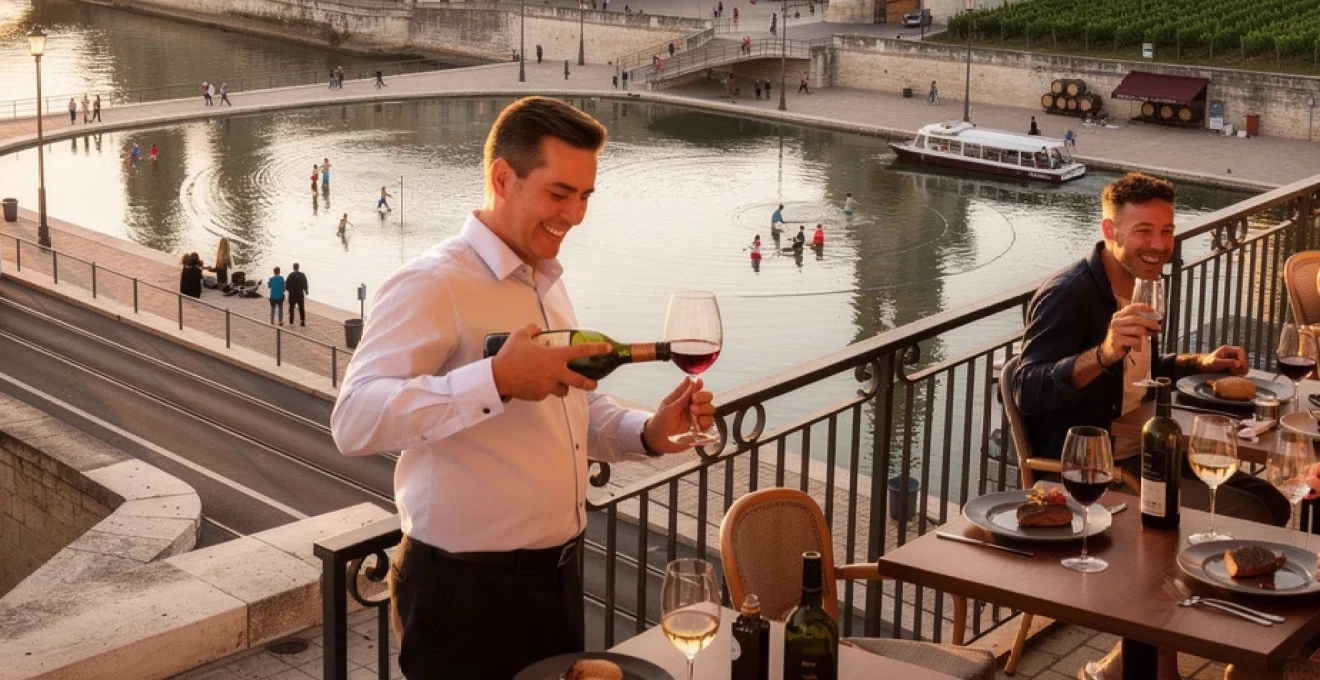
Bordeaux stands as one of France’s most captivating cultural destinations, where centuries of architectural heritage merge seamlessly with world-renowned wine traditions and contemporary urban innovation. This southwestern French city, inscribed entirely on UNESCO’s World Heritage list in 2007, offers visitors an extraordinary blend of neoclassical grandeur, medieval charm, and cutting-edge cultural institutions. The convergence of the Garonne River with Atlantic influences has shaped both the city’s stunning waterfront development and its exceptional terroir, creating a destination that satisfies cultural enthusiasts, wine connoisseurs, and architecture admirers alike. From the golden limestone facades reflecting in the famous Miroir d’Eau to the rolling vineyards of Saint-Émilion just beyond the city limits, Bordeaux presents a perfect weekend escape that combines urban sophistication with pastoral beauty.
Bordeaux’s UNESCO world heritage architecture and cultural landmarks
The architectural splendour of Bordeaux reflects eight centuries of continuous urban development, making it one of Europe’s most cohesive historical city centres. The UNESCO designation recognises not merely individual monuments but the entire urban ensemble, encompassing over 1,800 classified buildings across 1,810 hectares. This remarkable preservation includes everything from medieval towers to 18th-century neoclassical masterpieces, creating what many consider the world’s finest example of urban architectural harmony.
Place de la bourse and miroir d’eau architectural ensemble
Place de la Bourse epitomises Bordeaux’s architectural golden age under the guidance of Jacques-Ange Gabriel in the mid-18th century. This magnificent square, originally known as Place Royale, demonstrates the transition from medieval urban planning to Enlightenment ideals of symmetry and grandeur. The twin palaces flanking the square—the former Stock Exchange and Customs House—showcase the distinctive Bordeaux stone that gives the city its luminous quality, particularly during the golden hour when the limestone facades glow with warm light.
The 2006 addition of the Miroir d’Eau transformed this historic ensemble into a contemporary cultural landmark. Created by landscape architect Michel Corajoud, this 3,450-square-metre reflecting pool alternates between mirror and mist effects, creating an ever-changing dialogue between historic architecture and modern intervention. The installation uses 69 fog nozzles and a sophisticated water circulation system that creates a 2-centimetre-deep reflecting surface, drawing over six million visitors annually and establishing itself as one of France’s most photographed attractions.
Saint-andré cathedral gothic revival elements and royal portal
The Cathédrale Saint-André dominates Place Pey-Berland as Bordeaux’s spiritual centrepiece, representing nearly seven centuries of architectural evolution. Construction began in the 12th century on the foundations of an earlier Romanesque church, with major additions continuing through the 15th century. The cathedral’s most striking feature remains its soaring Gothic nave, reaching 29 metres in height, whilst the separate Pey-Berland Tower rises 66 metres, offering panoramic views across the city and Garonne valley.
The Royal Portal, dating from the 13th century, showcases exceptional Gothic sculptural artistry with its depiction of the Last Judgement. This masterpiece influenced cathedral design throughout southwestern France and demonstrates the wealth and artistic patronage that characterised medieval Bordeaux. The cathedral’s classification as a UNESCO World Heritage site in 1998, as part of the Santiago de Compostela pilgrimage route, underscores its significance in European cultural and spiritual heritage. Interior highlights include the 18th-century organ by Dom Bédos and remarkable stained glass windows that survived the destructive periods of the French Revolution.
Grand théâtre de bordeaux neoclassical design by victor louis
Victor Louis’s Grand Théâtre, completed in 1780, represents the pinnacle of 18th-century French theatrical architecture and urban planning. This neoclassical masterpiece established the template for opera house design throughout Europe, influencing notable buildings including the Paris Opera. The building’s Corinthian colonnade, crowned by twelve Muses and allegorical figures, creates one of France’s most photographed architectural facades whilst its interior demonstrates exceptional acoustic engineering principles still studied by contemporary architects.</p
Inside, the horseshoe-shaped auditorium, inspired by ancient amphitheatres, seats just over 1,000 spectators in tiers of gilded boxes and plush red velvet. The careful proportioning of volume, wood panelling and decorative plaster ensures warm, balanced acoustics without electronic amplification, a feat that modern concert halls still strive to emulate. When you attend an opera or ballet performance here during your weekend in Bordeaux, you are not simply watching a show; you are stepping into an 18th-century sound laboratory where form and function were engineered to perfection.
Beyond performances, guided tours allow visitors to explore the Grand Théâtre’s backstage areas and learn about its restoration in the 1990s, which returned the auditorium’s blue-and-gold colour palette to its original splendour. These tours often highlight the building’s pioneering structural innovations, including early fireproofing measures such as stone staircases and brick vaulting, implemented after several theatre fires elsewhere in Europe. For architecture and design enthusiasts, the Grand Théâtre offers an invaluable case study in how neoclassical aesthetics, urban prestige and technical ingenuity came together to shape Bordeaux’s cultural identity.
Grosse cloche medieval bell tower and city gate complex
The Grosse Cloche, one of the oldest belfries in France, is a rare surviving fragment of Bordeaux’s medieval fortifications and a powerful symbol of the city’s civic independence. Dating largely from the 15th century and built on the site of the former Porte Saint-Éloy, this fortified gate once formed part of the defensive walls that encircled the historic centre. Its twin conical towers flank a central arcade through which pilgrims on the Way of Saint James passed on their journey to Santiago de Compostela, connecting Bordeaux to a broader network of European pilgrimage routes.
The bell itself, weighing over 7,500 kilograms, historically rang to mark harvest times, celebrations and, occasionally, to warn of fires or danger. Today, it chimes only on special occasions, preserving its role as a ceremonial heartbeat of the city rather than an everyday timekeeper. Climbing the Grosse Cloche on a guided visit offers a fascinating glimpse into medieval clock mechanisms, stone vaulting and historic prison cells, where the city once detained unruly citizens. Standing atop the tower, you can appreciate how the medieval street grid still shapes the modern urban fabric, despite later neoclassical interventions.
Médoc and saint-émilion vineyard estate tours
Beyond its UNESCO-listed centre, Bordeaux’s identity is inseparable from the vineyards that surround the city in every direction. A weekend in Bordeaux that includes even a short excursion to the Médoc or Saint-Émilion allows you to experience the region’s famous terroir first-hand. More than 6,000 wine-producing châteaux operate across the Bordeaux wine region, and while that number can seem overwhelming, focusing on a few emblematic estates offers both depth and clarity. Whether you opt for a private driver, a small-group tour or self-drive with pre-booked appointments, planning ahead is essential, as many top properties welcome visitors by reservation only.
The contrast between Left Bank and Right Bank vineyards is one of the most enlightening aspects of any Bordeaux wine tour. On the Left Bank, in appellations like Margaux and Pauillac, gravel soils and Atlantic breezes favour Cabernet Sauvignon, producing structured, age-worthy wines. On the Right Bank, around Saint-Émilion and Pomerol, clay and limestone give Merlot-based blends a softer, more plush profile. Exploring both sides of the Gironde during your stay helps you move beyond labels and ratings to understand why Bordeaux wines taste the way they do.
Château margaux premier grand cru classé tasting experience
Château Margaux, one of the five historic First Growths of the 1855 Classification, embodies the Left Bank ideal of elegance, finesse and longevity. Approaching the estate along its tree-lined allée, you quickly understand why it is often described as the “Versailles of the Médoc,” with its neoclassical mansion, columned portico and meticulously aligned vineyards. Visits here typically include an introduction to the estate’s history, stretching back to the 12th century, followed by a walk through the gravity-flow winery designed by Sir Norman Foster—a striking example of how contemporary architecture can integrate discreetly into a historic setting.
During a guided tasting, you may compare the Grand Vin of Château Margaux with its second wine, Pavillon Rouge, observing how parcel selection, vine age and barrel ageing influence the final profile. The Grand Vin often shows intense yet refined tannins, cassis and violet notes, and a capacity to age gracefully for decades, whereas the second wine tends to be more approachable in youth. For travellers new to Bordeaux wine tasting, this side-by-side comparison at a Premier Grand Cru Classé offers an invaluable benchmark against which other Médoc wines can be measured. Remember to book well in advance: demand for visits to Château Margaux is consistently high, especially during the harvest months of September and October.
Château pichon baron pauillac terroir analysis
Further north along the famed Route des Châteaux lies Pauillac, home to another Left Bank icon: Château Pichon Baron. Here, the visual drama is immediate—twin turrets reflected in a long ornamental basin, surrounded by impeccably tended vines. But while the façade is fairy-tale in appearance, the estate’s focus is deeply technical, with a strong emphasis on soil mapping and precision viticulture. Detailed studies of the gravel mounds, subsoils and micro-topography guide everything from rootstock choices to drainage systems, helping the vines achieve optimal ripeness and balance.
Estate visits often begin in the vineyards, where guides explain how gravel-rich soils warm quickly and drain efficiently, encouraging deep root systems that can withstand both heat and excess rain. You may then tour the cellar to observe how small-lot vinification allows different parcels to be fermented separately before blending, a process akin to composing a symphony from individual instruments. A structured tasting, usually including the Grand Vin and the second wine Les Griffons or Les Tourelles, showcases Pauillac’s signature profile: blackcurrant fruit, graphite, cedar and firm yet polished tannins. By the end, you will better understand how terroir, climate and human decisions intersect to create some of the world’s most sought-after Cabernet-based wines.
Right bank saint-émilion merlot cultivation techniques
Crossing to the Right Bank, the limestone plateau and rolling hills of Saint-Émilion offer a completely different landscape and viticultural approach. Merlot and Cabernet Franc dominate plantings here, thriving in clay-limestone soils that retain water and moderate vine stress, particularly in increasingly warm summers. Many family-owned châteaux in Saint-Émilion maintain parcel-by-parcel records of vine age, rootstock and pruning methods, fine-tuning their Merlot cultivation techniques to balance ripeness and freshness. For visitors, walking through these vineyards is like leafing through an open-air viticulture manual.
During estate tours, you will often hear about specific practices such as green harvesting (removing excess grape bunches in summer), canopy management to protect grapes from sunburn, and precise harvest timing based on both sugar ripeness and phenolic maturity. Several properties have transitioned to organic or biodynamic farming, using compost teas, plant-based treatments and horse-drawn ploughs to maintain soil health. At the tasting table, these choices become tangible: Saint-Émilion wines typically show ripe red and black fruits, supple tannins and a chalky, mineral finish that reflects the limestone bedrock below. For a weekend trip, selecting one classified estate and one smaller, family-run property offers an insightful cross-section of how tradition and innovation coexist on the Right Bank.
Pessac-léognan graves appellation white wine production
South of Bordeaux city, in Pessac-Léognan and the wider Graves appellation, the focus shifts to a unique Bordeaux strength: age-worthy dry white wines. Here, Sauvignon Blanc and Sémillon are often planted side by side on gravel and sandy-gravel soils, sometimes with a touch of Muscadelle. While red wines still dominate production volumes, some of Bordeaux’s most complex and long-lived whites come from this area, offering a refreshing counterpoint to the region’s celebrated reds. For travellers who enjoy food and wine pairing, a day in Pessac-Léognan can be particularly enlightening.
White wine production in this appellation involves meticulous attention to harvest timing, as winemakers seek to capture both aromatic freshness and textural depth. Grapes may be picked in multiple passes to ensure optimal ripeness, then gently pressed and fermented in a mix of stainless steel tanks and oak barrels. Extended lees contact—with or without bâtonnage (stirring of the lees)—adds creaminess and complexity, much like seasoning a dish over time rather than all at once. During a tasting, you will likely notice citrus, white peach and floral notes from Sauvignon Blanc layered over Sémillon’s waxy texture and honeyed hints. These whites pair beautifully with regional dishes such as oysters from the nearby Arcachon Bay, grilled fish and roasted poultry.
Bordeaux wine classification system and aoc regulations
Understanding the Bordeaux wine classification system and its AOC regulations can feel daunting at first, but a few key principles will help you read labels with confidence. Unlike in many New World regions, Bordeaux wines are classified primarily by origin—the appellation or AOC (Appellation d’Origine Contrôlée)—rather than by grape variety. More than 60 appellations exist, from prestigious names like Pauillac and Saint-Émilion Grand Cru to broader designations such as Bordeaux AOC or Bordeaux Supérieur. Each AOC has defined rules regarding permitted grape varieties, yields, vine density and winemaking practices, all designed to protect typicity and quality.
On top of this geographic framework, several historic classification systems rank individual châteaux. The most famous is the 1855 Classification of the Médoc and Sauternes, which established five tiers of Grand Cru Classé properties based on price and reputation at the time. Other key systems include the Saint-Émilion classification, revised roughly every ten years, and the Crus Classés de Graves. While these classifications can guide expectations, they are not the final word; many unclassified estates now produce wines that rival or surpass their more famous neighbours. As you taste your way through Bordeaux over a weekend, consider classifications as helpful signposts rather than strict hierarchies—much like star ratings in a city full of excellent restaurants.
Garonne river maritime heritage and waterfront development
The Garonne River has shaped Bordeaux’s fortunes for nearly two millennia, serving first as a Roman trade artery and later as the lifeblood of the city’s flourishing wine and maritime industries. In the 18th century, Bordeaux became one of France’s busiest ports, exporting wine, grain and other goods across Europe and to the Americas. The grand façades lining the riverfront along the Chartrons district once housed wine merchants’ warehouses and trading houses, many of which still display sculpted masks, anchors and maritime motifs. Walking along the quays today, you can almost imagine the masts of merchant ships crowding the horizon, much as they did during Bordeaux’s commercial golden age.
In the late 20th century, however, much of this waterfront was given over to derelict warehouses and parking lots, cutting the city off from its river. A major urban renewal project, launched in the 1990s under Mayor Alain Juppé, reversed this trend by clearing industrial clutter, cleaning the riverbanks and creating a 4.5-kilometre pedestrian promenade. The result is the contemporary Bordeaux you encounter today: joggers, cyclists and families sharing the same riverside spaces where barrels of wine once rolled towards waiting ships. Modern infrastructure like the Pont Chaban-Delmas, Europe’s tallest vertical-lift bridge, symbolises this new chapter, connecting historic port functions with contemporary mobility and design.
For visitors, the Garonne now offers both scenic and practical advantages. River cruises and Bat3 river shuttles operate like floating trams, allowing you to reach neighbourhoods such as the right-bank eco-district of Darwin or the wine museum Cité du Vin without relying on a car. Evening cruises often include wine tastings and commentary on Bordeaux’s maritime history, transforming a simple boat ride into an open-air seminar on trade routes, tides and terroir. If you are planning a weekend in Bordeaux, setting aside time for a walk or cruise along the Garonne is one of the easiest ways to connect the city’s past and present in a single experience.
Cité du vin interactive wine museum technology
Opened in 2016 in the emerging Bassins à Flot district, the Cité du Vin has rapidly become one of Bordeaux’s most recognisable landmarks. Its flowing, asymmetrical form—often compared to a swirl of wine in a glass or the eddies of the Garonne—signals a shift from traditional château visits to a more global, immersive approach to wine culture. Inside, the museum’s permanent exhibition spans more than 3,000 square metres and uses cutting-edge technology to explain everything from vineyard geology and grape varieties to the role of wine in art, religion and social rituals across centuries. Unlike a conventional museum, the Cité du Vin encourages you to touch, listen, smell and interact, making it especially appealing for first-time wine travellers or multi-generational groups.
Audio-guided itineraries are available in several languages, delivered via lightweight, smartphone-style devices that activate content automatically as you approach each installation. High-resolution, 360-degree projections transport visitors to vineyards around the world, while interactive tables allow you to compare climate data, soil types and winemaking practices across continents. One popular feature invites you to “blend” virtual wines by adjusting parameters like grape variety and barrel ageing, illustrating how small decisions can dramatically change the final flavour profile. In many ways, the Cité du Vin functions as a flight simulator for wine: you can explore extreme vintages, distant terroirs and historical banquets without ever leaving the building.
The experience culminates in a visit to the Belvedere on the eighth floor, where a glass of wine from a rotating international selection is included with your ticket. As you look out over the Garonne, the Chaban-Delmas bridge and the transforming Bassins à Flot district, you gain a literal overview of how Bordeaux integrates wine tourism, urban regeneration and cultural storytelling. Temporary exhibitions, themed tasting workshops and evening events add further layers for repeat visitors or wine professionals seeking deeper insights. For a compact weekend itinerary, allocating two to three hours to the Cité du Vin is often the most efficient way to gain a global perspective before or after more traditional château visits.
Bordeaux tramway network and sustainable urban mobility
Bordeaux’s modern tramway network is central to the city’s reputation as one of France’s most liveable urban centres, and it plays a practical role in any well-planned weekend visit. Launched in 2003 and now comprising four main lines (A, B, C and D) with over 80 kilometres of track, the system connects key districts including the historic centre, the university campuses, the airport-adjacent Mérignac area and emerging neighbourhoods like Bassins à Flot. For travellers, this means you can move efficiently between cultural landmarks, hotels and vineyard departure points without needing a car. Trams typically run every few minutes during the day, and ticketing is integrated with buses and river shuttles, simplifying multimodal journeys.
One of the network’s most innovative features is the ground-level power supply (APS) used on sections of track that pass through the UNESCO-listed historic centre. Instead of overhead wires, power is delivered via a third rail embedded in the street, preserving the clean visual lines of avenues like Cours de l’Intendance and the façades around Place de la Bourse. This technology, pioneered in Bordeaux and now adopted in other cities, exemplifies how heritage preservation and modern mobility can coexist without compromise. For visitors who appreciate urban design, even a simple tram ride here becomes a lesson in how 21st-century infrastructure can respect 18th-century streetscapes.
From a sustainability perspective, the tramway has contributed significantly to reducing car traffic and greenhouse gas emissions in the metropolitan area. According to local transport authorities, tram usage has helped cut thousands of tonnes of CO₂ annually, while pedestrianisation projects around key tram corridors have improved air quality and public safety. As a visitor, you benefit from this investment through quieter streets, cleaner air and easy access to attractions. Purchasing a 24- or 48-hour transport pass can be cost-effective if you plan to explore multiple districts, and many passes integrate with tourist cards that include museum entry. In practice, relying on trams and walking not only aligns with Bordeaux’s sustainability goals but also allows you to experience the city’s rhythm at a more human scale.
Michelin-starred gastronomy and aquitaine regional cuisine
No weekend in Bordeaux is complete without exploring its culinary landscape, which ranges from Michelin-starred dining rooms to bustling markets and casual wine bars. The city and its surroundings boast a growing number of starred restaurants, where chefs reinterpret Aquitaine’s rich pantry with contemporary techniques. Expect to see local ingredients such as Arcachon Bay oysters, Bazas beef, foie gras, wild mushrooms from the Landes forest and AOC Espelette pepper from nearby Basque Country. Paired thoughtfully with regional wines—from crisp Pessac-Léognan whites to structured Médoc reds—these dishes turn each meal into an extended lesson in terroir.
Beyond fine dining, traditional brasseries and bistros in Bordeaux showcase classic southwestern dishes such as magret de canard (duck breast), entrecôte à la bordelaise with a red wine and bone marrow sauce, and lamproie à la bordelaise, an ancient eel recipe linked to the Garonne. At the Marché des Capucins, often called the “belly of Bordeaux,” you can join locals for a late-morning plate of oysters and a glass of dry white wine—arguably one of the most authentic food experiences the city offers. Like the region’s wines, these dishes are often generous, hearty and built for convivial sharing, so it can be wise to pace yourself and perhaps share courses if you want to sample as much as possible over a short stay.
Desserts and pastries add another layer to Bordeaux’s gastronomic appeal. The city’s signature sweet, the canelé, features a caramelised crust and custardy interior, flavoured with vanilla and rum. Its origins are linked to the use of egg whites in traditional wine fining; surplus yolks were said to be repurposed by local nuns into this distinctive pastry. Today, you will find canelés in sizes ranging from bite-sized to large, sold in specialised boutiques and bakeries across the city. Pairing a canelé with a glass of Sauternes or Barsac offers a delightful way to connect Bordeaux’s vineyard and pastry traditions in a single bite.
For travellers planning their first weekend in Bordeaux, it can be helpful to think of the city as a multi-course menu: start with architectural “starters” in the old town, move to a main course of vineyard tours in the Médoc or Saint-Émilion, add a side of riverfront walks and tram rides, and finish with a dessert of regional specialities and Michelin-starred creativity. With thoughtful planning and a willingness to explore both famous addresses and neighbourhood favourites, you will leave with a deeper understanding of how culture, vineyards and river views come together to make Bordeaux one of Europe’s most rewarding city breaks.