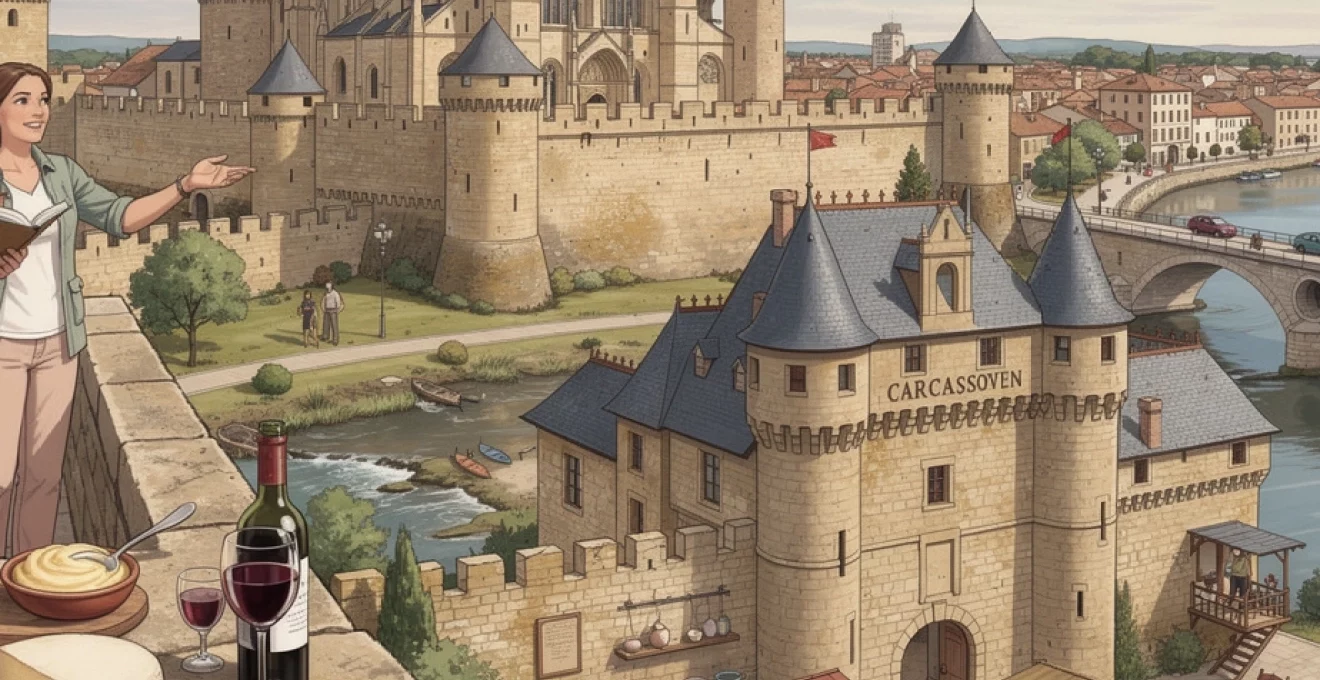
Nestled in the heart of southern France’s Languedoc region, Carcassonne stands as Europe’s most magnificent example of medieval fortification, drawing over four million visitors annually to its perfectly preserved double-walled citadel. This UNESCO World Heritage site, perched dramatically atop a hill overlooking the Aude River, offers travellers an unparalleled journey through 2,500 years of European history. The Cité de Carcassonne represents not merely a tourist destination, but a living testament to medieval ingenuity, architectural mastery, and the enduring power of historical preservation.
From its origins as a Gallo-Roman settlement to its current status as one of France’s most visited monuments, Carcassonne embodies the perfect fusion of authentic medieval heritage and modern accessibility. The city’s remarkable state of preservation, combined with its strategic location between the Mediterranean coast and the Pyrenees mountains, makes it an essential stop for anyone seeking to understand the complex tapestry of European medieval civilisation.
Medieval architecture and fortification systems of cité de carcassonne
The architectural complexity of Carcassonne’s medieval fortifications represents one of Europe’s most sophisticated examples of military engineering, spanning multiple construction periods and defensive innovations. The citadel’s current form reflects centuries of strategic development, from its earliest Gallo-Roman foundations through medieval expansions and 19th-century restoration efforts.
Gallo-roman foundations and visigothic construction techniques
Archaeological evidence reveals that Carcassonne’s defensive foundations date back to the 3rd century CE, when Roman engineers first recognised the site’s strategic importance. The original oppidum utilised the natural topography of the limestone plateau, creating an elevated defensive position that commanded extensive views across the surrounding plains. Early construction techniques employed massive stone blocks quarried from local limestone deposits, with walls reaching thicknesses of up to three metres in critical defensive sections.
Visigothic builders, who occupied the site from the 5th to 8th centuries, introduced distinctive architectural elements that remain visible today. Their construction methodology emphasised the use of smaller, more precisely fitted stones, creating walls with improved structural integrity and reduced material waste. The Visigothic influence can be observed in several tower bases and wall sections, where their characteristic alternating stone and brick courses create distinctive horizontal striping patterns.
Double rampart defence strategy and concentric wall engineering
Carcassonne’s most striking defensive feature lies in its sophisticated double rampart system, comprising two concentric rings of fortifications that create multiple layers of protection. The outer ramparts, constructed primarily during the 13th century, extend approximately 1.5 kilometres in circumference and incorporate 19 towers of varying designs and purposes. These outer defences serve as the primary barrier against siege equipment and massed infantry assaults.
The inner ramparts, dating to earlier periods but extensively modified during medieval expansions, feature 34 towers and represent the citadel’s final line of defence. The space between these walls, known as les lices, creates a killing ground where defenders could engage attackers who had breached the outer perimeter. This innovative concentric design influenced fortress construction throughout medieval Europe and demonstrates the advanced military engineering capabilities of 13th-century French architects.
Château comtal’s military architecture and strategic design elements
Within Carcassonne’s already formidable defences stands the Château Comtal, a fortress within a fortress that served as the residence and final stronghold of the Trencavel viscounts. Constructed during the 12th century, this inner citadel showcases advanced military architectural principles, including carefully planned approaches that force attackers into exposed positions while providing defenders with multiple firing positions.
The château’s design incorporates sophisticated features such as murder holes, arrow slits positioned at strategic angles, and a complex gate system requiring multiple key points to be breached simultaneously. The great hall and residential quarters demonstrate how medieval nobility balanced defensive requirements with domestic comfort, featuring large fireplaces, decorated windows, and private chambers that maintained luxury standards even within military constraints.
Eugène Viollet-le-Duc’s 19th century restoration methodology</h
Viollet-le-Duc approached Carcassonne as both architect and historian, undertaking one of the 19th century’s most ambitious restoration projects between the 1850s and 1870s. His methodology combined meticulous archival research with on-site archaeological observation, allowing him to reconstruct missing sections of walls, towers and gatehouses based on comparable fortresses from the same period. While he aimed to restore the Cité de Carcassonne to what he believed was its “ideal” medieval state, he also introduced certain anachronistic elements, such as the now-iconic slate roofs on the towers, which were historically tiled in the local Mediterranean style.
Today, scholars continue to debate the balance between authenticity and creative interpretation in Viollet-le-Duc’s work. For visitors, however, his restoration has ensured that Carcassonne remains one of the best-preserved fortified cities in Europe, rather than a ruined archaeological site. As you walk the ramparts or pass through the fortified gates, you are experiencing a 19th-century vision of the Middle Ages—less a literal reconstruction than a carefully researched, highly evocative synthesis of medieval architecture and defensive design.
Essential tourist attractions within la cité
Beyond its imposing fortification systems, the medieval city of Carcassonne offers a dense concentration of historic buildings, museums and atmospheric public spaces. Exploring these essential tourist attractions within La Cité allows you to move from grand military architecture to intimate religious spaces and lively squares in just a few minutes on foot. Many travellers find that spending at least a full day within the walls—ideally early in the morning or later in the evening—reveals layers of history often missed on a quick daytime visit.
Basilique Saint-Nazaire’s gothic and romanesque elements
The Basilica of Saint-Nazaire is often described as the “jewel of the Cité,” and for good reason. Originally founded in the 11th century, the church presents a fascinating blend of Romanesque and Gothic architecture, allowing you to see the evolution of medieval religious design in a single building. The heavy, rounded arches and sturdy pillars of the Romanesque nave contrast strikingly with the soaring, light-filled Gothic choir that was added in the 13th and 14th centuries.
Inside, some of the oldest stained-glass windows in southern France, dating from around 1280, bathe the interior in coloured light. Look especially for the rose window above the western portal and the delicate lancet windows in the choir, which illustrate biblical scenes and saints in vivid detail. Outside, the intricately carved portals, gargoyles and sculpted capitals reward slow, close observation—almost like reading a stone manuscript. If you are interested in medieval religious art, try to time your visit when the basilica is quiet; the atmosphere of hushed reverence makes its historical significance even more tangible.
Musée de l’école interactive exhibits and medieval artefacts
Located within the fortified city, the Musée de l’École (School Museum) provides an unexpected but engaging counterpoint to Carcassonne’s medieval ramparts. Rather than focusing on knights and castles, this small museum recreates French classrooms from the late 19th to mid-20th centuries, complete with wooden desks, ink wells, slate boards and period teaching materials. For families travelling to Carcassonne, it offers an interactive way for children to compare their own school experience with that of their great-grandparents.
Several rooms are arranged by theme—reading, writing, arithmetic, and moral education—allowing visitors to sit at the old desks, try their hand at writing with nib pens, and examine original textbooks and posters. While its primary focus is not strictly medieval, the museum adds depth to a Carcassonne travel guide by highlighting how education has shaped French society over time. If you are seeking things to do in Carcassonne beyond the ramparts, the Musée de l’École is an excellent short stop, especially on hot afternoons or rainy days when indoor attractions are most welcome.
Pont-vieux medieval bridge construction and historical significance
Spanning the Aude River and linking the medieval city to the later lower town, the 14th-century Pont-Vieux (Old Bridge) is both a practical crossing and an essential viewpoint for understanding Carcassonne’s strategic setting. Constructed with multiple stone arches and robust piers designed to withstand seasonal flooding, the bridge exemplifies late medieval civil engineering. Walking across its cobbled surface today, you can imagine merchants, pilgrims and soldiers making the same journey centuries ago.
From a visitor’s perspective, the Pont-Vieux offers one of the best panoramic views of Carcassonne’s double-walled citadel, particularly in the late afternoon when the sun bathes the ramparts in golden light. Photographers often consider this spot essential for capturing the classic postcard image of the fortress rising above the river. If you are planning a slow travel itinerary, we recommend timing at least one crossing of the Pont-Vieux at sunset, then pausing midway to appreciate how the river, bridge and citadel together formed an integrated defensive and commercial system in the Middle Ages.
Place marcou square’s artisan workshops and traditional crafts
At the heart of the walled city, Place Marcou functions today much as it did in earlier centuries: as a social and commercial hub where residents and visitors meet. Lined with cafés, restaurants and small artisan workshops, this square provides a welcome contrast to the more solemn atmosphere of the basilica and ramparts. While tourism has inevitably shaped its current character, you can still find traditional crafts such as ceramics, leatherwork and regional textiles being produced and sold in the surrounding streets.
If you are interested in supporting local artisans rather than purchasing mass-produced souvenirs, take time to browse the independent boutiques and studios that radiate from Place Marcou. Many craftspeople are happy to explain their techniques, whether they are hand-painting faience, carving wood or creating jewellery inspired by medieval motifs. Choosing a handcrafted item here creates a tangible link to Carcassonne’s living culture and helps sustain the small businesses that keep the historic centre vibrant outside peak tourist hours.
Strategic accommodation options in carcassonne’s historic quarters
Selecting the right accommodation in Carcassonne can significantly shape your experience of the medieval city. Do you want to wake up inside the ramparts, stepping straight into cobbled streets before the day-trippers arrive? Or would you prefer a quieter base in the lower town, with easy access to both the Cité and the Canal du Midi? Understanding the strengths of each historic quarter helps you choose strategically, especially if you are planning a short stay of two or three nights.
Staying within the medieval walls offers unparalleled atmosphere, particularly in the early morning and late evening when the streets are almost empty. Boutique hotels and guesthouses here often occupy renovated stone houses or former noble residences, blending period features—exposed beams, thick walls, small courtyards—with modern comforts. However, you should be prepared for higher prices, limited vehicle access and the need to wheel luggage over uneven cobblestones from the nearest gate.
By contrast, the Bastide Saint-Louis (the lower town) on the opposite bank of the Aude provides a more local, residential feel. Accommodation here typically offers better value for money, larger rooms and easier parking, while still placing you within walking distance of the Pont-Vieux and the citadel. This area is especially convenient if you plan to use Carcassonne as a base for day trips to regional vineyards, Cathar castles or the Canal du Midi, as you will be closer to the main train station and road network.
For travellers seeking a particularly tranquil experience, riverside or canal-side properties near the Canal du Midi present a third option. Some former warehouses and townhouses have been converted into charming B&Bs, and in certain cases, you can even stay on a restored barge moored along the canal. This type of accommodation suits visitors interested in slow travel, cycling or boating, allowing you to combine medieval sightseeing with quiet evenings by the water. Whichever quarter you choose, booking well in advance—especially in July and August—is advisable, as Carcassonne’s popularity ensures that the best-located rooms fill quickly.
Languedoc regional gastronomy and carcassonne’s culinary heritage
No travel guide to Carcassonne is complete without exploring its culinary heritage and the wider gastronomy of the Languedoc region. Historically a crossroads between the Mediterranean and the Atlantic, this area has developed a robust, rustic cuisine based on slow-cooked meats, hearty beans, olive oil, garlic and an impressive diversity of local wines. Many visitors soon discover that meals in Carcassonne are not simply refuelling stops between sightseeing, but an essential part of understanding the region’s culture.
From traditional inns within the medieval walls to contemporary bistros in the Bastide Saint-Louis, you will find menus that highlight regional specialities adapted to the seasons. In cooler months, slow-simmered dishes and rich sauces dominate, while summer brings lighter preparations featuring tomatoes, peppers and fresh herbs. If you are a food-focused traveller, consider planning lunches and dinners in advance, especially if you want to sample highly rated restaurants that showcase updated versions of classic Languedoc dishes.
Cassoulet de carcassonne preparation and traditional ingredients
Cassoulet is the emblematic dish of Carcassonne and its surroundings, a slow-cooked casserole that has achieved almost legendary status in southern French gastronomy. At its core, cassoulet de Carcassonne combines white beans with a selection of meats—typically duck confit, pork and sausage—cooked for several hours in a heavy earthenware dish known as a cassole. The result is a rich, comforting meal with a golden crust on top and deeply flavoured beans beneath, absorbing the essence of the meats and herbs.
While neighbouring towns such as Castelnaudary and Toulouse claim their own variations, Carcassonne’s version often includes partridge or other game when available, reflecting the region’s hunting traditions. Preparing authentic cassoulet at home can be a demanding process, requiring high-quality ingredients and patience; in many ways, it is closer to a culinary ritual than a simple recipe. For visitors, the best approach is to seek out restaurants that specialise in cassoulet and cook it in small batches, rather than tourist-oriented establishments that may reheat pre-prepared portions. Pairing your cassoulet with a robust local red wine from Corbières or Minervois completes the experience.
AOC corbières wine tasting and local vineyard tours
The hills and plains surrounding Carcassonne form part of one of France’s most dynamic wine regions, with the AOC Corbières designation particularly prominent. Characterised by a Mediterranean climate, varied soils and winds that help keep the vines healthy, Corbières produces predominantly red wines that range from robust and spicy to surprisingly elegant. For travellers who appreciate wine tourism, using Carcassonne as a base for vineyard visits offers an excellent way to engage with the landscape and meet local producers.
Many domaines within a short drive of the city welcome visitors for tastings, often by prior appointment. During a typical visit, you might tour the vineyards, learn about grape varieties such as Carignan, Grenache, Syrah and Mourvèdre, and then taste several cuvées in the cellar. Some estates also organise food and wine pairings, blending regional cheeses, charcuterie and even chocolate with their wines. If you prefer not to drive, consider joining a small-group wine tour departing from Carcassonne; this allows you to explore Corbières, Minervois or Limoux appellations safely while gaining expert insight into local winemaking traditions.
Aligot and regional cheese specialities from aveyron producers
Although aligot originates from the neighbouring Aveyron department rather than Carcassonne itself, this dish has become increasingly common on menus throughout the wider Occitanie region. Made by vigorously mixing mashed potatoes with fresh Tomme cheese, butter, cream and garlic, aligot develops an extraordinarily elastic, almost ribbon-like texture. Watching it being served—stretched theatrically from pot to plate—can be as enjoyable as eating it, especially if you have not encountered this speciality before.
Aligot is typically accompanied by grilled sausages or roasted meats, making it a particularly satisfying option on cooler evenings. Alongside this iconic dish, you will also encounter a range of regional cheeses from Aveyron and the Massif Central, including Roquefort, Laguiole and smaller farmhouse productions. Cheese shops and market stalls in Carcassonne often stock these specialities, allowing you to assemble a tasting plate for a picnic on the banks of the Aude or the Canal du Midi. For travellers who enjoy culinary discovery, asking vendors for their favourite seasonal cheeses is an excellent way to start a conversation and uncover local recommendations that rarely appear in guidebooks.
Seasonal event programming and festival calendar
Carcassonne’s cultural life extends well beyond its stone walls, with a rich programme of events and festivals that animate the city throughout the year. Planning your visit to coincide with specific celebrations can dramatically enhance your experience, although it also requires more advance organisation due to increased demand for accommodation. The city’s event calendar reflects both its medieval heritage and its role as a modern regional centre, blending historical reenactments, music festivals and contemporary performances.
One of the most famous events is the Festival de Carcassonne, held each July, which transforms both the Cité and the Bastide Saint-Louis into open-air stages. Internationally renowned musicians, opera companies and theatre troupes perform in venues ranging from the medieval Théâtre Jean-Deschamps to intimate courtyard spaces. If you enjoy live performance, securing tickets early is essential, as many shows sell out quickly. On 14 July, France’s national holiday, a spectacular fireworks display over the citadel draws tens of thousands of spectators, creating one of the country’s most iconic Bastille Day celebrations.
Outside the peak summer period, Carcassonne also hosts Christmas markets, heritage days and themed medieval weekends that appeal to history enthusiasts and families alike. During the European Heritage Days in September, for example, certain normally closed sites open their doors, and guided tours focus on lesser-known aspects of the city’s past. Spring and autumn often see smaller-scale events linked to local gastronomy, wine harvests and regional crafts, providing excellent opportunities to experience Carcassonne alongside residents rather than exclusively with other tourists. When planning your itinerary, it is worth consulting the local tourist office’s online calendar to align your dates with events that match your interests.
Transportation networks and accessibility from major european hubs
Despite its medieval appearance, Carcassonne is remarkably well connected to the wider European transport network, making it an accessible destination for both short breaks and longer regional itineraries. Situated on the main rail line between Toulouse and Narbonne, the city benefits from regular train services that link it to major French hubs such as Paris, Marseille and Bordeaux, as well as international connections via Barcelona. For many visitors, arriving by train offers the most convenient and sustainable option, with the added advantage that the station lies within walking distance of both the Bastide Saint-Louis and the Canal du Midi.
From Paris, high-speed TGV services to Toulouse or Narbonne, followed by a regional connection, typically bring you to Carcassonne in around eight hours. Travellers coming from Barcelona can expect a journey time of approximately three and a half hours with one or two changes, while routes from Marseille take just over three hours. If you are flying, Carcassonne has a small airport served by low-cost carriers on selected routes, primarily from the United Kingdom and other European cities; alternatively, larger airports in Toulouse and Montpellier offer more frequent international flights, with onward travel by train or rental car.
Once in Carcassonne, the compact size of the historic areas means that most sightseeing can be done on foot. Local buses connect the train station, lower town and approaches to the medieval city, providing a useful option if you prefer to avoid the uphill walk to the citadel in hot weather. For those planning to explore the surrounding countryside—Cathar castles, vineyards or the Canal du Midi—renting a car offers maximum flexibility, though organised tours and regional trains can cover many popular excursions. Whatever mode of transport you choose, integrating Carcassonne into a broader journey through southern France or northern Spain is straightforward, allowing you to experience this medieval masterpiece without sacrificing travel convenience.